Transforming medical equipment procurement globally

The Digital Shift in Healthcare Procurement
A medical equipment marketplace is a digital B2B platform that connects healthcare buyers with verified suppliers of new, used, and refurbished medical devices. These online marketplaces streamline the entire procurement process—from searching and quoting to delivery—making it faster, more transparent, and more cost-effective than traditional purchasing methods.
Top Medical Equipment Marketplaces at a Glance:
| Marketplace Type | Best For | Key Feature |
|---|---|---|
| Comprehensive Platforms | Large hospitals, health systems | 390,000+ listings of new and used equipment |
| Secondary Market Specialists | Budget-conscious facilities | Focus on used, refurbished devices for capital recovery |
| Niche/Specialized | Small clinics, research labs | Category-specific equipment with peer-to-peer options |
| Integrated Procurement | Global procurement teams | End-to-end workflow with RFQ, approvals, and logistics |
The healthcare procurement landscape is undergoing a massive change. Gone are the days of endless phone calls, faxed quotes, and opaque pricing. Today's procurement managers face a different challenge: finding verified suppliers who can deliver quality equipment efficiently across borders.
Traditional procurement methods create bottlenecks. They're slow, administratively heavy, and often lack transparency in pricing and supplier credentials. This is especially problematic for global healthcare institutions that need to source equipment quickly while ensuring compliance with international standards.
Medical equipment marketplaces solve these problems by bringing buyers and sellers together on a single digital platform. They provide access to hundreds of thousands of products—from diagnostic imaging systems to surgical instruments—with built-in verification processes, competitive pricing, and integrated logistics support. For readers new to this space, overviews such as the one on the healthcare supply chain help contextualize how marketplaces fit into broader procurement and distribution models.
The numbers tell the story. Some of the largest platforms list over 520,000 products, with more than 390,000 offers for both new and used medical equipment. This digital shift isn't just about convenience. It's about expanding access to global suppliers, reducing costs through competition, and creating transparency in an industry where trust is paramount.
For procurement managers at healthcare institutions, this means you can now compare multiple suppliers, verify certifications, request quotes, and manage approvals—all within a single platform. Whether you're sourcing a single ultrasound machine or outfitting an entire surgical center, the right marketplace can cut your procurement cycle from months to weeks.
Key Benefits for Buyers and Sellers on a Marketplace

The rise of the medical equipment marketplace has revolutionized how healthcare facilities acquire and dispose of critical assets. For both buyers and sellers, these platforms offer a compelling suite of advantages that traditional methods simply can't match. We often hear from our partners how much easier their lives have become since embracing this digital shift!
For buyers, the benefits are clear and immediate:
- Wider Selection: Imagine having a global catalog at your fingertips. Some marketplaces, for example, boast an incredible selection, with over 500,000 products listed and more than 390,000 offers for new and used medical equipment. This vast inventory means you're far more likely to find the exact model or specification you need, rather than being limited by local distributors. This expanded choice also includes access to both brand-new, cutting-edge devices and reliable, cost-effective used equipment, ensuring every budget and need is met.
- Competitive Pricing: With multiple sellers vying for your business, prices naturally become more competitive. This transparency allows for easy comparison, ensuring you get the best possible deal. For years, leading hospitals have realized significant savings in medical equipment costs through these platforms, demonstrating the tangible financial benefits. Whether you're looking for an Ultrasound Machine Price or a fleet of patient monitors, the marketplace drives down expenses.
- Access to New and Used Devices: This flexibility is a game-changer. Facilities can invest in the latest technology when needed, or opt for well-maintained used equipment to optimize capital budgets. This hybrid approach allows for strategic purchasing that balances innovation with financial prudence.
- Significant Cost Savings: Beyond competitive pricing, marketplaces reduce overheads associated with traditional procurement—think fewer hours spent on research, negotiations, and administrative tasks. Many platforms focus on streamlining the buying and selling process to make it easier and more efficient, ultimately leading to cost reductions for healthcare facilities.
Sellers also reap substantial rewards from engaging with a medical equipment marketplace:
- Access to a Global Audience: No longer confined to regional markets, sellers can showcase their products to hospitals and clinics worldwide. This dramatically expands their potential customer base, opening up new sales channels and growth opportunities. Our global B2B marketplace, for example, connects certified suppliers with a vast network of healthcare providers globally.
- New Sales Channels: For manufacturers, distributors, or even healthcare facilities looking to offload surplus equipment, marketplaces provide a powerful new avenue for sales. These platforms allow members to sell unwanted CT scanners, MRI scanners, hospital beds, operating tables, surgical tools, or other medical supplies, turning dormant assets into revenue.
- Efficient Inventory Management: By providing a ready market for excess or end-of-life equipment, marketplaces enable sellers to manage their inventory more effectively. This reduces storage costs and frees up valuable capital. Selling Bulk Medical Equipment becomes a systematic process rather than a logistical headache.
- Market Data Insights: While not always explicit, participation in a marketplace can offer valuable insights into demand, pricing trends, and competitor activity, helping sellers refine their strategies.
The goal of a medical equipment marketplace is to foster overall efficiency. By reducing administrative workload, automating parts of the procurement process, and connecting buyers and sellers more directly, these platforms facilitate faster procurement cycles. This means healthcare providers can get the equipment they need, when they need it, allowing them to focus more on patient care and less on paperwork.
Navigating the Medical Equipment Marketplace Landscape

The medical equipment marketplace isn't a monolithic entity; it's a diverse ecosystem with various platforms catering to different needs and scales. This section explores the different types of marketplaces available, helping you identify the best fit for your needs, whether you're a large hospital, a small clinic, or a distributor.
Comprehensive Marketplaces for New and Used Equipment
These are the titans of the medical equipment marketplace world, offering an expansive selection that spans the entire spectrum of medical devices. They are designed to be a one-stop shop for virtually any healthcare equipment need.
- Comprehensive platforms feature vast inventories, with some listing over 500,000 products and providing hundreds of thousands of offers for new and used medical equipment, making them formidable resources. They also provide extensive catalogs and RFQ features.
- Key Features often include robust seller verification processes, ensuring that buyers connect with reputable suppliers. These platforms, for instance, often emphasize "reliable and verified sellers" as a core offering. Many also provide trade-in options, allowing facilities to upgrade equipment more economically. The sheer breadth of their offerings covers broad equipment categories, from specialized Cardiology and ICU Medical Equipment to Dental and laboratory devices. You can explore these vast offerings through organized Categories.
- Target Audience for these platforms typically includes large hospitals, health systems, and Global Medical Device Distributors who require diverse inventories and comprehensive procurement solutions.
The Role of the Secondary Market in Medical Equipment
The secondary medical equipment marketplace is a vibrant sector focused on pre-owned, used, and refurbished equipment. It plays a crucial role in budget optimization and capital recovery for healthcare facilities worldwide. This market is a testament to the enduring value of well-maintained medical technology.
- Focus on used and refurbished equipment is the cornerstone here. Many platforms were developed specifically for the secondary market, helping facilities optimize capital budgets and manage inventory by facilitating the sale of used equipment. For years, these platforms have been key players in helping hospitals with both buying and selling used medical and IT equipment.
- Budget optimization is a primary driver. Acquiring high-quality, refurbished equipment can significantly reduce capital expenditure compared to purchasing new, making advanced technology accessible to more institutions.
- Capital recovery on surplus assets is another major benefit. Hospitals can recover value from equipment that is being replaced or is no longer needed, turning it into liquid assets. Marketplaces allow members to sell unwanted equipment efficiently.
- Key Participants include hospitals selling old stock, specialized refurbishers who carefully restore equipment to like-new condition, and dealers who specialize in the secondary market. This also extends to Durable Medical Equipment for long-term care facilities and home use.
- Common Processes involve online auctions, direct "for sale" listings, and detailed condition reports. Some platforms, for instance, allow users to filter by equipment condition (Brand New, Less Than 1 Year, 1 To 2 Years, 3 To 5 Years, Over 5 Years), which is critical for informed purchasing in this segment. Transparency in reporting the equipment's history and condition is paramount.
Specialized and Niche Platforms
Beyond the comprehensive giants and the secondary market specialists, a fascinating array of specialized and niche medical equipment marketplace platforms exists. These cater to very specific needs, offering a custom experience for particular types of equipment or user communities.
- These platforms often focus on specific categories such as Microbiology Lab Equipment, dental instruments, or even highly specialized surgical tools like an Electrosurgical Unit for Sale. Many segment their offerings into dozens of specialized areas, from veterinary medicine to aesthetic equipment.
- Some platforms feature community-driven models, facilitating peer-to-peer transactions. Certain platforms excel in this area, with features like location-based search, allowing users to find equipment within a specific radius, often for local pickup. This model is particularly useful for smaller, less complex items.
- The Target Audience for these niche marketplaces includes small private practices, Clinic Medical Supply providers, home care providers looking for specific patient aids, and research labs seeking specialized apparatus. They value a curated selection and a community feel over sheer volume.
Essential Features of a Top-Tier Marketplace
Choosing the right platform means looking beyond the listings. The best marketplaces offer a suite of features designed to ensure quality, efficiency, and security. We believe that a truly effective medical equipment marketplace is built on a foundation of trust and innovation.
| Feature Category | Key Feature | Description & Importance |
|---|---|---|
| Quality Assurance | Supplier Verification | Rigorous vetting of sellers to ensure credibility and reliability. |
| Equipment Certification | Verification of compliance with standards like CE Mark, FDA, etc. | |
| Community Trust | User reviews and ratings build transparency and accountability. | |
| Procurement Efficiency | Integrated RFQ Systems | Streamlines quoting process, saving time for buyers and sellers. |
| Internal Approval Workflows | Facilitates organizational buying processes within the platform. | |
| End-to-end Facilitation | Supports the entire transaction lifecycle from search to delivery. | |
| Logistics & Security | Global Logistics Support | Comprehensive shipping, customs, and insurance solutions. |
| Secure Payment Gateways | Protects financial transactions for both parties. | |
| Data Transparency | Ensures clear, immutable records of transactions (e.g., blockchain). |
Quality Assurance and Supplier Verification
In the medical field, there's no room for compromise on quality. A top-tier medical equipment marketplace takes this seriously, implementing robust mechanisms to ensure reliability.
- Ensuring reliability starts with rigorous vetting. We, for example, connect certified medical equipment suppliers with hospitals and clinics, ensuring a high standard from the outset. This often involves rigorous seller background checks to confirm their legitimacy and track record. Some platforms even maintain public seller blacklists, a cautionary measure for buyers.
- Equipment Certification is non-negotiable. It's about verifying that devices meet international safety and performance standards. This includes confirming CE Marked Devices for sales in Europe, FDA compliance documentation for the US, and other relevant certifications globally. This ensures that the Certified Medical Equipment you procure is safe and effective.
- Community Trust is fostered through transparency. User reviews and rating systems allow buyers to share their experiences, building a collective knowledge base that helps future purchasers make informed decisions and holds sellers accountable. This creates a transparent and reliable ecosystem where everyone benefits.
Streamlined Procurement and Logistics
The true power of a medical equipment marketplace lies in its ability to simplify what was once a complex, time-consuming process. We're talking about taking procurement from a marathon to a sprint, without cutting corners on quality or compliance.
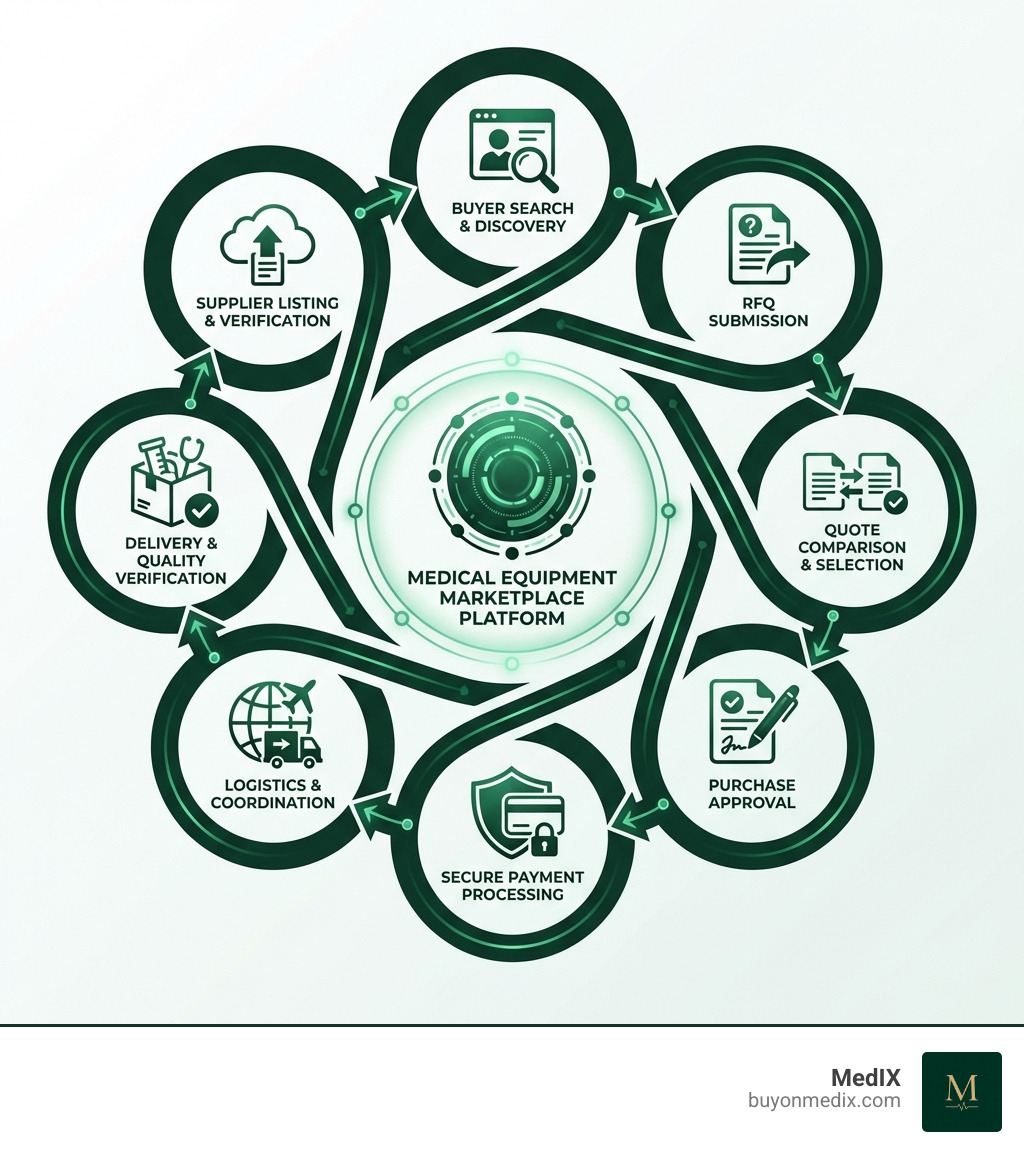
- Digital efficiency tools are at the heart of this change. Integrated Request for Quotation (RFQ) systems allow buyers to easily solicit bids from multiple suppliers, speeding up price findy. Platforms also often build in internal approval workflows, reducing the time procurement managers spend seeking sign-offs.
- End-to-end process facilitation means the marketplace supports the entire journey, from the initial search and quote to secure payment and final shipping. This holistic approach significantly reduces administrative burden.
- For a global B2B marketplace like ours, global shipping solutions are paramount. This involves not just arranging transport but also navigating the complexities of Medical Device Logistics. We often see partnerships with specialized freight forwarders, assistance with customs clearance, and comprehensive insurance support to ensure equipment arrives safely and compliantly, no matter where it's headed worldwide.
The Future of Medical Equipment Procurement
The medical equipment marketplace sector is far from static. Innovation is rapidly changing how we procure equipment, making it smarter, faster, and more sustainable. We're on the cusp of an exciting era where technology improves every step of the supply chain.
The Impact of Artificial Intelligence
Artificial Intelligence (AI) is set to be a game-changer, changing the medical equipment marketplace from a simple listing site into an intelligent procurement partner.
- AI-powered product matching is already here. Our own platform uses AI-matching to connect buyers with the most suitable suppliers and equipment, based on specific needs and preferences. This goes beyond simple keyword searches, understanding context and nuances.
- AI in Medical Procurement extends to predictive analytics for demand forecasting. Imagine a system that can anticipate your facility's equipment needs before you even realize them, optimizing inventory and procurement cycles.
- Automated comparison tools, such as AI Smart Compare of Medical Equipment, will simplify complex purchasing decisions. Instead of manually sifting through specifications and prices, AI can instantly highlight the best options based on predefined criteria, saving countless hours and ensuring optimal choices.
Sustainability and the Circular Economy
The future of the medical equipment marketplace is also deeply intertwined with sustainability. As healthcare strives to reduce its environmental footprint, these platforms will play a pivotal role in fostering a circular economy for medical devices.
- Promoting equipment lifecycle extension is key. By facilitating the buying and selling of used and refurbished equipment, marketplaces inherently support the reuse of valuable assets. This reduces the demand for new manufacturing and minimizes waste. The value of refurbishment and repair services becomes more prominent, ensuring equipment remains in service longer.
- This directly contributes to reducing waste in the healthcare industry, a sector known for its significant waste generation. By enabling the efficient resale of Bulk Medical Equipment and individual items, marketplaces help divert functional devices from landfills. This approach not only benefits the planet but also offers substantial financial advantages, as demonstrated by the cost savings associated with optimized procurement strategies.
Deeper Integration and Data Transparency
The next wave of innovation will see medical equipment marketplaces becoming seamlessly integrated hubs within the broader healthcare supply chain.
- We expect to see integration with hospital ERP systems becoming standard. This means procurement data from the marketplace flows directly into a hospital's enterprise resource planning system, streamlining accounting, inventory, and asset management. Some solutions, for instance, already offer features to integrate with practice management systems for convenient inventory control, paving the way for advanced inventory management tools that will become ubiquitous.
- Real-time market pricing data will offer unprecedented transparency, allowing both buyers and sellers to make decisions based on the most current market conditions.
- Furthermore, emerging technologies like blockchain could offer secure and transparent transaction histories. This immutable record-keeping would improve trust, verify authenticity, and simplify compliance audits, adding another layer of security and transparency to every transaction.
Frequently Asked Questions about Medical Equipment Marketplaces
We understand that diving into medical equipment marketplaces can bring up a few questions. Here are some of the most common ones we encounter:
What types of equipment can I find on a medical equipment marketplace?
You'd be surprised by the sheer variety! A vast range is available, covering almost every medical specialty. You can find sophisticated diagnostic imaging systems like MRI and CT scanners, essential surgical instruments, critical Patient Monitor Suppliers, and a wide array of laboratory analyzers. Beyond these, marketplaces also list fundamental items like hospital beds, specialized Patient Lift Systems, and even medical consumables. Whether it's a small clinic needing a new exam table or a large hospital seeking an entire operating room setup, the chances are high you'll find it.
How is equipment quality verified?
This is a critical question, and top platforms use a multi-layered approach to ensure quality and reliability. It typically includes:
- Vetting Suppliers: Reputable marketplaces rigorously check the background and credentials of their sellers. For instance, our platform focuses on connecting with certified medical equipment suppliers. Many platforms also highlight their focus on "reliable and verified sellers."
- Official Certifications: Equipment is often checked for adherence to international standards. This includes verifying CE Marked Medical Devices for European markets, FDA approvals for the US, and other regional compliance documentation.
- Detailed Condition Reports: Especially for used or refurbished items, platforms require sellers to provide comprehensive descriptions and often high-quality images of the equipment's condition. Some platforms, for example, allow users to filter by the age and condition of the equipment.
- User-Generated Reviews and Ratings: Many marketplaces incorporate feedback systems where buyers can rate their experience with sellers and the equipment, adding a layer of community-driven quality assurance.
Can individuals buy equipment, or is it only for businesses?
This varies significantly by platform and the type of equipment. Many medical equipment marketplaces, including our own, are strictly B2B (business-to-business), designed to connect hospitals, clinics, and other healthcare facilities with suppliers. This ensures that transactions meet industry standards and regulatory requirements.
However, other platforms facilitate C2C (consumer-to-consumer) or B2C (business-to-consumer) transactions, especially for home care equipment, mobility aids, or simpler devices. Some platforms, for example, appear to cater to a broader audience, including individuals seeking used equipment for personal or home use. Always check the specific platform's terms and conditions to understand its target audience and transaction policies.
Conclusion: Finding the Right Partner for Your Procurement Needs
The digital shift in healthcare procurement is not just a trend; it's a fundamental change. A medical equipment marketplace offers unparalleled efficiency, significant cost savings, and global access for healthcare providers, fundamentally changing how we acquire essential tools for patient care. It’s an evolution from fragmented, manual processes to integrated, intelligent systems.
Choosing the right platform is crucial for navigating this new landscape successfully. We encourage you to look for a marketplace with robust verification processes to ensure the reliability of suppliers and equipment, seamless logistics support for hassle-free delivery, and intelligent, AI-driven tools that simplify complex decisions and optimize your procurement strategy. These features ensure you acquire reliable equipment transparently and efficiently, allowing your team to focus on what truly matters: patient well-being.
MedIX is a premier global B2B marketplace designed to meet these modern demands, connecting certified medical equipment suppliers with hospitals and clinics worldwide through a platform built on AI-matching, rigorous compliance checks, and transparent transactions. We are committed to making your procurement journey as smooth and effective as possible.
Explore how a modern marketplace works for Buyers & Sellers.

Expert voices
Insights from leaders transforming medical equipment procurement


More from our blog
Discover the latest trends in medical technology and procurement
Stay ahead of medical technology
Get the latest insights, research, and market updates delivered straight to your inbox
Ready to transform your procurement
Discover how MedIX can streamline your medical equipment sourcing process