Transforming medical equipment procurement globally

Why Choosing the Right Patient Monitor Supplier Matters
Patient monitor suppliers are the backbone of reliable healthcare delivery, providing the critical equipment that enables clinicians to make life-saving decisions in real time. But finding a trustworthy supplier isn't just about comparing product specs—it's about ensuring long-term investment protection, comprehensive support, and uninterrupted patient care.
If you are new to patient monitoring technology and want a neutral overview of how these systems fit into modern care pathways, resources like the patient monitoring article on Wikipedia can be a helpful starting point before you begin evaluating specific suppliers and solutions.
Top considerations when evaluating patient monitor suppliers:
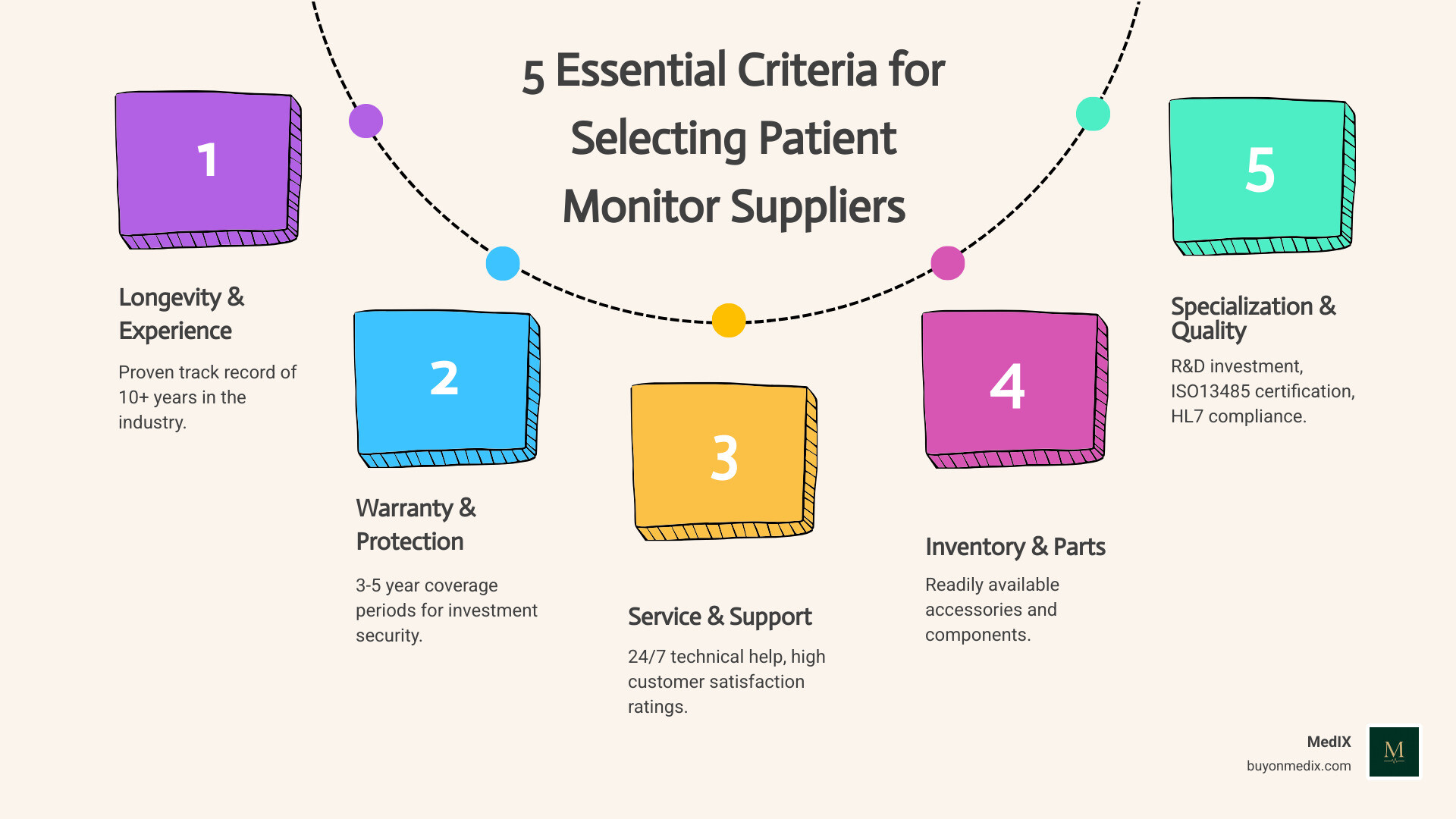
- Longevity - Look for suppliers with over a decade of proven industry experience
- Warranty - Seek extended coverage (3-5 years) to protect your investment
- Support - Ensure 24/7 technical assistance and high customer satisfaction ratings
- Inventory - Verify readily available spare parts and accessories
- Specialization - Choose vendors who focus specifically on patient monitoring technology
In today's dynamic healthcare environment, the wrong supplier choice can be much worse than paying an initial premium. A supplier that can't deliver spare parts when you need them, or one that disappears after the sale, puts both your operational efficiency and patient safety at risk.
The good news? With the right evaluation framework, you can identify suppliers who offer cutting-edge technology and the reliability your facility needs. Many leading suppliers now reinvest 10% of their revenue into research and development, while offering warranties up to five years on high-acuity monitors. Some have achieved 97% customer satisfaction ratings through dedicated support teams that ensure uninterrupted monitoring.
This guide walks you through a practical, five-point checklist for vetting patient monitor suppliers—from assessing their track record to verifying their global logistics capabilities. Whether you're sourcing bedside monitors, transport units, or complete central monitoring systems, you'll learn how to balance innovation with long-term value.
Understanding the Landscape: Types of Patient Monitoring Solutions
The world of patient monitoring is vast and varied, designed to meet the diverse needs of patients across all care settings. From the most acute critical care units to the comfort of a patient's home, specialized devices ensure continuous oversight. When evaluating patient monitor suppliers, it's crucial to understand the different solutions available and how they fit into your facility's workflow.
Here's a breakdown of the key types of patient monitoring solutions:
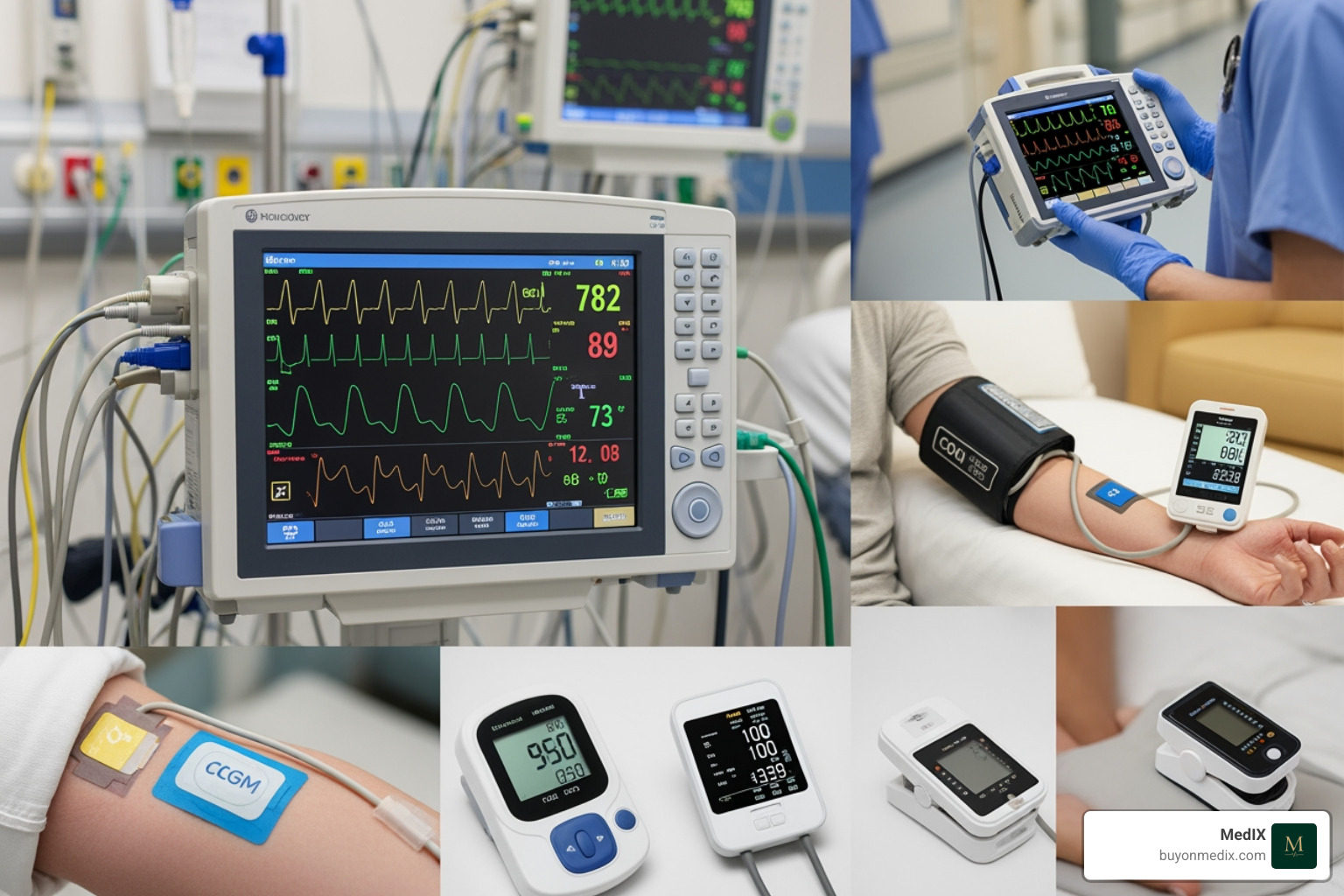
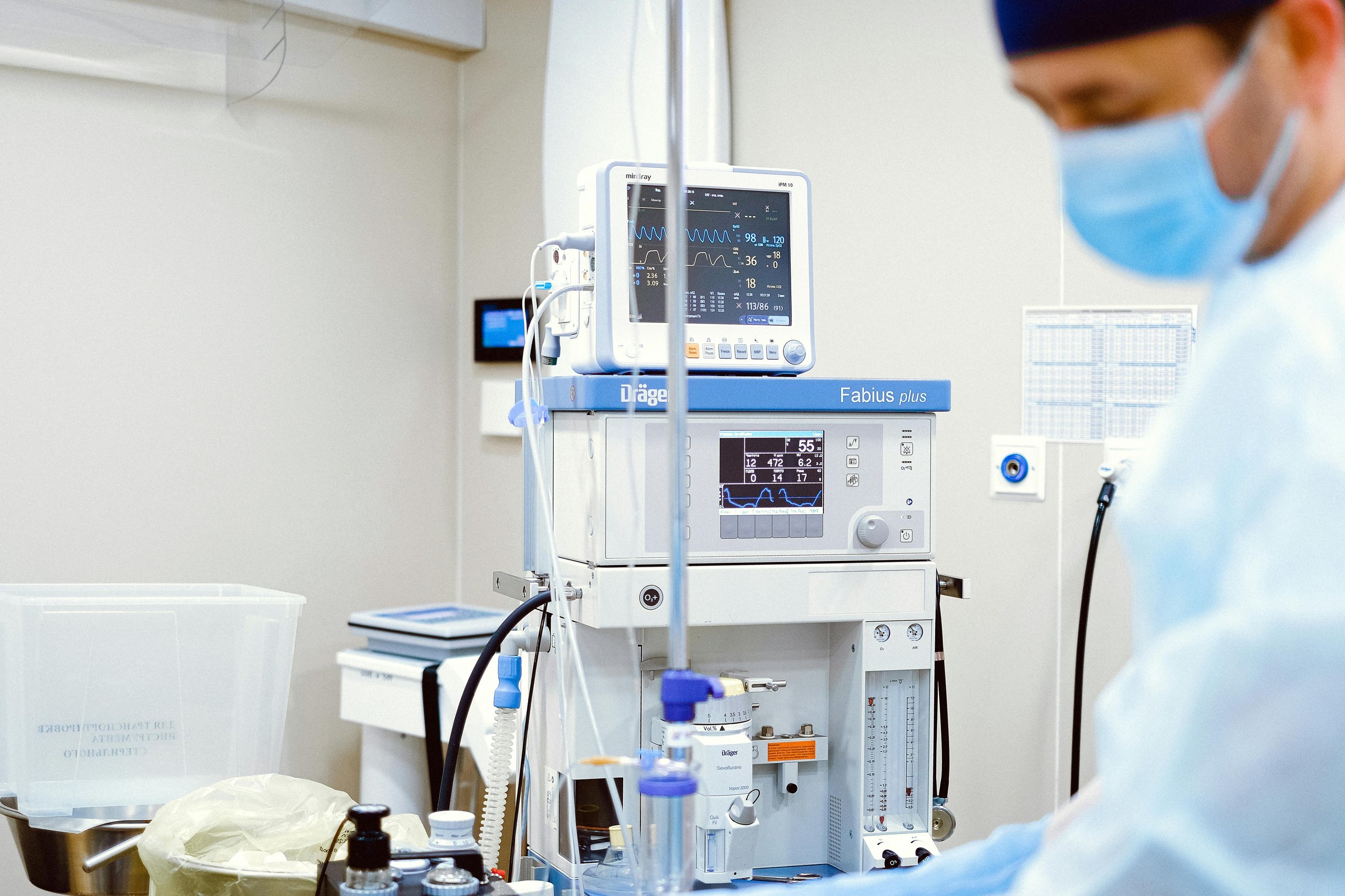
Bedside Monitors: These are the workhorses of patient care, typically found in ICUs, CCUs, and general wards. They provide continuous, multi-parameter monitoring for vital signs like ECG, SpO2, NIBP, temperature, and respiration. Advanced models can also monitor EtCO2, IBP, and cardiac output. Their primary goal is to offer immediate, comprehensive data to clinicians at the patient's side, supporting early diagnosis and informed decision-making.
Transport Monitors: Designed for patient transfers within the hospital or during ambulance transport, these compact, durable, and battery-powered monitors ensure continuity of care. They often feature robust designs to withstand movement and provide essential vital signs monitoring on the go. The Philips IntelliVue X3, for instance, is a dual-purpose transport monitor with intuitive smartphone-style operation.
Central Monitoring Systems: These systems aggregate data from multiple patient monitors across a unit or even an entire hospital. They allow healthcare teams to remotely monitor a large number of patients from a central station, providing an overview of patient status and alerting staff to critical changes. Infinium's Omniview central station, for example, can network up to 64 patient monitors, ensuring real-time remote surveillance.
Vital Signs Monitors: Often simpler than full multi-parameter bedside monitors, these devices focus on core vital signs like blood pressure, SpO2, and temperature. They are commonly used in general wards, outpatient clinics, and for spot-check applications. The Edan M3 Monitor, for instance, is known for being a durable and efficient solution for outpatients and general wards.
Remote Patient Monitoring (RPM): Extending care beyond hospital walls, RPM solutions allow clinicians to monitor patients at home or in other off-site locations. This often involves wearable sensors and mobile applications that transmit data securely. GE HealthCare's Portrait Mobile monitoring solution is a wearable, wireless continuous solution providing a real-time personalized view of the patient, demonstrating how care can extend outside traditional hospital settings.
Fetal & Maternal Monitors: Specialized monitors used in obstetrics to track the vital signs of both the expectant mother and the fetus. These can include wireless solutions that improve the experience for parents and caregivers while continuously monitoring.
Wearable Monitors: These are compact, often wireless devices that patients wear, allowing for continuous monitoring while maintaining mobility. They are particularly useful for ambulatory patients or for gathering long-term data without restricting the patient.
Specialized Monitors: Beyond these general categories, there are monitors custom for unique environments, such as those designed for use in magnetic resonance (MR) environments, ensuring safety and performance even in the presence of strong magnetic fields.
Leading patient monitor suppliers like Mindray, GE HealthCare, Philips, HealthFirst (Edan), Infinium, and Criticare Systems offer a comprehensive range of these solutions, often integrating them into a seamless ecosystem. For instance, Philips offers an end-to-end solution that includes bedside, transport, fetal/maternal monitors, central systems, and mobile apps, all designed to be interoperable with a consistent user interface. This diversity ensures that every clinical need, from routine vital signs checks to high-acuity surgical monitoring, is met with precision and reliability.
The 5-Point Checklist for Vetting Patient Monitor Suppliers
This section provides a comprehensive checklist for healthcare facilities to evaluate and select the best suppliers for their needs, ensuring long-term value and patient safety.
1. Longevity and Industry Experience
When selecting patient monitor suppliers, one of the first things we look for is a proven track record. It's not just about how long a company has been around, but how consistently they've delivered quality and innovation in the demanding medical device industry. Think of it this way: would you trust your car's engine to a mechanic who opened shop last week, or one who's been expertly tuning engines for decades?
We've learned that there's a significant learning curve in manufacturing and supplying vital signs and patient monitor technology. Many new suppliers struggle to steer the complexities and simply don't last in this specialized space. That's why we prioritize suppliers with over a decade of active presence. Infinium Medical, for example, proudly states they've been manufacturing reliable and durable patient monitoring equipment since 1991, offering a reassuring level of stability and expertise.
A supplier's longevity signals their deep understanding of market dynamics, regulatory requirements, and the evolving needs of healthcare providers. It speaks to their financial stability and their commitment to long-term partnerships. In an industry where patient safety is paramount, reliability isn't just a bonus—it's a necessity. We want to partner with patient monitor suppliers who have weathered storms and emerged stronger, consistently demonstrating their capability to support our critical operations.
2. Warranty and Investment Protection
Let's face it, medical equipment is a significant investment. Beyond the initial purchase price, we're thinking about the long-term value, and nothing speaks to a supplier's confidence in their product quite like their warranty. A robust warranty is a clear indicator of investment protection and a proactive approach to minimizing operational costs over the lifespan of the equipment.
We advocate for seeking patient monitor suppliers who offer extended warranties, ideally for three to five years. Mindray, for example, offers an industry-leading three-year warranty on their ePM-Series and VS-Series Monitors, and an impressive five-year warranty on their high-acuity BeneVision N-Series Patient Monitors. Similarly, Infinium Medical provides a class-leading five-year warranty on their monitors. These extended periods are not just a safety net; they reflect the manufacturer's belief in the durability and longevity of their products.
When suppliers stand behind their equipment with such comprehensive coverage, it significantly lowers our total cost of ownership. It means fewer unexpected repair bills, less downtime, and greater peace of mind. Investing in monitors built for longevity, backed by strong warranties, is a smart financial decision that contributes directly to uninterrupted patient care and efficient resource allocation. It's like getting a long-term insurance policy for your critical equipment, ensuring that your investment continues to pay dividends for years to come.
3. Comprehensive Service and Dedicated Support
Imagine a critical patient monitor goes offline during a busy shift. Who do you call? The quality of a patient monitor supplier isn't just about the shiny new equipment; it's profoundly defined by the service and support they provide after the sale. We need partners who are there for us, not just during the procurement process, but throughout the entire lifecycle of the product.
Comprehensive service and dedicated support include everything from seamless installation assistance to prompt 24/7 technical help. It’s about having a responsive team ready to troubleshoot issues, provide training, and ensure our equipment is always functioning optimally. Mindray, for instance, boasts a remarkable 97% customer satisfaction rating, a testament to their commitment to dedicated support through their Mindray CARE Team. This kind of unwavering support is crucial for uninterrupted patient monitoring and maintaining high standards of care.
When evaluating patient monitor suppliers, we inquire about their support infrastructure: Do they offer on-site service? What are their response times for technical issues? Is there a dedicated point of contact? A supplier that invests in robust service and support demonstrates a genuine partnership approach, understanding that their success is intertwined with our ability to provide excellent patient care. It’s about building a relationship where we feel confident that help is always just a call away.
4. Inventory, Spare Parts, and Logistics
The best patient monitor in the world is useless if it's broken and you can't get a replacement part. This might sound obvious, but readily available inventory, spare parts, and efficient logistics are often overlooked until a crisis hits. For us, ensuring seamless workflow and reducing equipment downtime means partnering with patient monitor suppliers who can deliver.
We look for vendors who maintain adequate inventory of parts and accessories, ensuring they're ready to ship when needed. This includes not just major components but also consumables like cables, lead wires, electrodes, stethoscopes, and thermometers, as highlighted by Cardinal Health's robust product line. Having these essential items on hand prevents frustrating delays and keeps our operations running smoothly.
Furthermore, in a global healthcare landscape, the supplier's logistics capabilities are paramount. We need partners who can manage international shipping, customs clearance, and end-to-end logistics, ensuring reliable and timely delivery worldwide. A strong global logistics network is critical for us to access verified equipment efficiently, no matter where our facilities are located. Without this, even the most innovative products can become a bottleneck. We need patient monitor suppliers who can get the right parts to the right place at the right time, every time.
5. Specialization and Product Quality
When it comes to something as critical as patient monitoring, we believe in specialization. Just as you wouldn't ask a general practitioner to perform complex surgery, we prefer patient monitor suppliers who have a deep, focused understanding of patient monitoring technology. This specialization often translates into superior product quality and more innovative solutions custom to real clinical needs.
A specialized supplier is more likely to invest heavily in research and development (R&D). Mindray, for example, reinvests a significant 10% of its revenue into R&D, leading to cutting-edge technology and continuous improvement. This commitment to innovation means their products are more likely to be clinically innovative, as reflected by GE HealthCare's experienced physicians, 90% of whom believe their monitoring solutions are clinically innovative, and 97% who attest to their clinical excellence.
Beyond innovation, we look for adherence to stringent quality standards. ISO13485 certification, for instance, is a crucial indicator of a manufacturer's commitment to quality management systems for medical devices. We also prioritize monitors with HL7 compliance, which ensures seamless integration with our hospital information systems and Electronic Medical Records (EMRs). This focus on quality and specialization ensures that we receive reliable, effective, and interoperable solutions that truly improve patient care. Patient monitors are not commodity products; they require expert design, manufacturing, and support.
Key Features to Look for in Modern Patient Monitors
Beyond the supplier itself, the features of the patient monitors are what directly impact our clinicians' daily work and, ultimately, patient outcomes. Modern patient monitors are far more than just screens displaying numbers; they are sophisticated tools designed for efficiency, accuracy, and ease of use.
Here are the key features we prioritize when evaluating equipment from patient monitor suppliers:
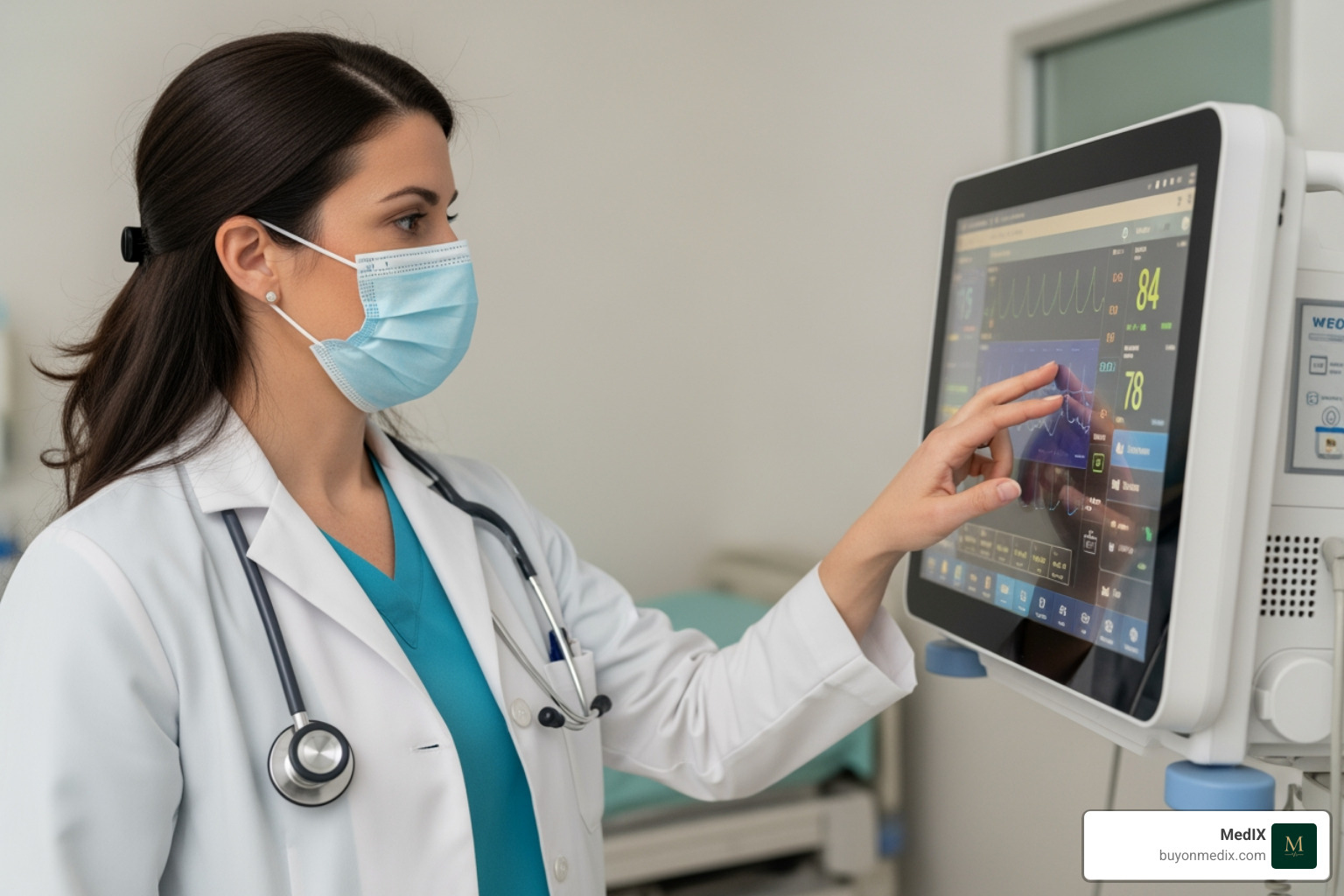
User-friendly Interface and Smartphone-style Operation: Clinicians are busy, and every second counts. An intuitive, easy-to-steer interface reduces training time and minimizes the risk of errors. Monitors like the Philips IntelliVue X3 offer smartphone-style operation, allowing users to swipe through screens and access information quickly. Infinium Omni & Cleo Series monitors are also designed to be very user-friendly, reducing staff training and frustration. A high-resolution touchscreen, as seen in the Edan iM Series, further improves usability.
Scalability and Field Upgradability: Healthcare needs evolve, and so should our equipment. Scalable solutions allow us to expand monitoring capabilities as patient acuity changes. Field upgradability means that a monitor's functionality can be improved or customized on-site with simple plug-in modules and software settings, rather than requiring a new purchase. This flexibility, offered by Infinium's monitors, allows a single device to adapt from general ward care to high-acuity surgeries. GE HealthCare's FlexAcuity approach also emphasizes this adaptability.
Durability and Portability: Medical environments can be tough on equipment. We need monitors that are built to last and can withstand the rigors of daily use and frequent transport. Devices like the Edan M3 are known for their durability. For mobility, compact and portable designs, often with built-in rechargeable batteries, are essential. Contec Medical Systems' CMS5100, for example, offers a compact and flexible design for portability, suitable for ambulances and various clinical settings.
Infection Control Features: In an era where infection prevention is paramount, monitor design plays a critical role. We look for features like chemical-resistant materials that can withstand aggressive disinfectants, and antimicrobial surfaces. The Philips IntelliVue X3, for instance, uses chemical-resistant materials and Antimicrobial Corning® Gorilla® Glass embedded with ionic silver to actively reduce microbial contamination.
Advanced Algorithms and Alarm Management: Modern monitors leverage advanced algorithms for earlier detection of patient deterioration and to reduce alarm fatigue. GE HealthCare highlights how their advanced algorithms enable earlier detection and support optimized alarm configurations, leading to a quieter healing space. Effective alarm management strategies are crucial for improving workflow and ensuring clinicians respond to truly critical events.
Connectivity and Integration: Seamless integration with hospital information systems (HIS) and Electronic Medical Records (EMR) is non-negotiable. We look for monitors that are HL7 compliant and offer open-source communication protocols, allowing patient information and trends to be seamlessly transferred. The Infinium Omni Series offers Ethernet and RS-232 connections with HL7 compliance, ensuring data can be managed efficiently on EMR platforms. For facilities without full HL7 integration, central stations like Infinium's Omniview can provide remote monitoring and networking.
Investing in technology with a focus on longevity and cost-effectiveness means choosing monitors that not only meet today's clinical demands but are also built to adapt and integrate into our future healthcare ecosystem.
How to Find Verified Patient Monitor Suppliers Globally
Navigating the global market to find reliable patient monitor suppliers can feel like searching for a needle in a haystack. With countless manufacturers and distributors worldwide, ensuring the quality, compliance, and authenticity of medical equipment is a significant challenge. This is where a structured vetting process and specialized platforms become invaluable.
We understand the complexities involved in procurement, which is why we emphasize the importance of leveraging resources that simplify the process. This includes thorough compliance checks, understanding global networks, and utilizing advanced technology like AI-matching.
The Role of a Global B2B Marketplace
In our experience, a global B2B marketplace plays a transformative role in simplifying procurement. Instead of sifting through endless individual supplier websites or attending countless trade shows, these platforms act as a centralized hub. They connect healthcare facilities like ours with a vast network of certified medical equipment suppliers worldwide.
Such marketplaces facilitate transparent transactions and provide access to verified suppliers, ensuring that every piece of equipment we consider meets rigorous standards. By centralizing procurement, they improve workflow efficiency and give us unparalleled access to a global network of options. This means we can find the exact patient monitoring solutions we need, from compact vital signs monitors to high-acuity systems, with confidence in the supplier's credibility.
Ensuring Compliance and Quality for patient monitor suppliers
Quality and regulatory compliance are non-negotiable when it comes to medical devices. When sourcing patient monitors globally, we must ensure that patient monitor suppliers adhere to the highest international standards. This involves rigorous verification processes and comprehensive documentation checks.
We look for suppliers whose products carry essential certifications like FDA approval (for the United States market) and CE marking (for the European market), alongside adherence to quality management standards such as ISO13485. These certifications are not just stamps of approval; they represent a supplier's commitment to manufacturing excellence, patient safety, and consistent product quality. A reliable marketplace will perform these rigorous compliance checks on our behalf, giving us peace of mind that the equipment we procure meets all necessary regulatory requirements.
Streamlining Logistics for global patient monitor suppliers
Once we've identified the right monitor, the next hurdle is getting it to our facility. International shipping, customs clearance, and last-mile delivery can be complex and time-consuming. That's why streamlining logistics is a critical component of finding global patient monitor suppliers.
We need suppliers and platforms that offer comprehensive, end-to-end logistics management. This means handling everything from the point of origin to our doorstep, including all necessary paperwork, duties, and transportation. Reliable global logistics ensure that our patient monitoring equipment arrives safely, on time, and without unexpected complications, regardless of its origin. This efficiency is vital for maintaining our operational schedules and ensuring that patient care is never compromised by supply chain delays.
Frequently Asked Questions about Patient Monitor Suppliers
What is more important: the monitor's features or the supplier's reliability?
This is a fantastic question, and one we often encounter. Our answer? Both are absolutely critical, but if forced to choose, a supplier's reliability often takes precedence. Why? Because a monitor with cutting-edge features is only as good as its uptime and the support behind it.
Think about it: a truly innovative patient monitor, if sourced from an unreliable supplier, can quickly become a liability. What happens if it breaks down and spare parts aren't available? What if technical support is non-existent when you need it most? As some experts wisely note, "selecting the wrong vendor can be much worse than paying an initial premium for patient monitoring equipment." Patient monitors are not commodity products; they require significant service and support throughout their lifecycle.
A reliable supplier ensures long-term value, comprehensive support, and crucial maintenance. They stand by their products, offering strong warranties and dedicated support teams, as Mindray does with its 97% customer satisfaction rating. So, while impressive features are a huge draw, always remember that a great product from an unreliable supplier is a significant risk to both your operational efficiency and patient safety.
How can I ensure a new patient monitor integrates with my hospital's EMR system?
Integrating new medical equipment with existing Electronic Medical Record (EMR) or Hospital Information Systems (HIS) is a key consideration for seamless data flow and improved patient care. The good news is that modern patient monitor suppliers are well aware of this need.
The most important standard to look for is HL7 compliance. Health Level Seven (HL7) is a set of international standards for transfer of clinical and administrative data between healthcare information systems. When a monitor is HL7 compliant, it means it's designed to "speak the same language" as your EMR, allowing for patient information and trends to be transferred smoothly. Infinium Medical, for instance, emphasizes that their Omni Series monitors are HL7 compliant for integration with hospital information systems and offer an open-source communication protocol.
When speaking with patient monitor suppliers, always ask about their specific integration protocols. Inquire if they offer dedicated support for EMR/HIS integration and if they have experience working with your particular EMR system. Some suppliers also provide central monitoring stations, like Infinium's Omniview, which can network monitors and manage data for facilities that might not have full HL7 integration. Prioritizing interoperability is crucial for connected data that provides complete insights, as GE HealthCare highlights, ensuring the right data reaches the right person at the right time.
What does "total cost of ownership" mean for patient monitors?
"Total Cost of Ownership" (TCO) for patient monitors refers to the sum of all direct and indirect costs associated with the equipment over its entire lifecycle, not just the initial purchase price. It's a holistic view that helps us make more informed, long-term financial decisions.
Beyond the upfront cost, TCO includes:
- Maintenance and Servicing: Regular calibration, preventive maintenance, and any repair costs.
- Cost of Consumables: Items like cables, sensors, electrodes, and printer paper that need frequent replacement.
- Warranty Coverage: A longer, more comprehensive warranty can significantly reduce unexpected repair costs.
- Staff Training Time: The resources (time and money) spent on training staff to use the new equipment. User-friendly interfaces, like those offered by Infinium, can help minimize this.
- Potential Downtime Costs: The financial and operational impact if a monitor is out of service, including potential rental costs for replacements or delays in patient care.
- Software Upgrades and Licensing: Costs associated with keeping the monitor's software up-to-date and compliant.
- Integration Costs: Expenses related to connecting the monitor with your existing EMR/HIS.
Suppliers like Philips emphasize that their integrated solutions aim to lower the total cost of ownership by protecting investment through longevity and interoperability. Similarly, Mindray designs its monitors for longevity, which directly helps in minimizing operational costs. By looking at the full picture of TCO, we can select patient monitor suppliers and equipment that offer the best long-term value for our healthcare facility.
Conclusion
Choosing the right patient monitor suppliers is a critical decision that impacts patient safety, operational efficiency, and your facility's financial health. It's about much more than just the price tag; it's about forging a partnership built on trust, reliability, and long-term support.
Our 5-point checklist—focusing on Longevity, Warranty, Service & Support, Inventory & Logistics, and Specialization & Quality—provides a robust framework for evaluating potential partners. By thoroughly assessing these areas, you ensure that your investment in patient monitoring technology is sound, sustainable, and truly serves the best interests of your patients and staff. Balancing cutting-edge technology with unwavering supplier reliability is the key to successful procurement in today's dynamic healthcare environment.
To simplify this complex process, global B2B marketplaces like MedIX connect certified medical equipment suppliers with hospitals and clinics worldwide. We simplify procurement through AI-matching, rigorous compliance checks, and reliable global logistics, ensuring you get verified equipment and transparent transactions every time.
Don't leave such vital decisions to chance. Empower your facility with the best patient monitoring solutions and the most reliable patient monitor suppliers in the world.

Expert voices
Insights from leaders transforming medical equipment procurement


More from our blog
Discover the latest trends in medical technology and procurement
Stay ahead of medical technology
Get the latest insights, research, and market updates delivered straight to your inbox
Ready to transform your procurement
Discover how MedIX can streamline your medical equipment sourcing process