Transforming medical equipment procurement globally

Why Finding the Right Electrosurgical Unit for Sale Matters
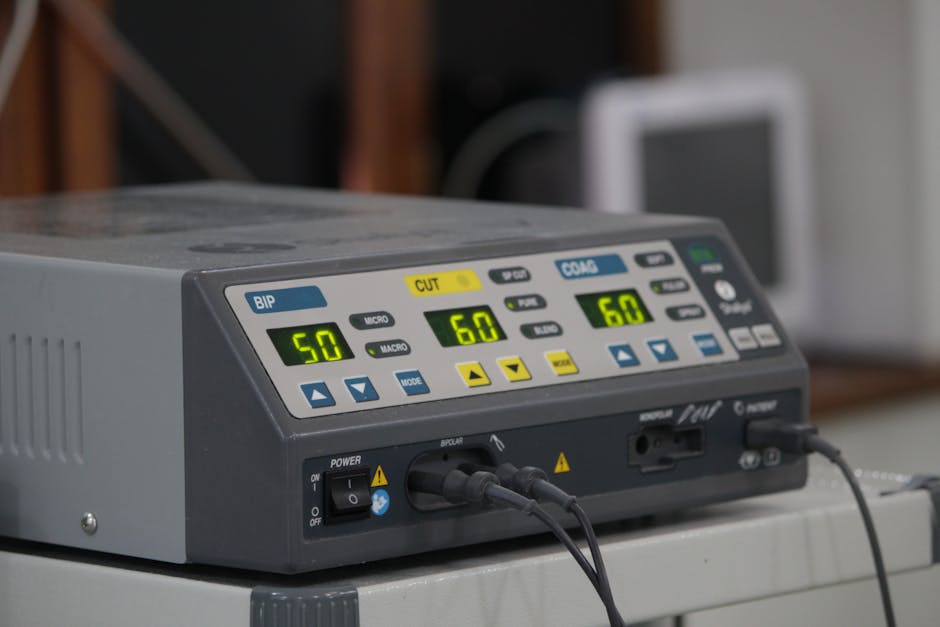
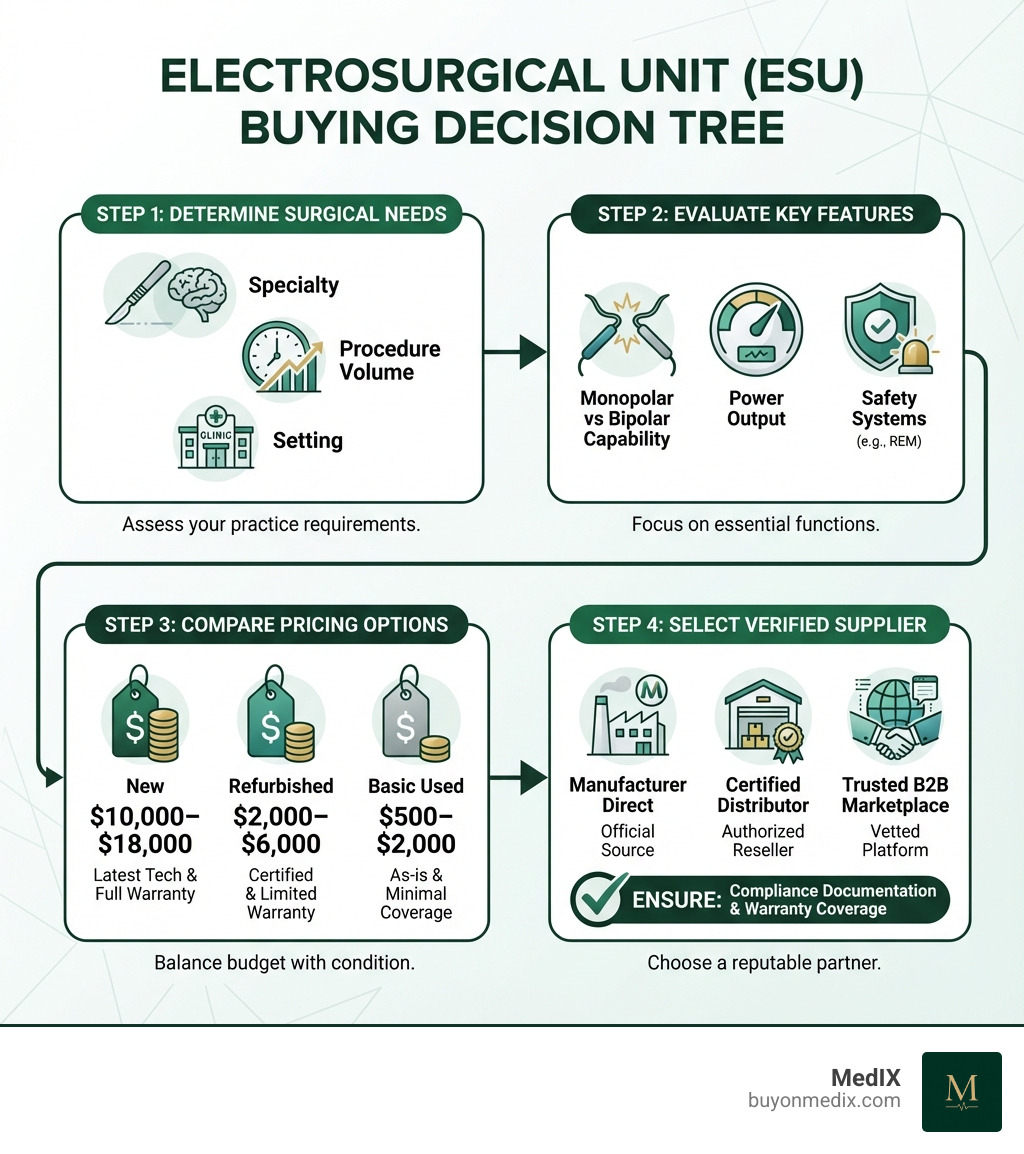
Electrosurgical unit for sale searches typically lead buyers to a complex market of manufacturers, distributors, auctions, and online marketplaces. If you need a quick answer: reputable sources include manufacturer-direct sales, certified distributors, specialized medical equipment B2B platforms like MedIX, and auction sites for used units—but always verify regulatory compliance and supplier credentials before purchase.
Quick Reference: Where to Find ESUs
- New Units: Manufacturer direct (Bovie, ConMed, ERBE, Valleylab/Medtronic), authorized distributors
- Refurbished Units: Certified refurbishers with warranties (typically 90 days to 2 years)
- Used/Auction: Online medical equipment marketplaces, hospital surplus auctions
- Price Range: $500–$18,000+ depending on condition, features, and brand
- Key Considerations: Warranty coverage, regulatory compliance (FDA/Health Canada), return electrode monitoring systems, accessory compatibility
Electrosurgical units have become indispensable tools in modern surgery. These devices use high-frequency electrical current to cut tissue with precision while simultaneously controlling bleeding—a combination that traditional scalpels simply cannot match. From routine dermatology procedures in office settings to complex open surgeries in operating rooms, ESUs power countless procedures every day.
The challenge for procurement managers is navigating a fragmented market. You might find a basic office unit for under $1,000 or a state-of-the-art generator exceeding $17,000. Research shows that refurbished units from reputable suppliers often provide excellent value—for instance, a ConMed System 5000 sells for around $2,884 refurbished versus $17,812 new, both with warranties.
But price is just one factor. Safety features like Return Electrode Monitoring (REM) prevent patient burns. Compatibility with your existing instruments matters. And critically, you need verified suppliers who can document regulatory compliance and provide transparent pricing.
This guide breaks down the technology, features, pricing, and procurement channels to help you make an informed decision when searching for an electrosurgical unit for sale.
Understanding the Core Technology: Monopolar vs. Bipolar Systems
At its heart, an electrosurgical unit (ESU) functions by generating a high-frequency electrical current that passes through tissue. This energy is converted into heat, allowing surgeons to precisely cut, coagulate, desiccate, or fulgurate tissue. The magic lies in the controlled application of this energy, leading to a host of benefits over traditional methods, such as reduced blood loss, shorter operating times, and improved precision. This technology is a cornerstone of modern surgical practices, offering superior hemostasis and surgical precision.
When we talk about ESUs, the primary distinction often revolves around how this high-frequency current completes its circuit: through monopolar or bipolar systems.
Monopolar Electrosurgery: The Workhorse of the OR
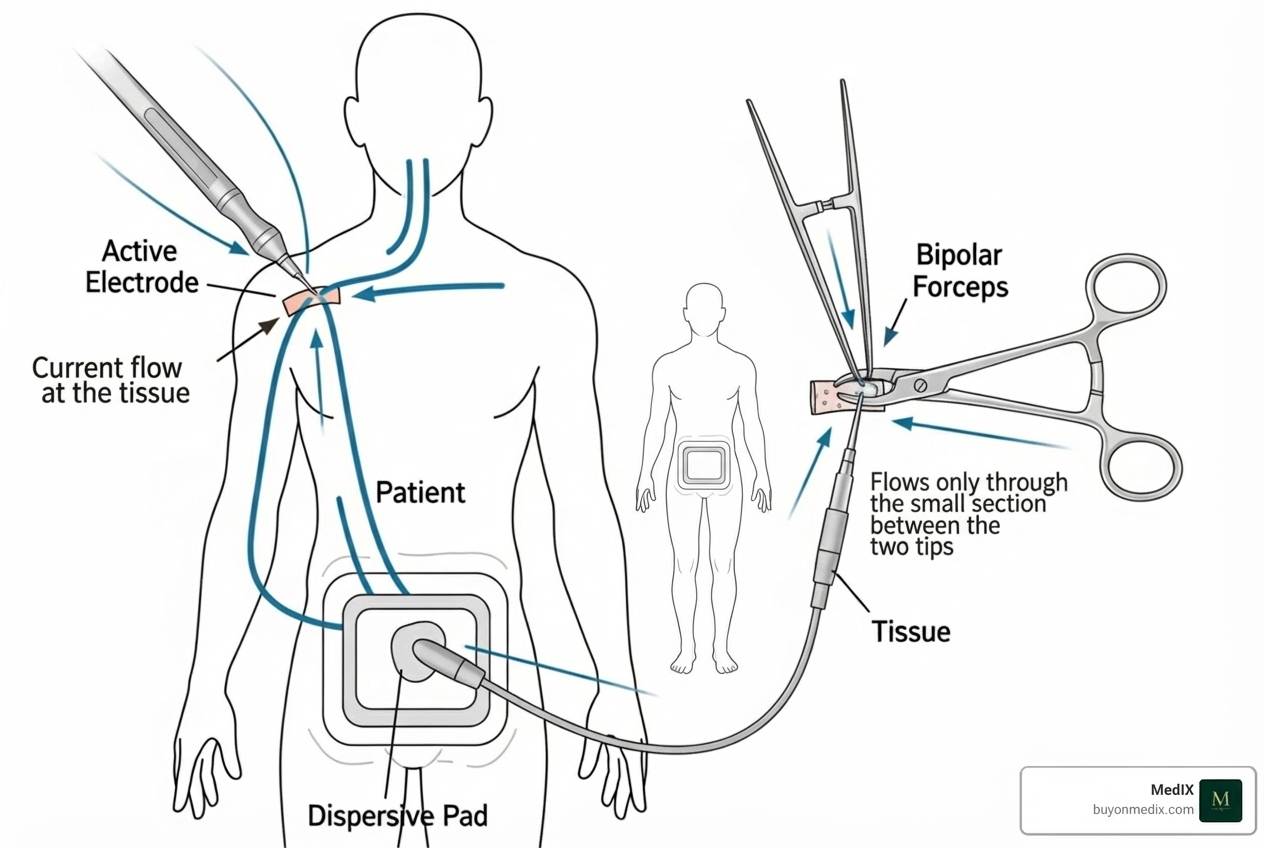
Monopolar electrosurgery is arguably the most common form, often considered the workhorse of the operating room. In this system, the high-frequency current flows from an active electrode (like a cutting blade or needle) at the surgical site, through the patient's body, and then returns to the ESU generator via a large, dispersive return electrode pad placed elsewhere on the patient's skin. This completes the electrical circuit.
Because the current travels through a larger portion of the patient's body, monopolar electrosurgery offers incredible versatility. It's excellent for cutting and coagulation over large tissue areas and is widely used in open surgeries across many specialties. Units like the Bovie A1250S and the Valleylab Force FX-C are designed with robust monopolar capabilities, offering various cut and coag modes to suit diverse surgical needs. Even specialized units like the Hyfrecator 2000, often found in office settings, frequently feature monopolar modes for general procedures.
Bipolar Electrosurgery: Precision and Safety
In contrast, bipolar electrosurgery confines the electrical current entirely between two tips of the same instrument, usually forceps. The current flows from one tip, through a small amount of tissue grasped between the tips, and then returns to the generator through the other tip. Crucially, there is no need for a patient return pad, as the current doesn't pass through the patient's entire body.
This localized current flow makes bipolar electrosurgery exceptionally precise and significantly safer, especially for delicate tissues or in patients where placing a return pad is problematic. The reduced risk of alternate site burns is a major advantage. It's the preferred method for procedures in neurosurgery, ophthalmic surgery, and increasingly in laparoscopic and endoscopic procedures where precise control and minimal collateral tissue damage are paramount. Many modern ESUs, including the ConMed System 5000 and the EickTron Electrosurgical Unit (often found in veterinary medicine), offer both monopolar and bipolar functionalities, providing surgeons with the flexibility to choose the most appropriate technique for the task at hand.
Key Features to Evaluate in an Electrosurgical Unit for Sale
When we're looking for an electrosurgical unit for sale, it's not just about finding a price tag; it's about finding the right tool for the job. The features and specifications of an ESU directly impact its performance, safety, and suitability for specific surgical environments. We need to consider everything from power output to user interface and, of course, the all-important warranty.
Essential Operating Modes: From Cut to Coagulation
Modern ESUs are marvels of engineering, offering a variety of operating modes to achieve different tissue effects. Understanding these modes is crucial:
- Cut Modes: These modes generate a continuous high-frequency waveform, leading to rapid heating and vaporization of tissue, resulting in a clean incision.
- Pure Cut: Provides a precise, clean cut with minimal hemostasis. The Valleylab Force FX-C, for example, excels here.
- Blend Cut: Combines cutting with some degree of coagulation, useful when hemostasis is desired along the incision line. The ConMed System 5000 offers several blend modes.
- Low Cut: Ideal for delicate tissue work or laparoscopic procedures, where lower power settings and precise control are needed to minimize energy spread.
- Coagulation Modes: These modes use an intermittent or modulated waveform, causing slower heating and desiccation of tissue, which seals blood vessels and stops bleeding.
- Desiccate: Achieves low-voltage contact coagulation, often used for superficial bleeding. The Valleylab Force FX-C's Desiccate mode is suitable for laparoscopic and delicate tissue work.
- Fulgurate: Provides non-contact coagulation with a higher voltage, creating a spark that spreads over a larger area to stop bleeding. Some units offer high and low crest factor fulgurate modes for varying effects.
- Spray: A specialized fulgurate mode for very broad, superficial coagulation over large tissue areas, often with limited capacitive coupling.
- Bipolar Modes: As discussed, these are for precise, localized coagulation.
- Micro Bipolar: Delivers very low power for fine, delicate coagulation, often seen in neurosurgery or ophthalmic procedures. The ConMed System 5000 has a Micro Bipolar mode.
- Macro Bipolar: Provides higher power for more energy-intensive bipolar applications.
- Dynamic Response Technology: Advanced units, like the ConMed System 5000 and the Valleylab Force FX-C with its Instant Response12 technology, continuously monitor tissue impedance and adjust energy output in real-time. This ensures consistent power delivery and optimal clinical effects, even through resistant tissue, and minimizes tissue damage.
- Pulse Modes: Some advanced units, such as the ConMed System 5000, offer pulse cut and pulse coag modes for precise energy bursts, useful in critical dissections.
- Specialized Modes: Units like the ConMed System 5000 also feature a "Fluids Mode" for an energy boost in fluid environments and a "Laparoscopic Mode" to limit open circuit voltages, reducing the risk of capacitive coupling during minimally invasive surgery. The JorVet unit, custom for veterinary surgeons, offers fully filtered (smooth cutting), fully rectified (cutting and coagulation), and partially rectified (coagulation of larger bleeders) modes, along with 10 different power settings.
Critical Safety Systems: Protecting Patients and Staff
Safety is paramount in electrosurgery. We must always prioritize features that protect both the patient and the surgical team.
- Return Electrode Monitoring (REM) / Contact Quality Monitoring (CQM): This is perhaps the most critical safety feature in monopolar systems. Systems like BovieNEM (on the Bovie A1250S) and REM12 (on the Valleylab Force FX-C) continuously monitor the impedance of the patient return pad. If the pad-patient contact is insufficient or compromised, these systems will alarm and deactivate the ESU, preventing severe patient burns that could result from high current density at a small contact area. The ConMed System 5000 features an improved ARM (Automatic Return Monitor) CQM system.
- Alarms: Audible and visual alarms for various issues, including system malfunctions, incorrect settings, or safety breaches, are essential.
- Dual Microprocessors: The Hyfrecator 2000, for instance, boasts a dual microprocessor safety system that independently controls and monitors current delivery, terminating activation if a safety hazard is detected.
- Voltage Limiting: Features like the Laparoscopic Mode in the ConMed System 5000 limit open circuit voltages to reduce the risks of capacitive coupling, insulation breakdown, and unintended burns.
- Surgical Smoke Hazards: An often-overlooked safety concern is surgical smoke. Did you know that 77% of particles in surgical smoke are not filtered out by standard surgical masks? This highlights the importance of robust smoke evacuation systems to protect staff from harmful airborne contaminants, a hazard detailed by health and safety organizations like OSHA.
We emphasize that understanding and utilizing these safety features is not just good practicedit's essential for patient and staff well-being.Learn more about ESU safety features on MedIX
For readers who want a neutral technical overview of how electrosurgery works in general, see this electrosurgery article on Wikipedia.
Accessories and Compatibility for Your Practice
An ESU is only as good as the tools it works with. When considering an electrosurgical unit for sale, we must also factor in the cost and compatibility of its accessories:
- Handpieces (Pencils): These are the primary interfaces for the surgeon. They can be hand-activated or foot-activated, autoclavable for reusability, and come in various designs.
- Footswitches: Provide hands-free activation of cutting and coagulation modes, crucial for maintaining sterility and focus. Many units, like the ConMed System 5000, offer splashproof footswitches.
- Electrodes: A vast array of electrodes exists for different tissue effects:
- Blades & Needles: For precise cutting and desiccation.
- Balls: For broad coagulation.
- Loops: For tissue removal.
- Specialized Electrodes: For specific procedures, such as those included with the EickTron unit or the variety pack with the JorVet ESU.
- Bipolar Forceps: Essential for bipolar electrosurgery, available in various tip sizes and designs (e.g., jeweler's micro tip, Gerald micro tips, Adson, Cushing from Hyfrecator accessories).
- Return Electrode Pads: For monopolar procedures, available in various sizes and designs, often with gel for optimal skin contact.
- System Integration: Some ESUs are designed for seamless integration with other advanced surgical systems. For example, the ConMed System 5000 can integrate with da Vinci S and Si surgical robotic systems via a custom energy activation cable, enabling improved control in robotic surgery. Compatibility with industry-standard accessories is also a key consideration, as highlighted for the Bovie A1250S.
Considering the full ecosystem of the ESU and its accessories ensures a smooth, efficient, and safe surgical workflow.More info about equipment categories
Navigating the Market: Types, Costs, and Where to Buy
The market for an electrosurgical unit for sale can feel like a labyrinth, with options ranging from compact office units to sophisticated operating room powerhouses. We'll help you steer this landscape, focusing on types, deciphering price tags, and identifying reliable procurement channels. Budgeting and understanding the return on investment are key components of this journey.
Common Types of Electrosurgical Units for Sale
The diversity of electrosurgical units reflects the wide array of procedures and settings they serve:
- General-Purpose OR Units: These are robust, high-power units designed for complex procedures in the main operating room. They typically offer a full suite of monopolar and bipolar modes, advanced safety features, and often the ability to integrate with other surgical technologies. Examples include the ERBE VIO series and the Valleylab Force Triad.
- Office-Based Units: Smaller, often more affordable, and designed for minor procedures performed in clinics or physician's offices. The Hyfrecator 2000 is a classic example, widely used for dermatological procedures. The Bovie A1250S is also ideal for monopolar and bipolar office surgical procedures.
- Units for Specialized Applications: Certain ESUs are custom for specific medical fields.
- Veterinary Medicine: Units like the JorVet Electrosurgical Unit and the EickTron Electrosurgical Unit are designed to meet the unique needs of animal surgery, often prioritizing affordability and ease of use.
- Flexible Endoscopy, Open, and Laparoscopic Procedures: Many advanced units are optimized for these applications, offering specific modes (e.g., Laparoscopic Mode in ConMed System 5000) to ensure safety and efficacy.
- Vessel Sealers: These specialized devices use electrosurgical energy for permanent vessel occlusion, often found in units like the Valleylab LigaSure.
- Advanced Technology Units: These units incorporate cutting-edge features like intelligent tissue feedback, robotic integration, and precise energy delivery for highly specialized or minimally invasive surgeries.
Electrosurgical units are used across a vast spectrum of surgical specialties, including:
- Dermatology
- Gynecology
- ENT (Ear, Nose, and Throat)
- General Surgery
- Orthopedics
- Urology
- Cardiothoracic Surgery
- Plastic Surgery
- Neurosurgery
Decoding the Price Tag: New, Used, and Refurbished Costs
The cost of an electrosurgical unit for sale can range dramatically, from a few hundred dollars to well over $18,000. Several factors influence this price:
- Type and Features: High-power, multi-mode OR units with advanced safety features and digital controls will naturally cost more than basic office-based units.
- Brand Reputation: Leading manufacturers often command higher prices due to their track record of reliability, innovation, and support.
- Condition (New, Refurbished, Used): This is one of the most significant cost drivers.
- New Units: Offer the latest technology, full manufacturer warranties, and peace of mind. For example, a new ConMed System 5000 can be around $17,811.96.
- Refurbished Units: These units have been restored to manufacturer specifications, often with a warranty (e.g., 90 days to 2 years). They offer an excellent balance of cost savings and reliability. A certified refurbished ConMed System 5000 might cost $2,884.47.
- Used Units: These are sold "as is" and are typically the most affordable. While they offer significant savings, they come with higher risks regarding functionality, longevity, and lack of warranty.
- Power Rating: Higher power output capabilities generally correlate with higher costs.
Let's look at some average prices for popular models, keeping in mind these are indicative and can vary based on condition, accessories, and seller:
| Model | Average Price (USD) |
|---|---|
| COVIDIEN Valleylab FT10 | $13,416 |
| OLYMPUS ESG-400 | $7,255 |
| VALLEYLAB Force Triad | $5,685 |
| ETHICON GEN11 | $5,455 |
| ERBE VIO 300D | $4,830 |
| VALLEYLAB LigaSure | $4,812 |
| ELLMAN Surgitron | $3,919 |
| VALLEYLAB Force Fx | $2,772 |
| OLYMPUS UES-40 | $2,526 |
| ERBE ICC 200 | $1,716 |
| ARTHROCARE Quantum 2 | $1,061 |
| JorVet Electrosurgical Unit | $1,030 |
| MITEK VAPR 3 | $663 |
(Note: Prices are averages and subject to change. Some models may be available new, refurbished, or used.)
For a more general perspective, basic Bovie Electro Surgery units can range from $580.00 to $4,320.00, while specialized Vessel Sealers might be $720.00 to $12,500.00. These figures underscore the importance of clearly defining your needs before diving into the market.
Top Places to Find an Electrosurgical Unit for Sale
Finding the right electrosurgical unit for sale requires knowing where to look and what questions to ask.
- Manufacturer Direct: For new units, purchasing directly from the manufacturer (e.g., Bovie, ConMed, ERBE, Medtronic/Valleylab) ensures authenticity, full warranty, and direct support. This is often the most expensive option but provides the highest level of assurance.
- Distributor Networks: Authorized distributors also sell new equipment and often provide local sales, service, and support, which can be invaluable.
- Online B2B Marketplaces: Platforms like MedIX are revolutionizing how medical equipment is bought and sold globally. We connect certified medical equipment suppliers with hospitals and clinics, simplifying procurement through AI-matching, rigorous compliance checks, and reliable global logistics. This ensures verified equipment and transparent transactions worldwide, whether you're looking for new, used, or refurbished options.
- Auction Sites: Online auction sites often feature auctions for used or surplus medical equipment. While these can offer significant savings (we've seen over 1500 total lots up for auction at various locations), they typically involve "as-is, where-is" sales. Buyers bear the responsibility for inspection, condition assessment, and regulatory compliance. Always perform thorough due diligence.
- Certified Refurbishers: For refurbished units, seek out sellers who specialize in medical equipment refurbishment and offer their own warranties. These companies offer certified refurbished units with warranties (e.g., 90 days for a ConMed System 5000), providing a cost-effective alternative to new equipment.
Regardless of where you purchase, we strongly advise verifying supplier credentials, inquiring about warranties, and ensuring the unit meets all relevant regulatory requirements (such as FDA or Health Canada standards for medical devices). This due diligence protects your investment and ensures patient safety.
Why choose MedIX for your ESU purchase
Frequently Asked Questions about Electrosurgical Units
We often encounter common questions when discussing electrosurgical units. Let's address some of the most pressing ones to help you make an informed decision.
What is the main difference between monopolar and bipolar electrosurgery?
The main difference lies in the path the electrical current takes. In monopolar electrosurgery, the current flows from the active electrode at the surgical site, through the patient's body, and returns to the generator via a large, dispersive grounding pad placed elsewhere on the patient. This method is versatile and commonly used for cutting and coagulation over larger tissue areas. In contrast, bipolar electrosurgery confines the current between two tips of the same instrument, typically forceps. The current passes only through the small amount of tissue grasped between these tips, eliminating the need for a separate patient return pad. This offers precise control for delicate procedures and significantly reduces the risk of alternate site burns, making it safer for sensitive areas or patients with certain conditions.
How much does a typical electrosurgical unit cost?
The cost of an electrosurgical unit varies widely based on its type, features, manufacturer, and condition (new, refurbished, or used). We've seen prices range from under $1,000 for a basic, used office unit to over $17,000 for a new, advanced operating room generator. For instance, a basic JorVet Electrosurgical Unit might be around $1,030.00, while a high-end COVIDIEN Valleylab FT10 could average $13,416. Refurbished models offer a mid-range option, often between $2,000 and $6,000 for popular models like the Valleylab Force Fx (average $2,772) or a certified refurbished ConMed System 5000 ($2,884.47). The total cost can also increase with necessary accessories, which can range from $125.00 to $324.00 for Bovie Electrosurgery Accessories, and disposable electrodes costing $84.00 to $99.00.
What safety features are most important in an ESU?
The most critical safety feature in an ESU, particularly for monopolar systems, is a Return Electrode Monitoring (REM) or Contact Quality Monitoring (CQM) system. This technology continuously monitors the integrity of the contact between the patient's skin and the dispersive (grounding) pad. If contact is compromised, the system alarms and deactivates the ESU, preventing patient burns that could occur if the current density becomes too high at the return electrode site. Other essential safety features include alarms for system malfunctions or incorrect settings, isolated outputs to minimize interference with other medical devices, and dual microprocessors (as seen in the Hyfrecator 2000) for independent control and safety monitoring. Additionally, for the safety of surgical staff, considering the unit's compatibility with smoke evacuation systems is vital, as 77% of particles in surgical smoke are not filtered by standard masks.
Conclusion: Making a Smart Investment in Your Surgical Practice
Investing in an electrosurgical unit for sale is a significant decision for any medical practice or facility. We've explored the crucial distinctions between monopolar and bipolar technologies, digd into the essential features like diverse operating modes and critical safety systems, and steerd the complex market of new, used, and refurbished options. From ensuring compatibility with existing accessories to understanding the nuances of pricing and warranties, every detail contributes to a successful procurement.
The future of electrosurgery continues to evolve, with ongoing advancements aimed at enhancing precision, safety, and integration with other surgical technologies. Choosing a reliable, feature-rich ESU is an investment in your surgical practice's efficiency, patient outcomes, and staff safety.
For a secure and transparent procurement experience, the MedIX global B2B marketplace connects buyers with certified suppliers, ensuring verified equipment through AI-matching and rigorous compliance checks. We simplify the process, allowing you to focus on what matters most: providing excellent patient care.
Explore a wide range of verified electrosurgical units on our platform

Expert voices
Insights from leaders transforming medical equipment procurement


More from our blog
Discover the latest trends in medical technology and procurement
Stay ahead of medical technology
Get the latest insights, research, and market updates delivered straight to your inbox
Ready to transform your procurement
Discover how MedIX can streamline your medical equipment sourcing process