Transforming medical equipment procurement globally

Why Microbiology Lab Equipment Matters for Modern Healthcare
From diagnosing infectious diseases to ensuring the safety of our food and water, microbiology laboratories are at the forefront of public health. The accuracy and reliability of their work depend heavily on the quality of their microbiology lab equipment. This guide provides a concise overview of the essential tools needed to set up and run an effective microbiology lab, covering everything from basic sterilization to core analytical instruments.
Key categories of equipment include:
- Sterilization & Preparation: Autoclaves, hot air ovens, water purification systems.
- Cultivation & Enumeration: Incubators, colony counters, shakers.
- Observation & Analysis: Microscopes, spectrophotometers, pH meters.
- Safety & Containment: Biosafety cabinets, personal protective equipment (PPE).
- Labware & Consumables: Petri dishes, pipettes, sterile loops.
The global microbiology testing market is projected to grow significantly, underscoring the increasing demand for high-quality, reliable laboratory equipment. For lab managers and procurement officers, making informed purchasing decisions is crucial for ensuring accurate results, maintaining safety, and achieving long-term value. This guide will help you steer the essential equipment needed for your facility. For broader context on microbiology as a discipline, see the Microbiology overview on Wikipedia.
Core Equipment for Sterilization and Media Preparation
In microbiology, the foundation of accurate and reliable results rests on aseptic technique – preventing contamination. Whether we are preparing sterile growth media for cultivating microorganisms or sterilizing glassware for experiments, the right equipment is paramount. Without proper sterilization, experiments can be compromised by unwanted microbial growth, leading to inaccurate data and wasted resources.
Autoclaves: The Gold Standard of Sterilization
When we talk about sterilization in a microbiology lab, autoclaves are often the first piece of microbiology lab equipment that comes to mind. These pressurized chambers are the gold standard for achieving complete sterilization and disinfection.
Working Principle: An autoclave works by combining time, pressure, and steam. It heats water to produce steam, then traps this steam under pressure, raising the boiling point of water and allowing temperatures far exceeding 100°C (212°F) to be reached. Typically, autoclaves operate at 121°C (250°F) for 15–20 minutes at 15 pounds per square inch (psi) of pressure. This combination of high temperature and pressure effectively denatures proteins and destroys microorganisms, including resistant bacterial endospores and viruses.
Primary Functions: Our laboratories rely on autoclaves for several critical tasks:
- Sterilizing culture media.
- Sterilizing glassware and instruments.
- Decontaminating biohazardous waste before disposal.
Autoclaves come in various sizes, from compact tabletop units suitable for smaller labs to large, high-capacity models for industrial or research facilities. Used autoclaves can offer a cost-effective alternative while maintaining performance if properly validated.
Hot Air Ovens
While autoclaves use moist heat, hot air ovens use dry heat for sterilization. This distinction matters because some materials, like oils or certain powders, cannot tolerate steam or need to remain completely dry after sterilization.
Working Principle: Hot air ovens achieve sterilization by circulating heated air within a chamber. The dry heat penetrates materials, destroying microorganisms through oxidation of cellular components. Sterilization typically occurs at higher temperatures and for longer durations than autoclaving, for instance, 160°C (320°F) for 2 hours or 170°C (338°F) for 1 hour.
Applications: We use hot air ovens primarily for:
- Sterilizing glassware that must remain dry.
- Metal instruments such as forceps and scalpels.
- Heat-stable powders and anhydrous materials that would be damaged by moisture.
Comparison to Autoclaves: The choice between an autoclave and a hot air oven depends on the material being sterilized. Autoclaves are faster and more effective for most aqueous solutions and porous materials, while hot air ovens are preferred for dry, heat-resistant items.
Water Purification Systems
Water is perhaps the most ubiquitous solvent in any microbiology lab, and its purity directly impacts the reliability of experiments. Impurities in water, such as ions, organic compounds, or even traces of other microorganisms, can interfere with media preparation, chemical reactions, and the growth of sensitive cultures.
Essential for Microbiology Workflows: High-purity water is critical for:
- Preparing culture media with consistent composition.
- Reagent preparation for sensitive assays.
- Washing glassware to avoid inhibitory residues.
Types: Common water purification systems include:
- Water distillers: Purify water through distillation by boiling and condensing steam.
- Deionization (DI) systems: Remove dissolved inorganic salts using ion-exchange resins.
- Reverse osmosis (RO) systems: Push water through a semi-permeable membrane to remove dissolved solids and many microorganisms.
Many labs combine these technologies to achieve the water quality needed for different applications, from routine washing to highly sensitive microbiological and molecular workflows.
Instruments for Cultivation, Enumeration, and Incubation
Once we have prepared our sterile media and tools, the next step in microbiology often involves cultivating microorganisms. This means providing them with the optimal conditions to grow and multiply, and then, in many cases, quantifying their populations.
Incubators: Creating the Perfect Growth Environment
Microorganisms, like all living things, have specific environmental requirements for optimal growth. Incubators are specialized microbiology lab equipment designed to provide and maintain these conditions, making them indispensable for any microbiology lab.
Primary Function: An incubator's main job is to maintain a constant, optimal temperature and, in some models, to control humidity, CO2, or oxygen levels. This allows us to mimic the natural environments where microbes thrive or to create specific conditions for research and diagnostics.
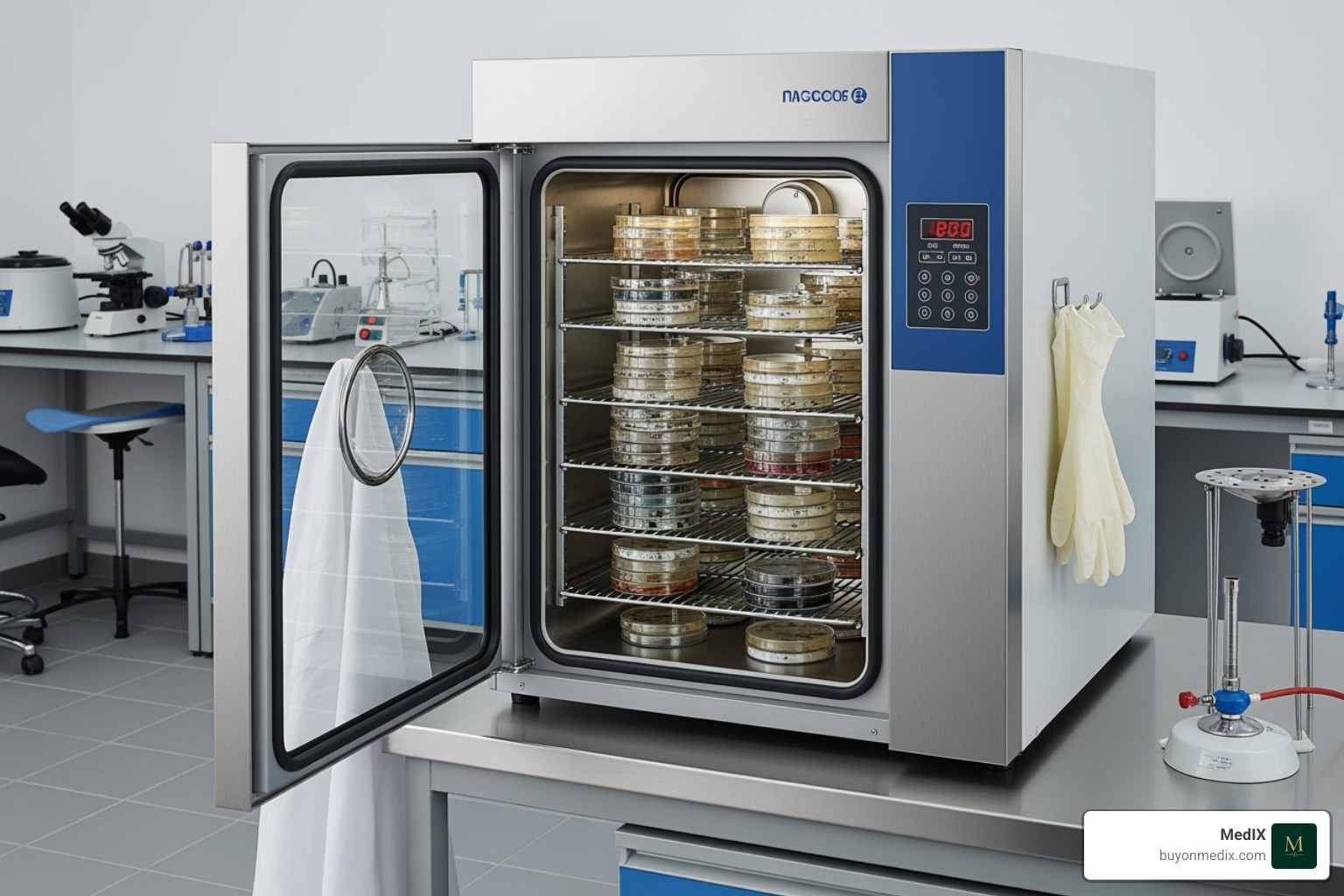
Applications: We use incubators for tasks such as:
- Bacterial and fungal culture for identification or susceptibility testing.
- Cell culture in clinical or research settings.
- Enzymatic reactions and other temperature-sensitive assays.
Types:
- Standard (bacteriological) incubators: Maintain a stable temperature, typically between 25°C and 60°C, ideal for most bacterial and fungal cultures.
- CO2 incubators: Precisely control CO2 concentration and humidity, essential for mammalian cell culture.
- Cooled incubators: Maintain temperatures below ambient for psychrophilic organisms or biochemical oxygen demand (BOD) work.
- Shaking incubators: Combine temperature control with orbital shaking, providing aeration for liquid cultures.
Colony Counters and Enumeration Devices
After incubating microbial cultures, we often need to quantify the number of viable cells present. Colony counters and related devices provide this crucial data.
Role in Quantifying Microbial Populations: The primary goal of a colony counter is to estimate the density of a liquid culture by counting the number of Colony-Forming Units (CFUs) on agar plates. A CFU represents a single viable microbial cell that has grown into a visible colony.
Working Principle:
- Manual colony counters: Typically consist of a lighted background and a grid. A technician manually marks and counts each colony. They are economical but can be time-consuming.
- Automated systems: Use imaging and software to rapidly scan agar plates, detect colonies, and count them with high accuracy. Some systems can differentiate colonies by size, shape, or color.
Calculating CFUs: The colony count, combined with the dilution factor of the original sample, allows us to calculate the CFU/mL (or CFU/g) of the initial sample, a standardized measure used in diagnostics and quality control.
Automated colony counters significantly improve efficiency and reproducibility in high-throughput labs by reducing manual labor and inter-operator variability.
Essential Microbiology Lab Equipment for Observation and Analysis
Once we have grown our microorganisms, the next step is often to observe them, understand their characteristics, and analyze their activities. This requires specialized microbiology lab equipment that allows us to visualize the microscopic world and gather quantitative data.
Microscopes: Visualizing the Microscopic World
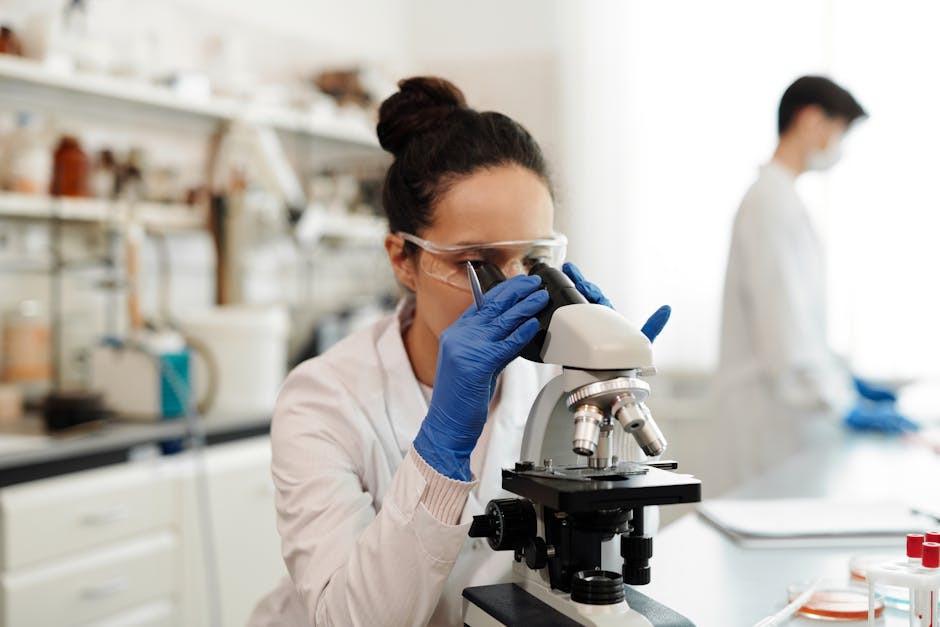
The microscope is arguably the most iconic and fundamental piece of microbiology lab equipment. Without it, the vast world of microorganisms would remain invisible.
Primary Function and Working Principle: Microscopes use a system of lenses to magnify small objects, projecting an enlarged image for observation. In light microscopes, light passes through a specimen and then through objective and ocular lenses to create a magnified image.

Key Types and Applications:
- Compound light microscopes: Workhorses of most microbiology labs, with magnifications typically up to 1000x–1500x. Used for bacterial morphology, staining (e.g., Gram stain), and basic cell counts.
- Electron microscopes (EMs): Use electron beams instead of light for very high magnification and resolution, enabling visualization of viral particles and cellular ultrastructure.
- Fluorescence microscopes: Use fluorescent dyes or tags that bind to specific cellular components, allowing targeted visualization against a dark background. Widely used in diagnostics and research for identifying specific pathogens or molecules.
Analytical Instruments for Quantitative Data
Beyond visualizing microorganisms, we often need to measure their growth, metabolic activity, and the composition of our samples. Analytical instruments make this possible.
Spectrophotometers:
- Operate based on the Beer–Lambert law, which relates light absorbance to concentration.
- Commonly used to measure turbidity of liquid cultures for growth curves and to quantify DNA, RNA, or proteins.
pH Meters:
- Measure the hydrogen ion activity in a solution via an electrode system.
- Critical for adjusting and verifying culture media pH so that microorganisms grow under optimal conditions.
Analytical Balances:
- Provide precise mass measurements in the sub-milligram range.
- Essential for preparing media, buffers, and reagents with accurate concentrations to ensure reproducible experimental conditions.
Creating a Safe and Sterile Work Environment
Working with microorganisms, especially potential pathogens, demands an unwavering commitment to safety and sterility. Microbiology lab equipment for creating a safe and sterile work environment is designed to protect samples from contamination and, crucially, to protect users and the surrounding environment from biohazards.
Biosafety Cabinets and Laminar Flow Hoods
These are critical pieces of microbiology lab equipment for creating controlled work environments, but they serve different primary purposes.
Laminar Flow Hoods (Clean Benches):
- Draw in ambient air, pass it through a HEPA (High-Efficiency Particulate Air) filter, and blow this filtered, particulate-free air in a laminar flow across the work surface.
- Primarily protect the sample from contamination from the user and the environment.
- Do not protect the user from aerosols generated by the sample, so they are only suitable for non-hazardous materials.
Biosafety Cabinets (BSCs):
- Use HEPA-filtered air with defined airflow patterns to protect the sample, the user, and the environment.
- Maintain an inward airflow at the work opening, a downward flow of HEPA-filtered air over the work surface, and HEPA-filtered exhaust air.
- Essential for handling potentially infectious microorganisms (biohazards).
Biosafety Cabinet Classes:
- Class I: Protects the user and environment, but not the product.
- Class II: Protects user, environment, and product; the most common type in microbiology labs.
- Class III: Gas-tight enclosures for work with the highest-risk agents.
Authoritative guidance on biosafety cabinet use and biosafety levels is available in the CDC’s Biosafety in Microbiological and Biomedical Laboratories.
Laboratory Benchtops and Surfaces
The material of laboratory benchtops significantly impacts the suitability of the workspace for microbiology. Surfaces must be durable, easy to clean, chemically resistant, and non-porous to prevent microbial growth and allow effective disinfection.
Common options include epoxy resin, phenolic resin, and stainless steel, which differ in cost, chemical resistance, and durability. Stainless steel is often preferred for sterile or cleanroom-adjacent environments due to its excellent cleanability and corrosion resistance, while epoxy and phenolic resins are widely used for general microbiology due to their balance of cost and performance.
Crucial Safety Equipment
Every lab must be equipped with essential safety gear to handle emergencies and protect personnel:
- Personal Protective Equipment (PPE): Lab coats, appropriate gloves, and safety glasses or face shields.
- Emergency Equipment: Easily accessible eyewash stations, safety showers, and fire extinguishers.
- Waste Disposal: Designated, puncture-resistant containers and clear procedures for biohazardous waste, sharps, and chemical waste, aligned with local regulations.
Core Equipment for Sterilization and Media Preparation
Proper sterilization is the foundation of all reliable microbiology work. It prevents cross-contamination and ensures that experimental results are accurate and reproducible. This involves sterilizing media, glassware, and equipment, as well as decontaminating waste.
Autoclaves: The Gold Standard of Sterilization
Autoclaves are essential for sterilizing most lab equipment and media using high-pressure saturated steam. A typical cycle runs at 121°C (250°F) for 15-20 minutes, which is effective at killing bacteria, viruses, fungi, and even heat-resistant spores.
Primary Functions:
- Sterilizing culture media, glassware, and instruments.
- Decontaminating biohazardous waste before disposal.
Hot Air Ovens
Hot air ovens use dry heat for sterilization, making them ideal for materials that are sensitive to moisture, such as powders, oils, and certain types of glassware or metal instruments. They operate at higher temperatures and for longer durations than autoclaves, typically 160-170°C for 1-2 hours.
Water Purification Systems
High-purity water is critical for preparing culture media and reagents. Contaminants in tap water can inhibit microbial growth or interfere with assays. Water purification systems, such as those using reverse osmosis (RO) or deionization (DI), remove impurities to produce laboratory-grade water, ensuring consistency and reliability in experimental results.
Instruments for Cultivation, Enumeration, and Incubation
After preparing sterile media, the next step is to provide the right conditions for microorganisms to grow. This involves using specialized equipment for incubation and subsequent counting.
Incubators: Creating the Perfect Growth Environment
Incubators are designed to maintain a stable and controlled environment, primarily temperature, for the growth of microbial cultures. Different types of incubators serve specific needs:
- Standard Incubators: Maintain a constant temperature, suitable for most common bacteria and fungi.
- CO2 Incubators: Control both temperature and CO2 levels, essential for growing mammalian cells and capnophilic (CO2-loving) bacteria.
- Shaking Incubators: Provide continuous agitation for liquid cultures, ensuring aeration and uniform growth.
Colony Counters and Enumeration Devices
Quantifying the number of microorganisms is a fundamental task in microbiology. Colony counters help in accurately counting bacterial or fungal colonies on a culture plate.
- Manual Colony Counters: Simple devices with a grid and a magnifying lens to aid in manual counting.
- Automated Colony Counters: Use digital imaging and software to count colonies rapidly and accurately, reducing human error and increasing throughput. These systems can often differentiate colonies by size and color, providing more detailed data.
Essential Microbiology Lab Equipment for Observation and Analysis
Observing and analyzing microorganisms is key to understanding their characteristics and behavior. This requires specialized instruments for both visualization and quantitative measurement.
Microscopes: Visualizing the Microscopic World
The microscope is the most fundamental tool for visualizing microorganisms. Different types of microscopes are used for various purposes:
- Compound Light Microscope: The workhorse of the microbiology lab, used for routine observation of bacteria, fungi, and parasites. It's essential for procedures like Gram staining.
- Electron Microscope (EM): Provides extremely high magnification and resolution, allowing for the detailed study of viral particles and cellular ultrastructures.
- Fluorescence Microscope: Uses fluorescent dyes to label specific molecules or structures, making them visible. It's widely used in diagnostics and research for identifying specific pathogens or cellular components.
Analytical Instruments for Quantitative Data
Beyond visual observation, microbiologists need to quantify microbial growth and activity. Key analytical instruments include:
- Spectrophotometer: Measures the turbidity of a liquid culture to determine the concentration of microorganisms, allowing for the tracking of growth curves. It can also be used to measure the concentration of DNA, RNA, and proteins.
- pH Meter: Ensures that culture media and solutions are at the optimal pH for microbial growth, as pH is a critical factor for most biological processes.
- Analytical Balance: Provides highly accurate measurements of mass, which is essential for preparing media and reagents with precise concentrations.
Creating a Safe and Sterile Work Environment
Safety and sterility are paramount in a microbiology lab to protect both the experiment and the personnel. This is achieved through a combination of specialized equipment and strict protocols.
Biosafety Cabinets and Laminar Flow Hoods
These enclosed workspaces are designed to provide a clean, particle-free environment. However, they serve different purposes:
- Laminar Flow Hoods: Protect the sample from contamination by blowing a continuous stream of HEPA-filtered air over the work area. They do not protect the user and are only for non-hazardous materials.
- Biosafety Cabinets (BSCs): Protect the user, the environment, and the sample. They use HEPA filters to clean both the incoming and exhaust air, creating a contained workspace. BSCs are categorized into different classes (I, II, and III) based on the level of containment required. Class II cabinets are the most common in clinical and research microbiology labs. For detailed guidelines, refer to the CDC's Biosafety in Microbiological and Biomedical Laboratories (BMBL).
Laboratory Benchtops and Surfaces
The choice of material for lab benchtops is crucial for maintaining a clean and safe environment. Ideal surfaces are non-porous, chemical-resistant, and easy to decontaminate.
- Epoxy Resin: Highly resistant to chemicals and heat, making it a durable and easy-to-clean choice for heavy-use areas.
- Phenolic Resin: A cost-effective alternative with good resistance to chemicals and wear.
- Stainless Steel: The preferred choice for sterile environments due to its excellent cleanability and resistance to corrosion.
Crucial Safety Equipment
Every lab must be equipped with essential safety gear to handle emergencies and protect personnel:
- Personal Protective Equipment (PPE): Includes lab coats, gloves, and safety glasses or face shields to protect against splashes and aerosols.
- Emergency Equipment: Easily accessible eyewash stations, safety showers, and fire extinguishers are mandatory.
- Waste Disposal: Proper disposal of biohazardous waste is critical. This involves using designated, puncture-resistant containers and following strict disposal protocols.
Labware, Consumables, and Small Tools
While large instruments are vital, the daily work in a microbiology lab relies on a wide range of smaller tools and consumables. These items are the workhorses of every experiment.
Glassware and Plasticware
Both glass and plastic labware are used, with the choice depending on the application.
- Glassware (e.g., beakers, flasks): Reusable, heat-resistant, and has excellent chemical resistance. Ideal for media preparation.
- Plasticware (e.g., petri dishes, pipette tips): Often disposable and pre-sterilized, which is convenient and reduces the risk of cross-contamination. It's a cost-effective choice for high-throughput work.
The Role of Sterile Consumables in Preventing Contamination
Single-use, sterile consumables are essential for maintaining aseptic technique and ensuring the integrity of experimental results.
- Inoculating Loops and Needles: Used for transferring microbial cultures to plates or broth.
- Spreaders: Used to evenly distribute liquid cultures on agar plates.
- Swabs: For collecting and transferring samples from surfaces or patients.
- Atmosphere Generation Systems: Sachets or jars that create specific atmospheric conditions (e.g., anaerobic) required for the growth of certain microorganisms.
Using pre-sterilized, disposable items saves time and minimizes the risk of contamination, which is critical for accurate and reliable microbiological work.
Explore a range of microbiology supplies on MedIX
Equipping Your Lab: Procurement, Technology, and Quality Control
Setting up or upgrading a microbiology lab requires careful planning to ensure efficiency, accuracy, and safety. Key considerations range from equipment selection to long-term maintenance.
Key Considerations for Selecting Microbiology Lab Equipment
When choosing equipment, consider:
- Application needs: The microorganisms and tests you run determine which instruments are essential.
- Lab space and infrastructure: Check that you have adequate space, ventilation, and power for items like biosafety cabinets and incubators.
- Budget: Balance upfront costs with long-term value. Higher-quality equipment often reduces downtime and maintenance over time.
- User-friendliness: Intuitive controls and clear documentation reduce training time and user error.
- Supplier reliability: Work with reputable suppliers that provide documentation, warranties, and after-sales support.
New vs. Used vs. Leasing: Cost and Value Analysis
- New equipment: Highest upfront cost, but includes the latest technology and full manufacturer support.
- Used equipment: Can significantly reduce initial spend. Ensure proper inspection, refurbishment, and performance verification.
- Leasing equipment: Offers flexibility, reduced upfront capital expenditure, and often includes maintenance, which can simplify budgeting.
Quality Control, Calibration, and Maintenance
To ensure accurate and reproducible results, a robust quality control (QC) and maintenance program is essential.
- Regular calibration: Instruments such as pH meters, balances, and spectrophotometers should be calibrated at defined intervals.
- Preventative maintenance: Scheduled servicing helps prevent unexpected failures and extends instrument life.
- Documentation: Maintain records of calibration, maintenance, and QC activities for audits and regulatory compliance.
Technological Advances and Emerging Trends
Microbiology is evolving quickly, with new technologies improving throughput and data quality.
- Automation: Systems for sample processing, incubation, and plate reading reduce manual labor and variability.
- Real-time analysis: Instruments that track growth or metabolic activity in real time enable faster decision-making.
- Miniaturization and point-of-care testing: Smaller devices expand access to microbiological testing beyond central labs.
- Molecular and genomic tools: Techniques such as PCR and sequencing complement classical microbiology by enabling rapid, precise identification of microorganisms.
Staying informed about these trends helps you keep your lab efficient, compliant, and ready to meet growing testing demands. MedIX can help you source suitable microbiology technology from verified suppliers worldwide.
Frequently Asked Questions about Microbiology Lab Equipment
What are the absolute must-have items for a new microbiology lab?
Answer: A basic setup requires an autoclave for sterilization, an incubator for cultivation, a microscope for observation, a biosafety cabinet for safety, and essential glassware/consumables like petri dishes and loops. These core items enable fundamental microbiological practices.
How much does it cost to equip a basic microbiology lab?
Answer: Costs vary widely, from $50,000 to over $2 million. A basic setup with essential new equipment can start around $50,000-$100,000, while opting for reliable used equipment can significantly lower initial costs, sometimes allowing for essential pieces like microscopes and autoclaves to be acquired for a few thousand dollars each.
What is the difference between a biosafety cabinet and a laminar flow hood?
Answer: A laminar flow hood protects only the sample from contamination by blowing filtered air towards the user, so it's suitable for non-hazardous materials. A biosafety cabinet (BSC) protects the sample, the user, and the environment by containing the airflow and filtering both inflow and exhaust air. BSCs are essential for handling hazardous biological agents.
Conclusion
Equipping a microbiology laboratory is an investment in scientific accuracy, operational efficiency, and safety. From core sterilization and cultivation tools to analytical instruments and safety infrastructure, each piece of microbiology lab equipment plays a specific role in generating reliable results.
The right choices depend on your lab's applications, budget, and regulatory environment. Prioritizing quality, reliability, and proper maintenance helps ensure result integrity and protects your team.
MedIX simplifies the procurement of certified lab equipment, connecting you with verified suppliers worldwide so you can source what you need with confidence and transparent pricing.
Explore a comprehensive catalog of microbiology lab equipment

Expert voices
Insights from leaders transforming medical equipment procurement


More from our blog
Discover the latest trends in medical technology and procurement
Stay ahead of medical technology
Get the latest insights, research, and market updates delivered straight to your inbox
Ready to transform your procurement
Discover how MedIX can streamline your medical equipment sourcing process