Transforming medical equipment procurement globally

Why Patient Lift Systems Are Essential for Modern Healthcare
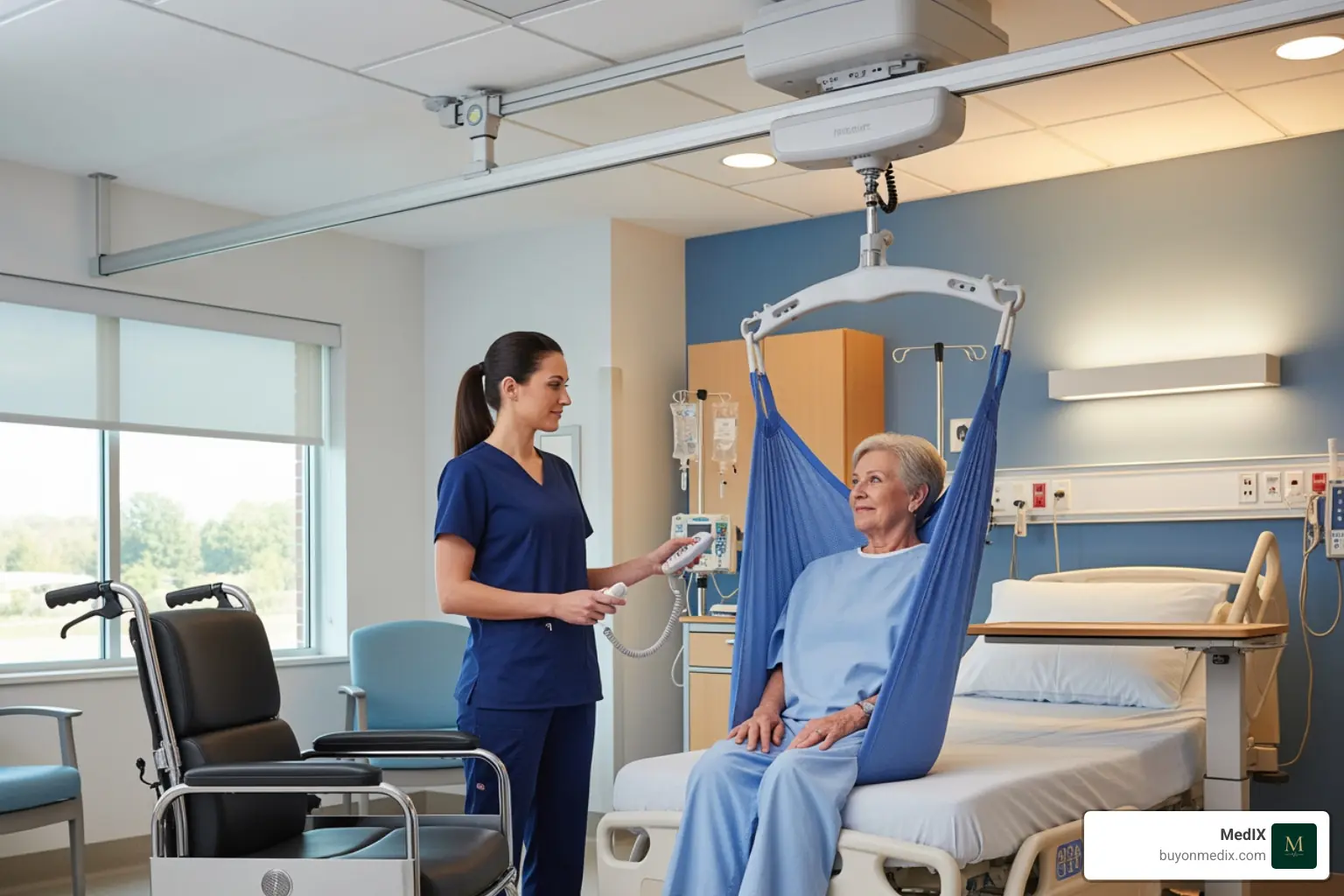
Patient lift systems are specialized medical devices designed to safely lift and transfer patients between surfaces—such as from bed to chair, chair to toilet, or floor to standing position—while protecting both patients and caregivers from injury.
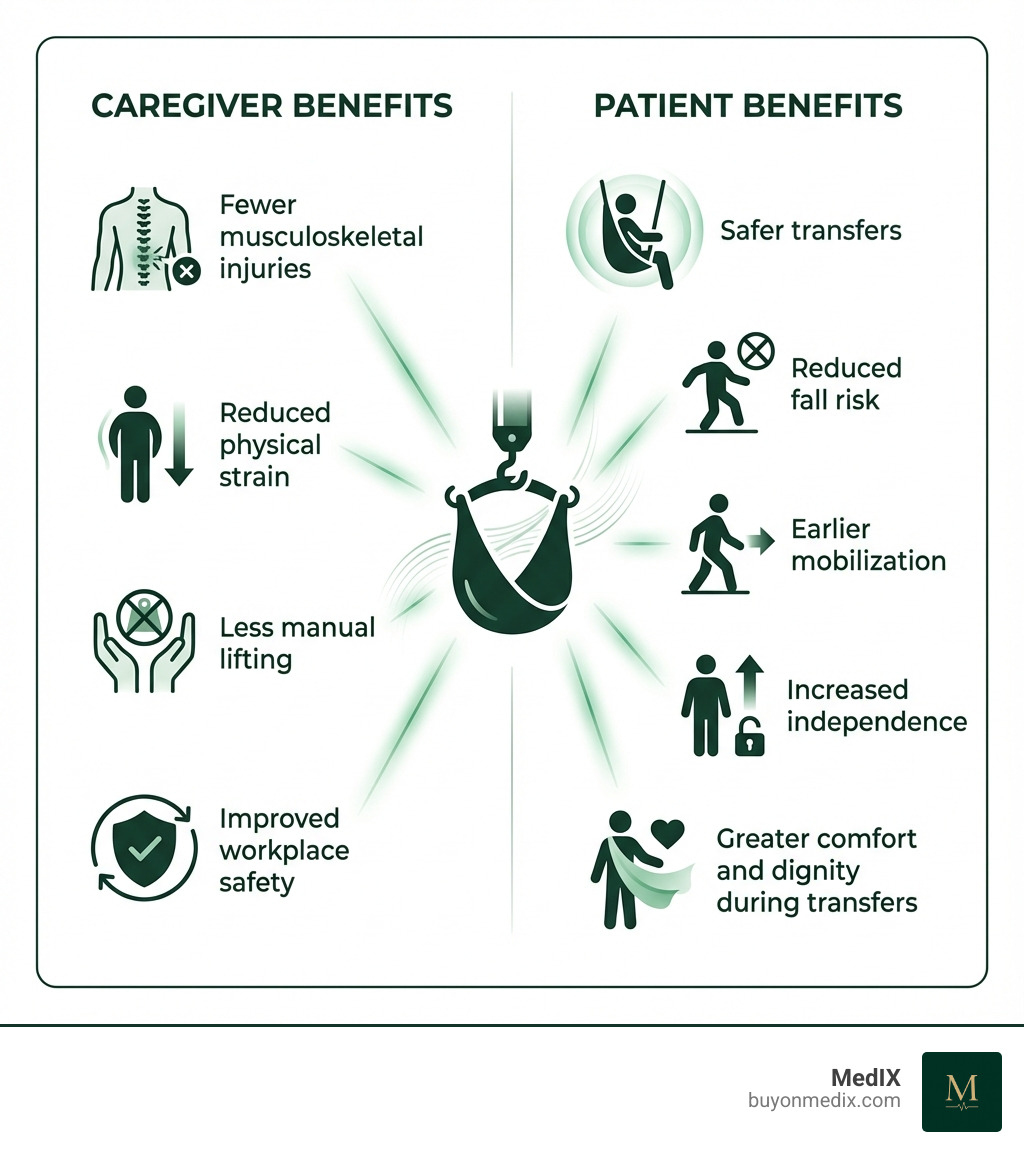
Key benefits of patient lift systems include:
- Caregiver protection: Dramatically reduces musculoskeletal injuries from manual lifting
- Patient safety: Minimizes fall risks and transfer-related injuries including head traumas and fractures
- Regulatory compliance: Helps facilities meet safe patient handling laws passed in multiple states
- Operational efficiency: Enables single-caregiver transfers for many tasks
- Patient dignity: Provides comfortable, controlled transfers that reduce anxiety
Patient lifts aren't just helpful—they're increasingly necessary. Safe patient handling laws now mandate their use in several states, and the clinical community continues to push for their adoption to reduce injury rates.
The research is clear: improper use of patient lifts can lead to severe injuries, including falls that result in head traumas, fractures, and even death. But when used correctly, these systems transform patient care by protecting everyone involved in the transfer process.
Whether you're evaluating mobile floor lifts, ceiling-mounted systems, or sit-to-stand aids, understanding the different types, safety protocols, and selection criteria is critical for healthcare facilities and procurement managers tasked with sourcing reliable equipment.
This guide will walk you through everything you need to know about modern patient lift systems—from the basic types available to the key features that matter most for your facility.
Types of Patient Lift Systems: Finding the Right Fit for Your Facility
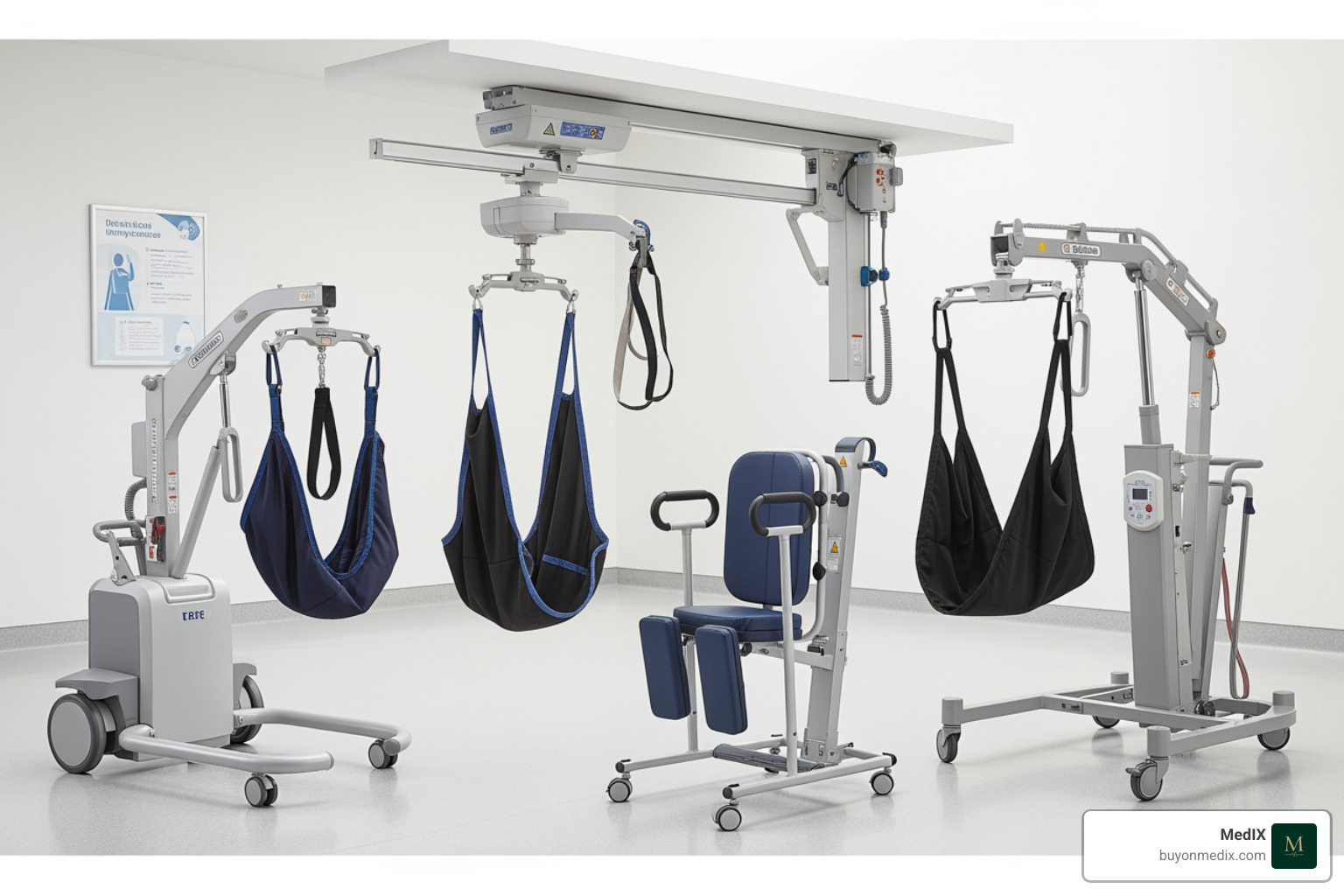
When considering patient lift systems for your facility, it’s important to understand the diverse range available. Each type is designed to address specific patient needs and environmental constraints, offering unique advantages. From highly portable units to integrated overhead systems, we'll explore the main categories.
Mobile Floor Lifts
Mobile floor lifts, often generically referred to as "Hoyer lifts," are a common sight in many healthcare settings and homes. These patient lift systems are characterized by their portability and wheeled base, allowing them to be moved between rooms as needed. They are highly versatile, capable of performing a wide range of transfers, such as from bed to chair, or from a chair to a toilet.
Mobile floor lifts can be operated via manual hydraulic operation, requiring a caregiver to pump a lever, or through electric powered operation, which uses a rechargeable battery for effortless lifting. While their versatility is a major plus, it's important to consider their space requirements as they need clear floor pathways to maneuver. Floor surface considerations are also crucial; uneven or cluttered floors can make operation challenging and unsafe.
However, mobile floor lifts can present challenges. They often require a caregiver to operate, and maneuvering them in cramped spaces, like small bathrooms, can be difficult. The manual hydraulic versions can be tiresome for caregivers, and for patients, the experience might sometimes feel less comfortable due to the movement and adjustment involved. Despite these points, their flexibility and relatively lower initial cost make them a popular choice for various settings.
Ceiling (Overhead) Lifts
For facilities seeking a more integrated and often more efficient solution, ceiling (overhead) lifts are a game-changer. These patient lift systems use fixed track systems installed directly into the ceiling, or freestanding gantry systems that don't require permanent structural changes. This design allows for seamless room-to-room transfers without ever touching the floor.
A significant benefit of ceiling lifts is their space-saving design. By eliminating the need for a wheeled base on the floor, they free up valuable floor space, making them ideal for smaller rooms or environments where clutter is a concern. This also removes issues related to maneuvering around furniture or over uneven flooring. Ceiling lifts can significantly improve bariatric patient care, with some systems supporting weights from 200kg up to an impressive 500kg (approximately 1100 lbs). The Hillrom UltraTwin overhead lift system, for example, is specifically designed for bariatric patients, providing comfortable and easily adjustable transfers.
While they offer superior ease of use and caregiver efficiency, ceiling lifts do have installation requirements. Fixed track systems need to be structurally integrated into the building, which can be a consideration during facility planning or renovation. However, once installed, some ceiling lifts can even be taken down and reinstalled in new locations, offering flexibility for future needs.
Sit-to-Stand Lifts
Sit-to-stand lifts are a fantastic option for patients who retain some patient weight-bearing ability but require assistance to stand or pivot. These patient lift systems encourage active transfers, promoting patient engagement and muscle strength. They are particularly valuable for rehabilitation use, helping patients regain mobility and independence.
These lifts are also highly useful for toileting assistance, allowing for quick and dignified transfers to and from a commode or toilet. A thorough patient assessment is crucial when considering a sit-to-stand lift to ensure the patient has the necessary upper body strength and cognitive ability to participate in the transfer.
For instance, devices like the IndeeLift PPU-S can lift individuals from the floor to full standing height (30 inches), making them suitable for those needing significant assistance to stand. Other models might lift from floor to chair height, ideal for transfers to seated surfaces. These lifts are designed to provide a safe and controlled way for patients to transition from sitting to standing, reducing the risk of falls and caregiver strain.
Specialized and Bariatric Lifts
For patients with higher weight capacities, specialized and bariatric lifts are indispensable. These patient lift systems are engineered with high weight capacity, often exceeding 500 lbs, and feature robust construction to ensure safety and stability during transfers.
Many bariatric lifts, such as the UltraTwin overhead system, incorporate dual motor systems to manage the demanding requirements of heavier patients. These dual motors allow for combined lifting capacity and often facilitate adjustable patient positioning, including tilt, for improved patient comfort and positioning during transfers.
The IndeeLift FTS-500, for example, is a professional-use lift capable of lifting up to 500 lbs from the floor to full standing height (30 inches). These specialized lifts are critical for ensuring the safety and dignity of bariatric patients while also protecting caregivers from injury, aligning with safe patient handling practices.
Ceiling Lifts vs. Mobile Floor Lifts: A Comparative Analysis
When choosing between patient lift systems, the decision often comes down to ceiling lifts versus mobile floor lifts. Both serve the fundamental purpose of safe patient transfers, but their operational characteristics, space requirements, and impact on workflow differ significantly. Let's break down the comparison.
| Feature | Ceiling Lifts | |||
|---|---|---|---|---|
| Functionality | N/A | |||
| --- | --- | --- | --- | --- |
| Functionality | Seamless transfers within defined track pathways. Can be used for specific room-to-room transfers if a multi-track system is installed. Some models allow self-transfer for patients with sufficient upper body strength. | Highly portable, can be moved between rooms and used in various locations. Versatile for bed-to-chair, chair-to-toilet transfers. Some specialty models (e.g., IndeeLift FTS-500) can lift patients directly from the floor. | ||
| Ease of Use | Generally smoother and less physically demanding for caregivers as the motor does the heavy lifting along a track. Can offer advanced features like powered traverse. | Requires manual pushing and steering by caregiver. Hydraulic models require physical pumping. Electric models are easier but still require maneuvering. Can be challenging in confined spaces. | ||
| Space Requirements | Frees up floor space as the lifting mechanism is overhead. Tracks are integrated into the ceiling or freestanding gantries. | Requires clear floor space for maneuvering the wheeled base. Can be bulky, especially in smaller rooms or bathrooms. | ||
| Installation | Requires professional installation into the ceiling structure for fixed tracks. Freestanding gantry systems offer more flexibility but still have a footprint. Can be relocated, but track systems require reinstallation. | No installation required beyond assembly. Ready to use wherever there's clear floor space. | ||
| Potential for Patient Independence | Higher potential for patient independence, especially with advanced models that allow self-transfer. Reduces reliance on caregiver presence for every move. | Limited potential for patient independence; almost always requires a caregiver for operation and maneuvering. | ||
| Caregiver Effort | Significantly reduces physical strain and manual effort. Caregivers can maintain close proximity and eye contact with the patient. | Requires considerable physical effort to push, pull, and steer, especially with heavier patients or on carpeted/uneven surfaces. | ||
| Footprint | Minimal to no floor footprint, as the system is overhead. Ideal for maximizing usable floor space. | Requires a significant floor footprint for the base and maneuvering space. Can be an obstacle in busy environments. | ||
| Structural Integration | Permanent fixed tracks integrate into the building's structure. Freestanding gantries are self-supporting. | No structural integration; completely mobile and independent of the building's infrastructure. | ||
| Cost Considerations | Higher initial investment due to installation and more complex technology. Long-term value through reduced caregiver injuries and increased efficiency. | Generally lower initial cost. Can be a cost-effective solution for facilities with budget constraints or for temporary needs. |
We often see that ceiling lifts are considered "professional strength lifting technology" due to their robust nature and ability to streamline transfers. They offer superior functionality and significantly reduce caregiver effort, leading to a smoother, safer experience for both the patient and the healthcare professional. The footprint of a ceiling lift is virtually nonexistent on the floor, which is a huge advantage in busy or small spaces.
However, the structural integration of ceiling lifts means a higher initial investment and specific installation requirements. Mobile floor lifts, while requiring more caregiver effort and floor space, offer unparalleled portability and a lower entry cost.
The best choice depends on your facility's specific needs, budget, and layout. We encourage a thorough assessment of patient mobility needs, caregiver capacity, and environmental constraints to determine the most suitable patient lift system.
Core Components and Key Considerations for Selection
Choosing the right patient lift system goes beyond merely selecting a type; it involves understanding the intricate components and crucial features that ensure safety, comfort, and efficiency. From the fabric that cradles the patient to the power that drives the lift, every detail matters.
Choosing the Right Slings and Accessories
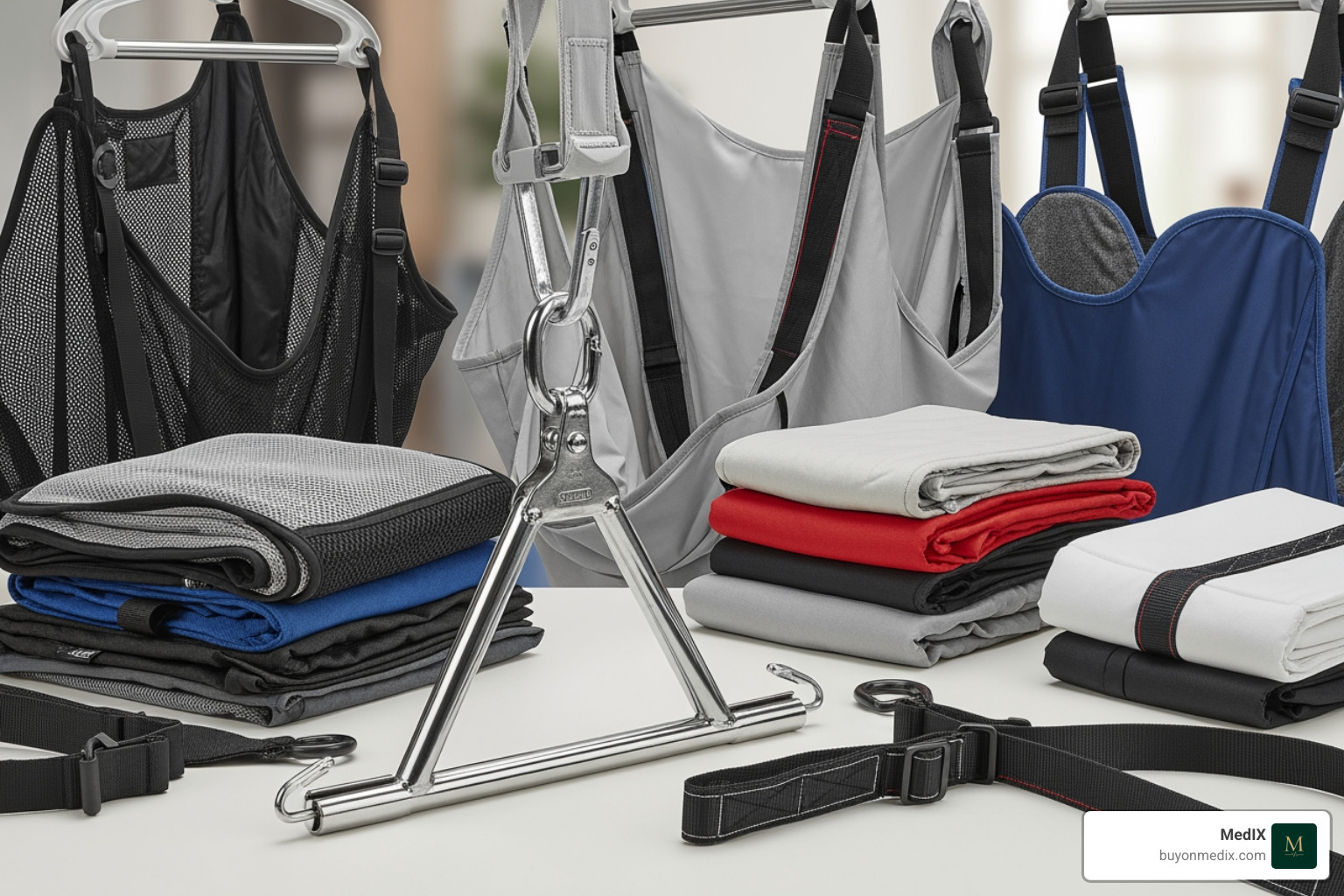
The sling is the unsung hero of any patient lift system, directly interacting with the patient and bearing their weight. Proper sling compatibility with your chosen lift is paramount for safety. Slings come in a variety of designs, each serving a unique purpose:
- Universal slings: Our go-to for general transfers, offering broad applicability.
- Hammock slings: Provide full body support, ideal for patients with limited trunk control.
- Hygiene slings: Designed for toileting and bathing, often with an open bottom.
- Positioning slings: Used for repositioning patients in bed or on a surface.
- Other specialized slings include bathing, amputee, seat, and walking harness slings.
The sling material is also important, affecting patient comfort, durability, and ease of cleaning. We always emphasize stringent sling inspection protocols. Slings should be checked before each use for any signs of wear and tear, such as fraying, holes, or damaged seams. A damaged sling must never be used, as it significantly increases the risk of patient falls and injury.
Equally important are the spreader bars, which connect the sling to the lift. 2-point spreader bars are common, while 4-point spreader bars offer broader support and can improve patient comfort by distributing weight more evenly. Some spreader bars feature a bow shape, ensuring the patient's head is clear and their vision unobstructed.
Essential Features of Modern patient lift systems
Modern patient lift systems are equipped with features designed to maximize safety and ease of use. One of the first considerations is weight capacity. We see models ranging from around 400 lbs (like the IndeeLift PPU and PPU-S devices) to heavy-duty bariatric lifts capable of handling over 500 lbs (such as the IndeeLift FTS-500 or certain ceiling hoists which can go up to 500kg). Always ensure the lift's capacity safely exceeds the patient's weight.
Most electric lifts operate on rechargeable batteries, offering cordless convenience. It's crucial to have smart, exchangeable batteries or chargers to prevent downtime. A vital safety feature is the manual lowering function, which allows caregivers to gently lower a patient in the event of a power failure. Emergency stop buttons are also standard, providing an immediate halt to operation if needed. For mobile lifts, portability is key, with designs that are easy to maneuver and store.
Technological Advancements in patient lift systems
Technology continues to transform patient lift systems, enhancing both performance and safety. We're seeing sophisticated features that streamline operations and improve the patient experience:
- Integrated patient scales: Some lifts now incorporate scales, allowing for weight measurements during transfers, saving time and additional transfers.
- Smart service monitoring: Advanced control systems can provide intelligent service data, offering insights into usage patterns and maintenance needs.
- Powered Dynamic Positioning Systems (PDPS): Features like the one found in the Arjo Maxi Move allow caregivers to reposition the patient within the sling with minimal manual handling, improving precision and reducing strain.
- Dual controls: Having controls on both the mast and the hand control, as seen in the Maxi Move, allows caregivers to maintain close proximity and eye contact with the patient throughout the transfer.
- Bluetooth connectivity: Some systems, like LINAK's LIFT solutions, integrate Bluetooth for advanced control and data management, alongside features like turbo boost and parallel actuator programming for efficient and safe transfers. These innovations make our work not only safer but also more efficient.
Safety, Compliance, and Maintenance: A Guide for Healthcare Facilities
Ensuring the safe operation and longevity of patient lift systems is paramount in any healthcare environment. Neglecting safety protocols or maintenance can have severe consequences, leading to patient injury or caregiver strain. At MedIX, we understand that robust safety, compliance, and maintenance protocols are non-negotiable.
Mitigating Risks and Ensuring Patient Safety
The primary goal of using patient lift systems is to improve safety, yet improper use can introduce significant risks. As stated in the research, patient falls from these devices have resulted in severe injuries including head traumas, fractures, and even deaths. To mitigate these risks, we emphasize several critical steps:
- Pre-transfer safety checks: Before every transfer, a thorough check of the lift and sling is essential. This includes inspecting the sling for wear, ensuring all fasteners are secure, and checking battery levels.
- Patient assessment: Always assess the patient's physical capabilities, medical condition, and mental status. Is the patient calm or agitated? Can they follow instructions? This informs the type of lift and sling to use.
- Clear communication: Effective communication between the caregiver and patient, and between multiple caregivers if required, ensures a coordinated and safe transfer.
- Weight limits: Never exceed the weight limitations of the lift or the sling.
FDA and CDC Best Practices for Safe Operation
To guide healthcare facilities, the FDA and CDC provide comprehensive recommendations for the safe operation of patient lift systems. We strongly advocate for adherence to these guidelines:
- Proper caregiver training: All caregivers must receive thorough training and understand how to operate the specific lift system they are using. This includes knowing emergency procedures and understanding the lift's unique features.
- Matching sling to lift and patient: The sling must be compatible with the specific lift and appropriate for the patient's weight and condition. Inspect slings for any wear and tear; if damaged, do not use them.
- Securing all fasteners: Ensure all clips, latches, and hanger bars are securely fastened before initiating any lift.
- Locking wheels: Always lock the wheels of any receiving device (e.g., wheelchair, bed) before a transfer to prevent unintended movement.
- Base stability: Keep the base (legs) of mobile patient lifts in the maximum open position for optimal stability.
- Patient positioning: Position the patient’s arms within the sling straps and ensure they are calm and cooperative during the transfer.
- Manufacturer instructions: Always consult the manufacturer's instructions for specific use guidelines, maintenance, and troubleshooting.
We encourage you to review the FDA's best practices for safe lift use and refer to the CDC guidance on Safe Patient Handling and Mobility for comprehensive information.
Installation and Maintenance Protocols
Proper installation and ongoing maintenance are crucial for the safe and efficient operation of patient lift systems.
- Ceiling track installation: For ceiling lifts, professional ceiling track installation is critical. These systems must be securely mounted into the building's structure, and their placement should optimize patient flow.
- Floor lift assembly: Mobile floor lifts typically require assembly, which should be performed according to manufacturer specifications.
- Regular inspection checklists: Implement regular inspection checklists for all lift components, including the mast, boom, spreader bar, and battery. This helps identify potential issues before they become hazards.
- Sling care instructions: Slings require specific care. They should be disinfected after every use, following manufacturer washing instructions. Avoid bleaching or machine drying; always air dry slings. Replace any sling showing signs of wear immediately.
- Disinfection procedures: Develop and adhere to clear disinfection procedures for the lift equipment itself, especially between patient uses, to prevent cross-contamination.
By adhering to these rigorous safety, compliance, and maintenance standards, we ensure that your patient lift systems operate reliably, protecting both your patients and your invaluable caregiving staff.
The Business Case: Cost Considerations and ROI for Patient Lift Equipment
Investing in patient lift systems is more than just a purchase; it's a strategic decision that impacts patient care, caregiver well-being, and your facility's bottom line. While there's an initial outlay, the long-term value and return on investment (ROI) can be substantial.
Analyzing the Initial Investment
The initial investment factors for patient lift systems can vary widely based on the type, features, and scale of implementation:
- Lift type costs: Mobile floor lifts generally have a lower initial cost compared to ceiling-mounted systems, which involve more complex installation. Specialized bariatric lifts, with their higher weight capacities and robust construction, will also command a higher price point.
- Installation fees: For ceiling lifts, professional installation is a significant cost factor, as it involves structural integration. Freestanding gantry systems might reduce installation complexity but still require careful setup.
- Accessory costs: Don't forget the cost of slings, spreader bars, and other accessories. These are often purchased separately and need to be regularly replaced or maintained.
- Training expenses: Proper caregiver training on the safe and efficient use of the new equipment is crucial and should be factored into the overall budget. While this might seem like an added cost, it's an investment in safety and compliance.
Calculating the Return on Investment (ROI)
The ROI for patient lift systems extends beyond immediate savings and encompasses improvements in safety, efficiency, and patient outcomes.
- Reduced workers' compensation claims: Manual patient handling is a leading cause of musculoskeletal injuries among healthcare workers. By implementing patient lift systems, facilities can significantly reduce these injuries, leading to fewer workers' compensation claims, lower associated costs, and less lost work time.
- Decreased staff turnover: A safer work environment contributes to higher job satisfaction and decreased staff turnover. Caregivers who feel valued and protected are more likely to stay, reducing recruitment and training costs.
- Shorter patient hospital stays: Safe patient handling equipment, particularly overhead lifts, can help mobilize patients earlier. This early mobilization can mitigate complications from immobility, reduce falls, and ultimately contribute to shorter patient hospital stays, freeing up beds and improving patient flow.
- Increased operational efficiency: Many modern patient lift systems, such as the Arjo Maxi Move, are designed for single-caregiver operation, leading to increased operational efficiency. This means tasks can be completed with fewer staff members, optimizing resource allocation. The investment in mechanical lifting equipment can offer immediate returns by requiring fewer personnel and less time to operate compared to manual lifting.
While there is a clear financial commitment upfront, the benefits—from protecting your most valuable asset (your staff) to enhancing patient care and streamlining operations—create a compelling business case for investing in high-quality patient lift systems.
Conclusion: Investing in a Safer Future for Patients and Caregivers
Modern patient lift systems are truly the gentle giants of healthcare, silently working to improve safety, improve efficiency, and preserve dignity for both patients and caregivers. We've explored the diverse types available, from portable floor lifts to integrated ceiling systems, and digd into the critical components like slings and spreader bars. We've also highlighted the transformative power of technological advancements and underscored the absolute necessity of rigorous safety, compliance, and maintenance protocols.
The evidence is clear: investing in these systems is not just about meeting regulatory requirements; it's about fostering a safer, more humane environment for everyone. By reducing caregiver injuries and patient falls, we contribute to a healthier workforce and better patient outcomes, ultimately leading to a more efficient and compassionate healthcare system.
At MedIX, we are committed to connecting healthcare facilities with the highest quality, certified medical equipment. We believe that informed choices lead to the best outcomes.
We invite you to explore a comprehensive range of certified patient lift systems on the MedIX marketplace to find the perfect solutions for your facility's unique needs. Together, we can build a safer future for patients and caregivers worldwide.

Expert voices
Insights from leaders transforming medical equipment procurement


More from our blog
Discover the latest trends in medical technology and procurement
Stay ahead of medical technology
Get the latest insights, research, and market updates delivered straight to your inbox
Ready to transform your procurement
Discover how MedIX can streamline your medical equipment sourcing process