Transforming medical equipment procurement globally

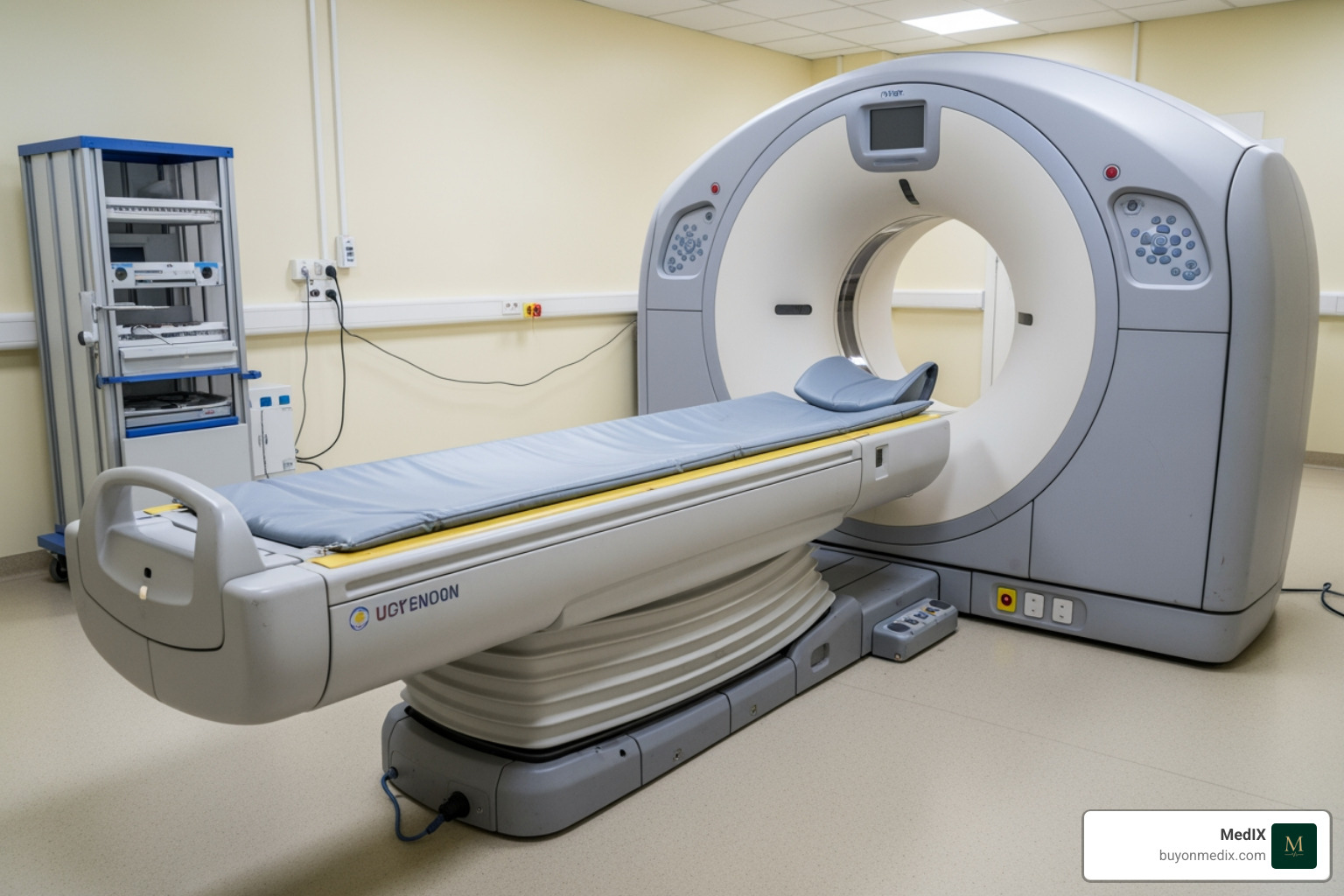
Why Used CT Scanners Are a Smart Investment for Healthcare Facilities
A used CT scanner can deliver the same diagnostic imaging quality as new equipment at 50-80% lower cost. For healthcare institutions managing tight budgets while maintaining high standards of care, refurbished CT systems offer a proven path to advanced imaging without the million-dollar price tag.
Quick Answer: Used CT Scanner Basics
| Aspect | What You Need to Know |
|---|---|
| Cost Range | $35,000 - $800,000 (vs. $150,000 - $2.5M new) |
| Key Metric | Tube life measured in scan seconds or mAs |
| Slice Options | 16-slice, 64-slice, 128-slice, 160-slice+ |
| Top Brands | GE, Siemens, Philips, Canon/Toshiba |
| Essential Certification | ISO 13485, ACR accreditation |
| Typical Warranty | 1 year full warranty on certified refurbished units |
New CT scanners can cost up to $2.5 million. Used systems start as low as $35,000. That's not just a price difference—it's the gap between accessible diagnostic imaging and budget paralysis for many facilities.
The secondary market for CT scanners has matured significantly. Refurbished systems now come with rigorous multi-point inspections, replaced components, and warranties that match or rival new equipment. According to marketplace data, a 2018 Siemens Perspective 128-slice scanner with only 716,030 scan seconds on its original tube can perform like new equipment while costing a fraction of the price.
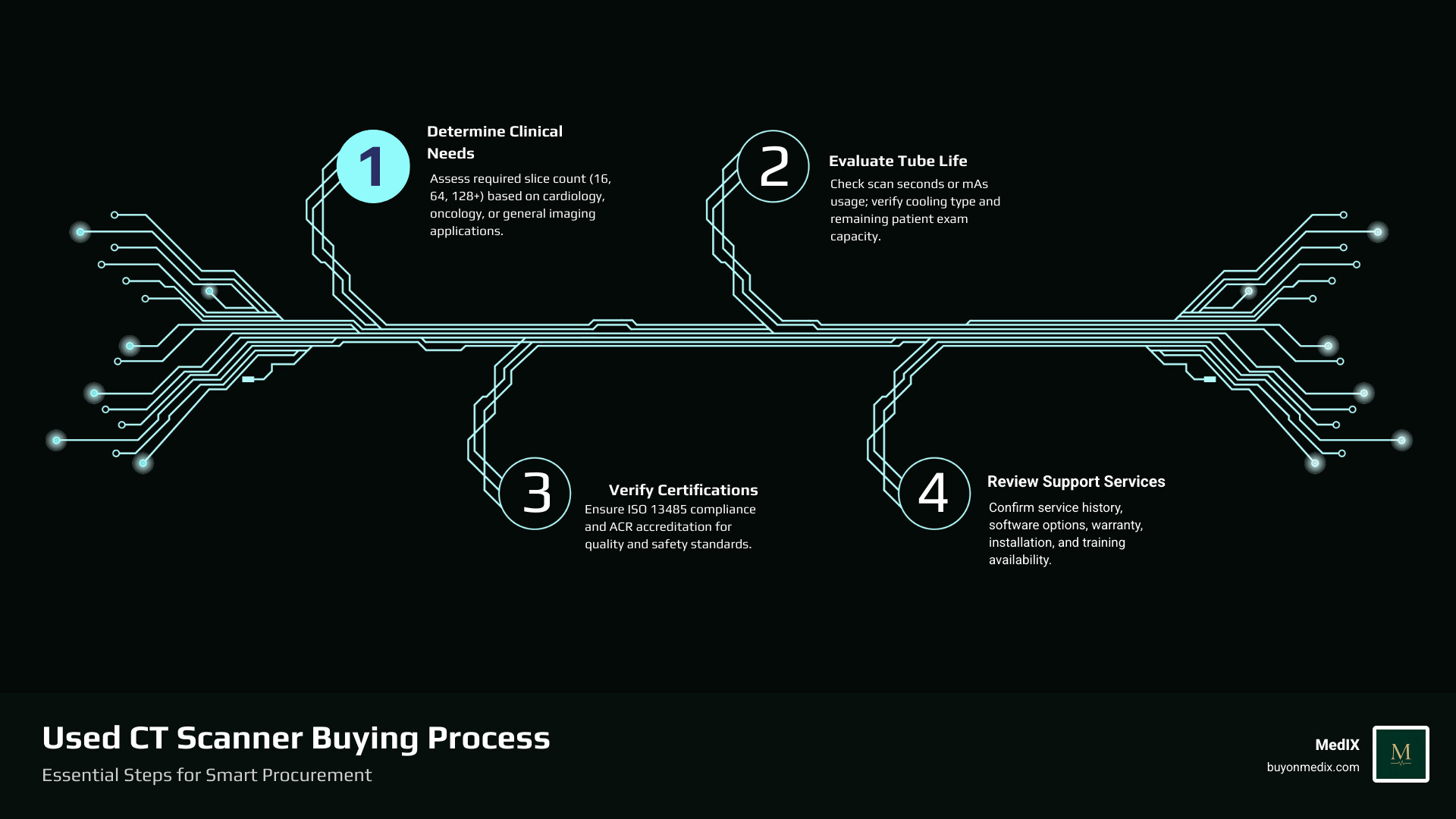
But buying used isn't just about finding the lowest price. It's about understanding tube life, verifying service history, evaluating slice counts for your clinical needs, and ensuring proper certification. The difference between a smart investment and an expensive mistake often comes down to knowing what questions to ask.
Used CT scanner word list:
Benefits of Investing in a Used CT Scanner
When we talk about a used CT scanner, we aren't talking about a dusty relic from a bygone era. We are talking about high-performance medical technology that has simply "lived" somewhere else first. The advantages of choosing pre-owned or refurbished equipment over brand-new models are substantial, touching on financial, operational, and even environmental factors.
Massive Cost Savings and ROI
The most obvious benefit is the price tag. New CT scanners typically range from $150,000 to $2,000,000 (and sometimes up to $2.5 million for high-end 640-slice systems). In contrast, used systems offer budget-friendly options starting as low as $35,000 and topping out around $800,000 for very recent, high-spec models.
By saving 50% to 80% on the initial purchase, a clinic can achieve a much faster Return on Investment (ROI). This allows facilities to allocate funds to other critical areas, such as hiring specialized staff or upgrading their clinical chemistry analyzers.
Sustainability and the Environment
In an age where "green" is the new gold, buying a used CT scanner is a major win for sustainability. Manufacturing a new scanner requires a massive amount of raw materials and energy. By refurbishing and reusing existing gantries and components, we significantly reduce electronic waste. It’s a way to give a second life to a machine that still has hundreds of thousands of scans left in it.
Reliability and Proven Performance
Many buyers fear that "used" means "unreliable." In reality, used scanners often come with a comprehensive service history that proves their stability. Unlike a brand-new model that might have "first-generation" software bugs, a refurbished unit from a reliable manufacturer like GE, Siemens, or Philips has already been vetted in a clinical environment. For more insights on finding trustworthy equipment, check out our guide on Reliable Medical Sources.
Understanding Pricing and Slice Counts
One of the first questions we hear is: "How many slices do I actually need?" In CT, "slices" refer to the number of cross-sectional images the scanner can acquire in a single rotation.
The Slice Count Breakdown
- 16-Slice Scanners: These are the workhorses of urgent care centers and smaller clinics. They are excellent for general diagnostics, bone scans, and basic chest/abdomen imaging. Prices often range from $35,000 to $60,000.
- 64-Slice Scanners: This is the industry standard for most hospitals. They offer high-speed imaging and are capable of cardiac studies and detailed vascular work. A used 64-slice model typically costs between $90,000 and $130,000.
- 128 to 160-Slice Scanners: These are for advanced applications, including high-end cardiology and neurology. They provide incredible detail and very fast scan times, which is great for pediatric patients or emergency trauma.
- 256 to 640-Slice Scanners: These are top-tier systems often found in research universities or major heart centers. Used versions of these can still command prices of $250,000 and upwards.
Price Factors Beyond the Gantry
When comparing medical equipment price comparison data, the "sticker price" is influenced by:
- Age: A 2010 model will be significantly cheaper than a 2021 model.
- Tube Usage: The X-ray tube is the most expensive consumable part (more on this later).
- Software Packages: Advanced reconstruction software or cardiac gating adds value.
- Cooling Type: Air-cooled systems are often more compact and affordable to install than water-cooled systems.
For more details on navigating these choices, see our article on Hospital Equipment Procurement and explore more info on Radiology Imaging.
Key Evaluation Metrics for a Used CT Scanner
Evaluating a used CT scanner is a bit like buying a used car, but instead of checking the odometer for miles, we check the X-ray tube for "scan seconds" or "mAs."
Evaluating the Used CT Scanner X-Ray Tube
The X-ray tube is the heart of the machine. It generates the radiation needed for imaging, and it eventually wears out.
- Tube Usage: Look for the total "scan seconds" or "mAs" (milliampere-seconds). A "low-use" tube is a goldmine. For example, a 2018 Siemens Perspective with only 716,030 scan seconds is considered to be in "like new" condition.
- Replacement Costs: A new tube can cost $50,000 to $150,000. If you buy a scanner with a tube near the end of its life (typically around 130,000 scans or a certain mAs threshold), you must factor that replacement into your budget.
- Recent Replacements: Sometimes, you’ll find an older gantry (e.g., 2012) with a brand-new tube installed in 2024. This is often an excellent deal!
Software and Connectivity for your Used CT Scanner
A scanner is only as good as the software that processes the data. When browsing a medical equipment marketplace, verify the following:
- DICOM Compatibility: Essential for sending images to your PACS (Picture Archiving and Communication System).
- Dose Reduction (AIDR 3D / ASIR): These software options allow you to get high-quality images using less radiation, which is a major safety selling point for patients.
- Cardiac Gating: Necessary if you plan to perform heart scans.
- CE Marking: Ensure the device meets safety standards, especially if you are in the European market. Read more about CE Marked Devices.
The Refurbishment Process and Quality Standards
Not all "used" scanners are created equal. There is a big difference between "used" (as-is) and "refurbished."
The Multi-Point Inspection
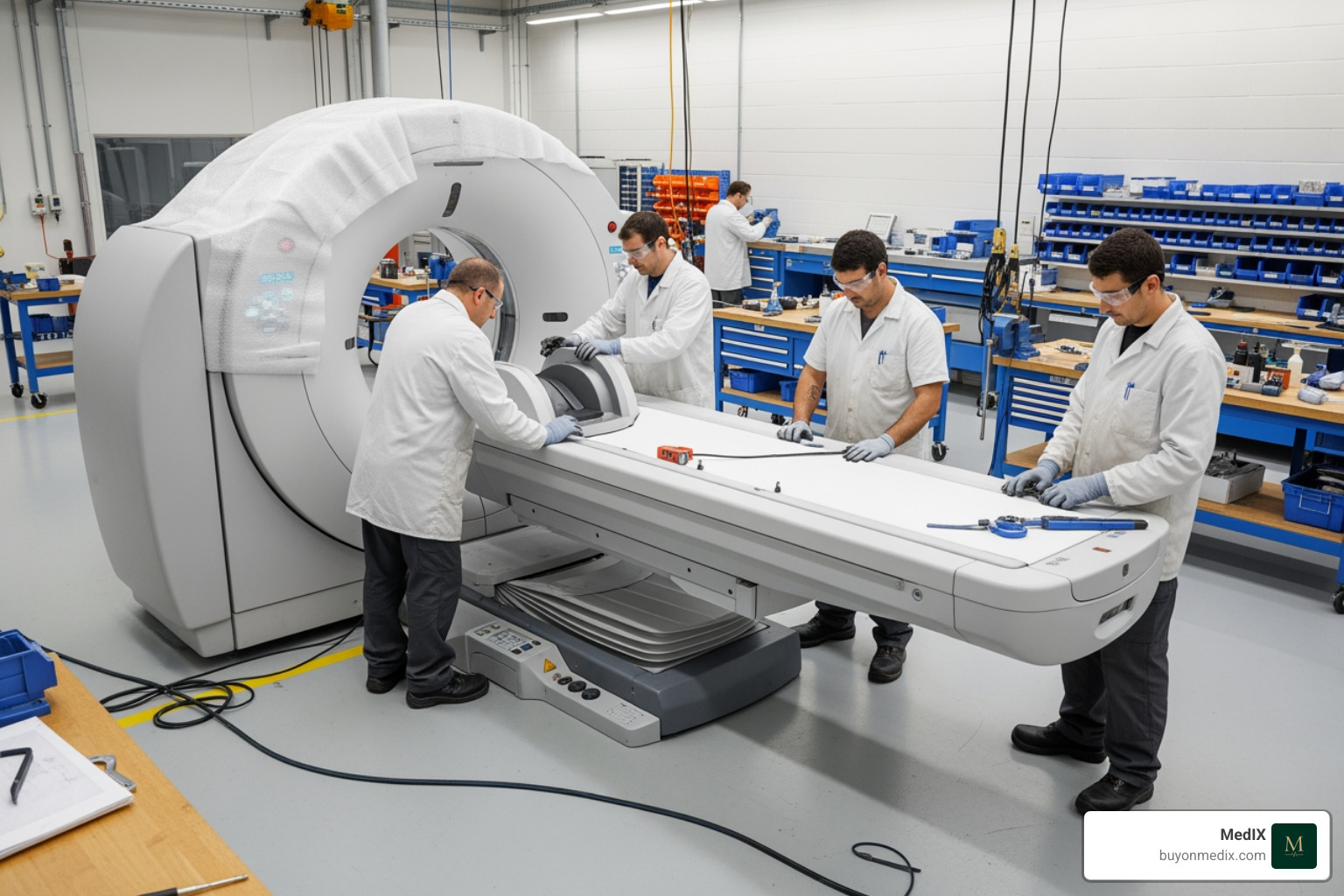
A true refurbishment process involves a factory-trained engineer taking the machine apart. They perform:
- Cosmetic Refinishing: Sanding and repainting the covers so the machine looks brand new in your suite.
- Component Replacement: Replacing worn belts, bearings, and brushes.
- Calibration: Ensuring the detectors and tube are perfectly aligned to OEM (Original Equipment Manufacturer) specifications.
- Testing: Running thousands of phantom scans to ensure image quality is perfect.
Certifications to Look For
To ensure you are getting certified medical equipment, verify that the refurbishing facility holds ISO 13485 certification. This is the gold standard for medical device quality management. Additionally, the scanner should be capable of ACR (American College of Radiology) accreditation, which is often required for reimbursement. For a deep dive into these standards, check our CE Certified Medical Device Complete Guide.
Essential Services and Support for Pre-Owned Equipment
Buying the machine is only half the battle. You also need to get it through the door and keep it running.
Logistics and Installation
CT scanners are heavy, delicate, and full of lead shielding. You can't just hire any moving company. You need specialists who understand medical equipment logistics. This includes:
- De-installation: Safely removing the unit from its original site.
- Rigging: Using cranes or specialized lifts to move the gantry.
- Site Planning: Ensuring your room has the correct power supply and radiation shielding.
Training and Service Contracts
Your staff needs to know how to use the specific software interface of a GE vs. a Siemens. Most reputable vendors include "Applications Training" as part of the sale. Furthermore, we highly recommend a service contract. While on-site repairs for refurbished equipment can be half the cost of OEM services, having a 24/7 technical hotline and a guaranteed response time is vital for patient care.
Mobile CT and Rentals
If your facility is undergoing a renovation or you want to "test the waters" before a permanent purchase, mobile CT rental trailers are a fantastic alternative. These are fully functional suites on wheels that can be parked in your lot and connected to your hospital's network.
Frequently Asked Questions about Used CT Scanners
How much does a used CT scanner cost compared to a new one?
As a rule of thumb, a used CT scanner costs about 30% to 50% of the price of a new one if it is "manufacturer refurbished," and as little as 20% if it is a well-maintained used unit from a private seller. For example, a new 64-slice scanner might be $500,000, while a refurbished one could be $150,000.
What is the typical lifespan of a refurbished CT scanner tube?
Most CT tubes are rated for a certain number of "scan seconds" or "slices." On average, a tube lasts about 130,000 to 150,000 scans, or roughly 1 to 3 years depending on patient volume. When buying used, always ask for the "tube head start" or "mAs" report to see exactly how much life is left.
Are financing and trade-in programs available for used equipment?
Yes! Many marketplaces offer flexible financing and leasing options. You can also often trade in your old, lower-slice scanner to offset the cost of an "upgrade" to a 64 or 128-slice system. This is a common way for growing clinics to modernize their imaging departments.
Conclusion
Navigating the market for a used CT scanner doesn't have to be overwhelming. By focusing on the "big three"—tube life, slice count, and refurbishment quality—you can secure a high-end diagnostic tool that saves your facility hundreds of thousands of dollars.
At MedIX, we specialize in making this process seamless. Our global B2B marketplace uses AI-matching to connect you with certified suppliers who meet rigorous compliance checks. Whether you need a 16-slice workhorse for a rural clinic or a 128-slice powerhouse for a busy hospital, we ensure verified equipment and transparent transactions worldwide.
Ready to upgrade your imaging capabilities without breaking the bank? Explore our Hospital Procurement Platform or visit our page For Buyers & Sellers to see how we can simplify your next equipment purchase. From medical device logistics to final installation, we are here to support your mission of providing world-class patient care.

Expert voices
Insights from leaders transforming medical equipment procurement


More from our blog
Discover the latest trends in medical technology and procurement
Stay ahead of medical technology
Get the latest insights, research, and market updates delivered straight to your inbox
Ready to transform your procurement
Discover how MedIX can streamline your medical equipment sourcing process