Transforming medical equipment procurement globally

Why Medical Equipment Logistics Matters for Healthcare Success
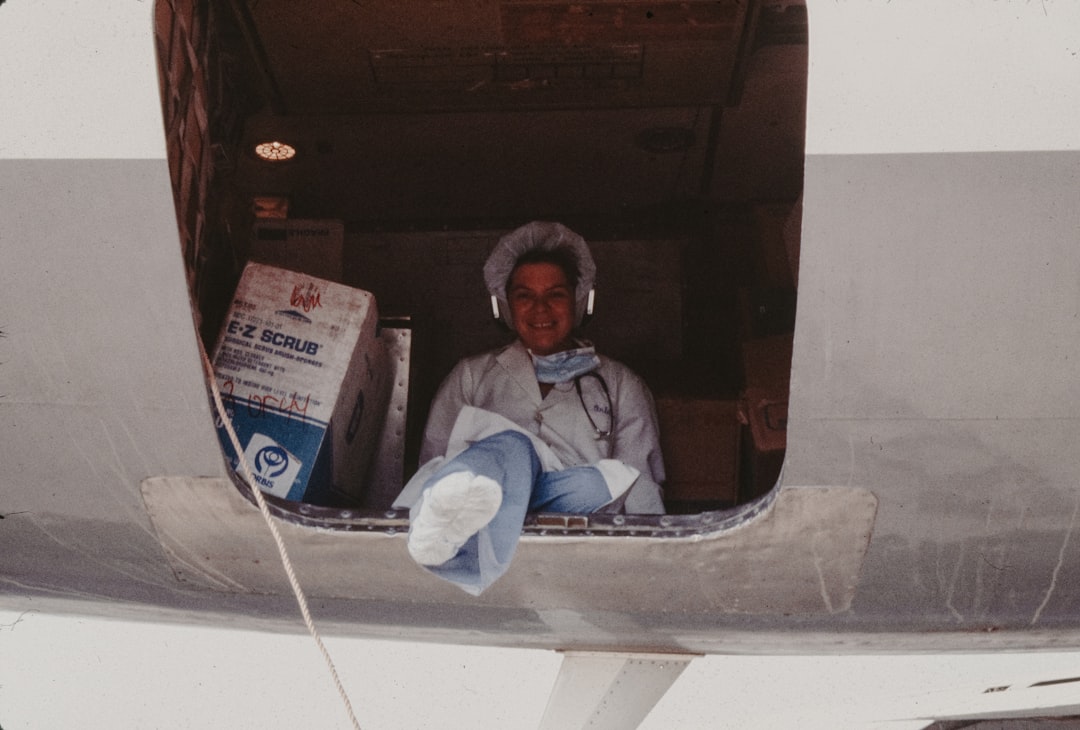
Medical equipment logistics is the specialized management of transporting, storing, and delivering medical devices and equipment from manufacturers to healthcare facilities and patients. It encompasses everything from simple consumables like syringes to complex diagnostic machines like MRI scanners, requiring expert handling, regulatory compliance, and precise coordination.
What Medical Equipment Logistics Includes:
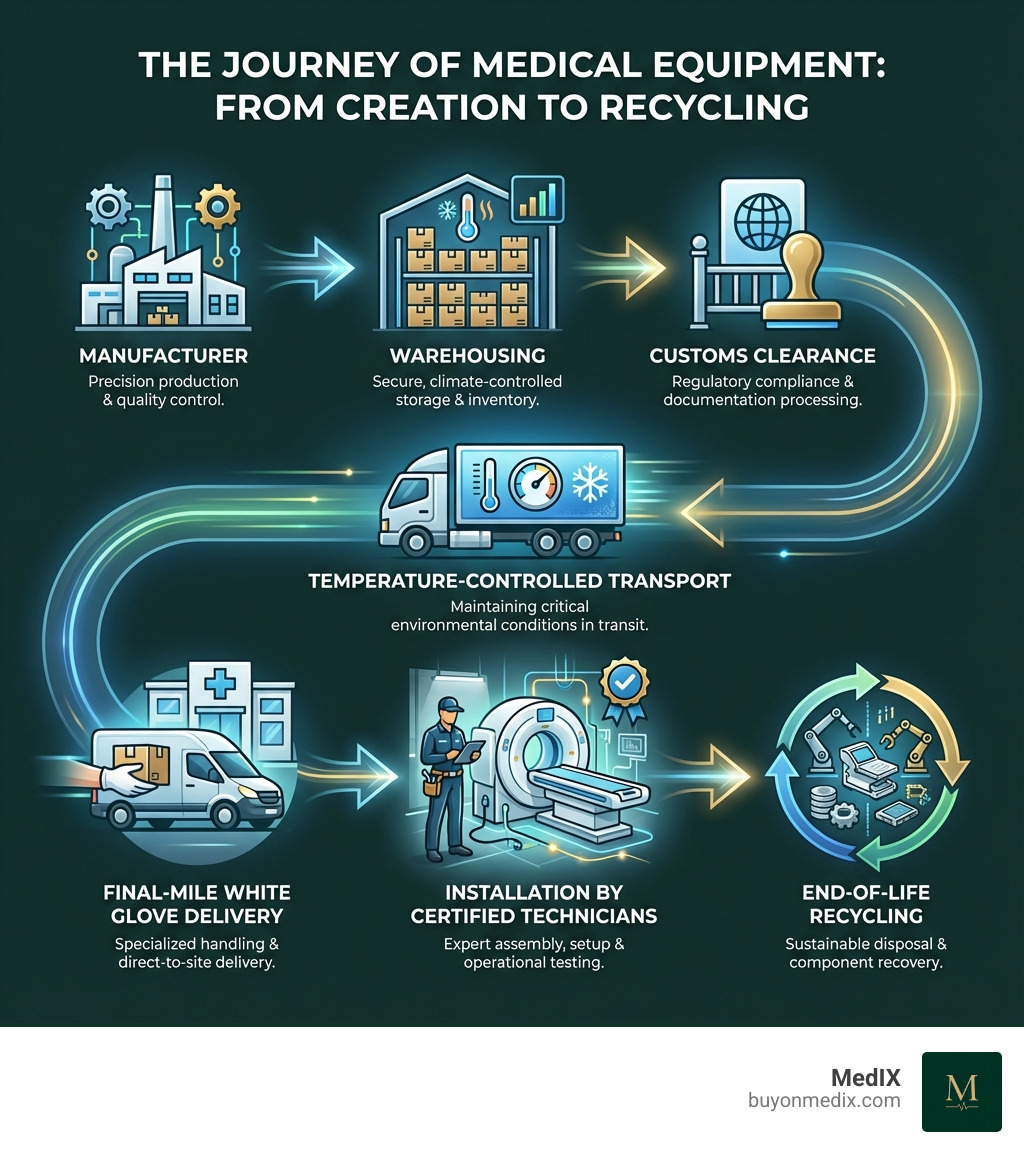
- Specialized Transport - Temperature-controlled shipping, white glove delivery, and custom handling for sensitive devices
- Regulatory Compliance - Meeting FDA, ISO, and GMP standards across borders
- Installation Services - On-site assembly, setup, and testing by certified technicians
- Storage & Distribution - Climate-controlled warehousing with serialization and lot tracking
- Reverse Logistics - Returns, recalls, de-installation, and sustainable disposal
Medical devices have the potential to save or change a life. From arthroscopy scopes for surgical procedures to ventilators that support critical patients, these devices must reach their destination safely and on time. Yet the supply chain connecting manufacturers to healthcare providers is remarkably complex.
The stakes couldn't be higher. A single error in transporting medical equipment can lead to patient safety risks, significant financial losses, or operational downtime at healthcare facilities. Specialized devices like CT scanners and dialysis machines require delicate handling, precise temperature control, and meticulous documentation at every step.
For procurement managers at global healthcare institutions, navigating this complexity means juggling supplier verification, international compliance requirements, customs clearance across 220+ countries, and coordinating with logistics partners who understand the unique demands of healthcare.
This guide walks you through the essential components of medical equipment logistics—from understanding core challenges to optimizing your supply chain with technology and specialized partners.
The Core Challenges of Transporting Medical Equipment
Transporting medical equipment isn't like shipping ordinary cargo. It's a high-stakes environment where every detail matters. The precision required is paramount, as even the smallest error can have far-reaching consequences.
At the heart of these challenges is the inherent nature of the cargo itself: it's often life-saving, extremely valuable, and incredibly sensitive. Imagine a hospital waiting for a critical MRI machine, or a patient needing a specific implant. Delays or damage aren't just inconvenient; they can lead to significant financial losses, operational downtime for healthcare facilities, and, most critically, patient safety risks. This is why medical equipment logistics demands a level of care and expertise far beyond standard freight.
The equipment itself presents unique problems. Many medical devices are fragile and highly sensitive to environmental conditions. They require specialized handling, from delicate loading and unloading to secure bracing during transit. Large, intricate pieces of equipment like diagnostic imaging machines or surgical robots can be cumbersome and difficult to maneuver. These items are not only physically challenging to transport but also represent substantial investments, making their safe passage a top priority.
Environmental control is another critical factor. Many medical devices, components, or accompanying reagents demand strict temperature and humidity control. A slight deviation can compromise their efficacy or even render them unusable. This necessitates specialized vehicles and storage facilities that can maintain specific climate conditions throughout the entire journey. Beyond environmental factors, security and theft prevention are crucial, given the high value and critical nature of the items. Maintaining a secure chain of custody—knowing exactly where a device is, who has handled it, and under what conditions, from origin to destination—is non-negotiable. This meticulous tracking and documentation ensure accountability and prevent tampering or loss.
Navigating a Complex Regulatory Landscape
Perhaps one of the most daunting aspects of medical equipment logistics is the intricate web of regulations governing medical devices. Unlike consumer goods, medical equipment is subject to strict oversight by health authorities worldwide. This includes compliance with diverse standards such as:
- FDA regulations: In the United States, the Food and Drug Administration sets stringent requirements for medical device manufacturing, labeling, and distribution.
- ISO standards: International Organization for Standardization (ISO) certifications, such as ISO 13485 for medical device quality management systems, are often prerequisites for market access and demonstrate a commitment to quality.
- Good Manufacturing Practice (GMP): These guidelines ensure that products are consistently produced and controlled according to quality standards appropriate for their intended use.
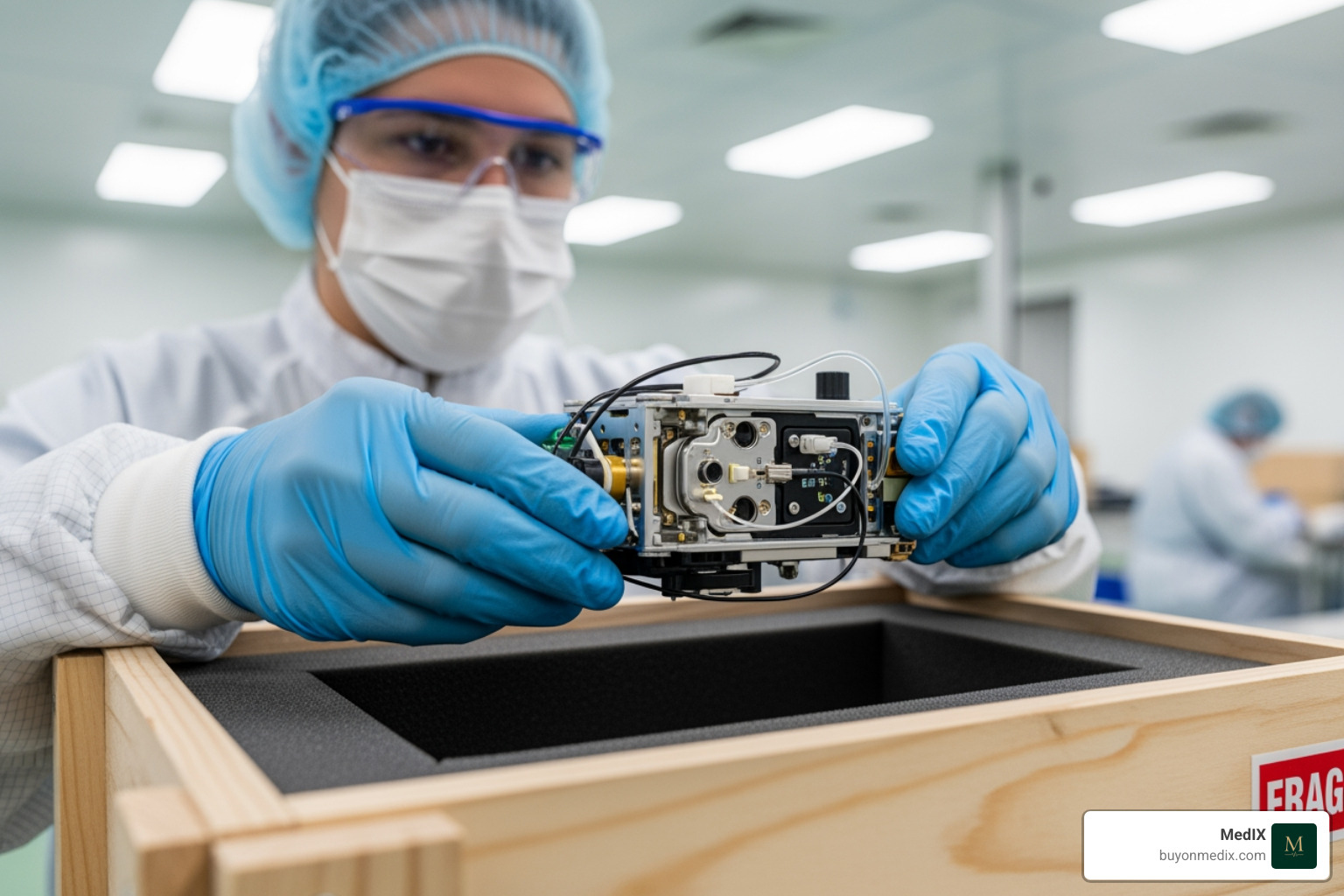
Beyond these, each country or region may have its own specific regulatory demands. Achieving international compliance means navigating a labyrinth of paperwork, certifications, and inspections. This requires robust documentation practices, ensuring every step of the logistics process is recorded and auditable. Furthermore, effective Quality Management Systems (QMS) are essential to ensure consistent adherence to these regulations, preventing costly delays, fines, or even product recalls. Our rigorous compliance checks at MedIX are designed to help streamline this complex process.
Handling Diverse and High-Value Devices
The term "medical equipment" covers an incredibly broad spectrum of devices, each with its own unique logistical requirements. Consider the sheer variety:
- Diagnostic imaging machines: MRIs, CT scanners, X-ray machines are often massive, extremely heavy, fragile, and require specialized rigging and environmental controls.
- Surgical tools: From arthroscopy scopes to robotic surgical systems, these items are precise, high-value, and often require sterile handling.
- Lab equipment: Centrifuges, analyzers, and microscopes are sensitive to vibration and temperature.
- Implants: Knee and hip replacements, pacemakers, and other implantable devices require meticulous inventory management, serialization, and often temperature-controlled storage.
- Ventilators and Dialysis machines: Critical life-support equipment that must be delivered and installed correctly and promptly.
- Consumables: Even seemingly simple items like test kits, oxygen meters, syringes, and blood collection tubes require careful handling, lot tracking, and often specific storage conditions to maintain their efficacy.
The evolving definition of medical devices further complicates matters, now blurring to encompass wearable technology like smartwatches and activity trackers. While perhaps not as physically challenging to transport as an MRI, these still require secure, compliant distribution channels. Handling this diversity means logistics providers must be adaptable, equipped with specialized tools, and staffed by experts who understand the nuances of each device type.
Key Services in Medical Equipment Logistics
To overcome the challenges outlined above, a specialized set of services has emerged within the medical equipment logistics sector. These services are designed to ensure that every device, from a small implant to a large diagnostic machine, reaches its destination safely, compliantly, and in perfect working order.
At the core, these services include specialized transport solutions custom to the unique needs of medical cargo. This often involves vehicles equipped with air-ride suspension to cushion delicate instruments, climate control systems, and advanced security features. Beyond simply moving items, logistics providers often offer final-mile delivery, which means not just dropping a package at the curb, but delivering it directly to the hospital department, clinic room, or even patient's home where it's needed.
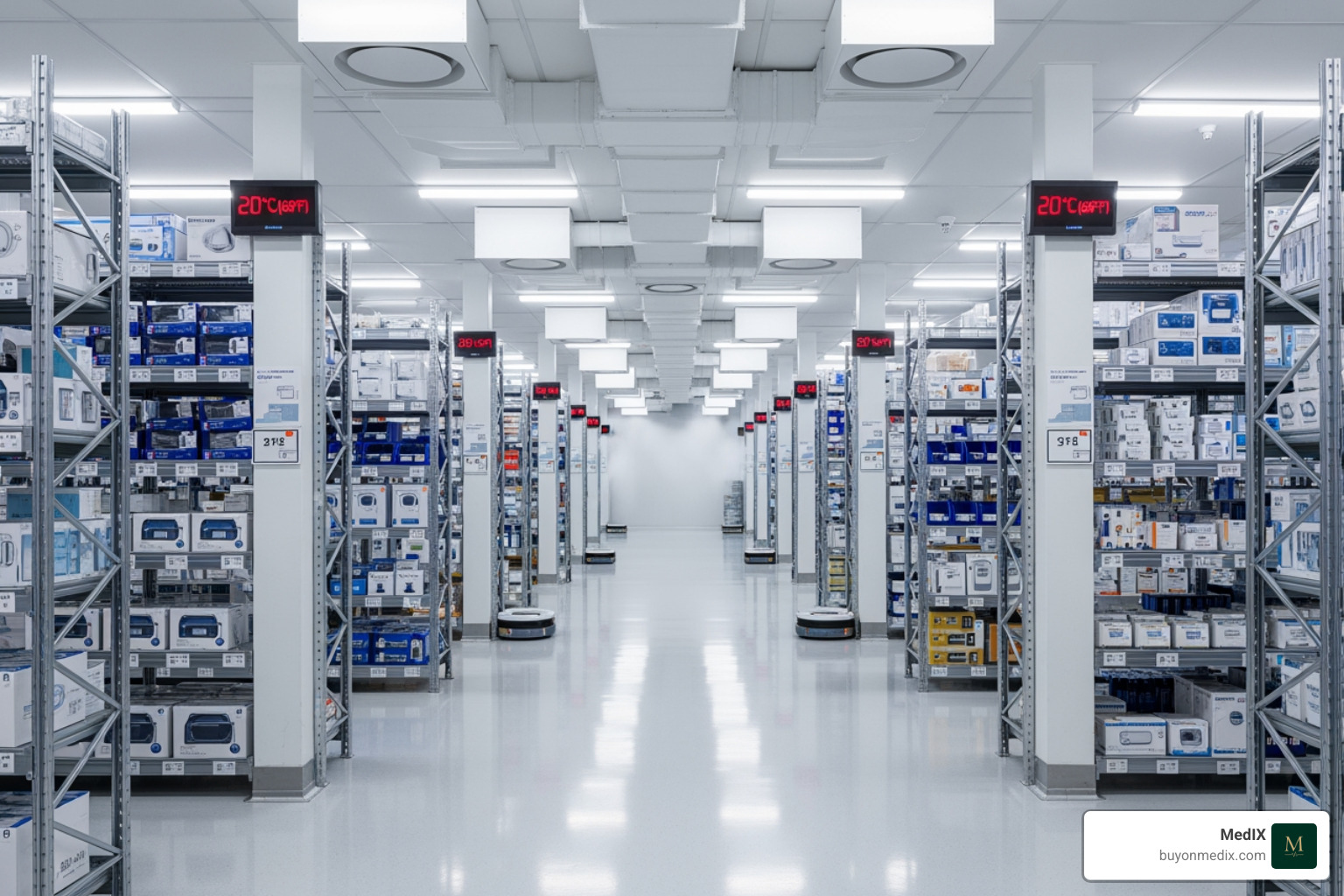
Warehousing and storage are equally critical. Medical devices often require climate-controlled environments, sterile areas, and robust inventory management systems. Our global network includes more than 17.2 million square feet of healthcare-licensed space and over 210 facilities worldwide, ensuring secure and compliant storage. This space is often equipped for serialization and lot tracking, which is vital for regulatory compliance and recall management. Effective inventory management goes beyond just counting items; it involves optimizing stock levels, monitoring expiration dates, and ensuring that critical equipment is always available without leading to overstocking.
White Glove Shipping: The Gold Standard for Sensitive Devices
When it comes to transporting high-value, delicate, or complex medical equipment, "white glove shipping" isn't just a luxury; it's often a necessity. In the healthcare sector, this service goes far beyond standard delivery. It encompasses a comprehensive, end-to-end solution designed to handle equipment with the utmost care and precision.
White glove shipping in healthcare logistics involves:
- Meticulous handling: Trained professionals use specialized equipment and techniques to carefully load, transport, and unload devices, minimizing any risk of damage.
- Inside delivery and placement: Equipment isn't left at the loading dock. It's moved directly to its designated room or installation site within the facility.
- Assembly and installation: For complex devices, this can include uncrating, assembling components, and even initial setup, ensuring the equipment is fully operational upon delivery. This service is particularly important for devices that require precise installation, such as imaging machines and surgical tools.
- Debris removal: All packaging materials, crates, and other waste are removed from the site, leaving the area clean and ready for use.
This level of service is crucial for large, fragile, or sensitive equipment like MRIs, CT scanners, and dialysis machines. It minimizes the risk of damage, reduces the burden on hospital staff, and ensures that critical equipment is ready for use as quickly as possible. Partnering with a logistics provider offering high-value white glove transportation capabilities is essential for protecting your valuable assets.
Temperature-Controlled and Cold Chain Logistics
Many medical devices and biological materials are extremely sensitive to temperature fluctuations, necessitating specialized temperature-controlled and cold chain logistics. This is particularly true for sensitive reagents, vaccines, and certain biologics that can degrade or become ineffective if not maintained within precise temperature ranges.
Our logistics partners employ:
- Validated packaging: Specialized containers and refrigerants ensure products remain within target temperatures for extended periods.
- Refrigerated transport: Fleets of temperature-controlled vehicles maintain consistent temperatures during transit, whether by road, air, or sea.
- Real-time temperature monitoring: Advanced IoT sensors and data loggers continuously track temperature conditions throughout the journey, providing an unalterable record and immediate alerts if deviations occur. This ensures product integrity and compliance.
- Expert handling: Teams are trained to manage special product needs and documentation, enabling prompt customs clearance and adherence to standard operating procedures to avoid compromise from temperature fluctuations.
This meticulous approach prevents damage and ensures that temperature-sensitive medical items maintain their efficacy and safety, ready for patient use.
Reverse Logistics and End-of-Life Solutions
The lifecycle of medical equipment doesn't end with its installation. Effective medical equipment logistics must also account for what happens when devices need to be returned, repaired, recalled, or disposed of. This is where reverse logistics and end-of-life solutions come into play.
- Product recalls: In the event of a recall, a robust reverse logistics system ensures that affected devices can be quickly and efficiently retrieved from healthcare facilities, minimizing patient risk.
- Returns and repairs: Equipment that malfunctions or needs servicing must be safely transported back to the manufacturer or repair center. This often requires the same specialized handling as the initial delivery.
- De-installation and asset recovery: When old equipment is replaced, it needs to be carefully de-installed and removed. This process can be complex, especially for large machinery. Asset recovery programs aim to maximize the value of these retired assets, either through refurbishment and resale or through responsible recycling.
- Sustainable disposal and recycling old equipment: With growing environmental awareness and regulations, the responsible disposal of medical devices is crucial. This involves adhering to environmental regulations, ensuring proper handling of potentially hazardous materials, and reducing the carbon footprint by recycling components. Logistics providers play a key role in facilitating the de-installation, removal, and responsible disposal or recycling of old equipment, ensuring compliance with environmental standards.
Integrating these reverse logistics and end-of-life solutions into the overall supply chain helps healthcare organizations manage costs, comply with regulations, and operate more sustainably.
Optimizing Your Medical Device Supply Chain
In the dynamic world of healthcare, an optimized medical equipment logistics supply chain is not just an advantage; it's a necessity. It's about achieving flexibility, controlling costs, and ensuring that life-saving equipment is always where it needs to be, when it needs to be there.
A crucial element in this optimization is comprehensive project management. For complex medical equipment moves, a dedicated project manager acts as a single point of contact, coordinating all aspects from planning to final installation. This includes conducting detailed site inspections before delivery, assessing potential constraints or hazards, and planning the project carefully. They also develop contingency plans to address unforeseen challenges, ensuring a smooth and efficient process.
Global network reach is another cornerstone of optimization. With healthcare needs spanning continents, access to a vast and efficient logistics network is vital. Our logistics partners, for instance, can leverage a global footprint, including customs brokerage experts who can negotiate clearance at the borders of more than 220 countries and territories. This expertise simplifies international shipping, ensuring compliant cross-border transit and minimizing delays.
Leveraging Technology for Visibility and Compliance in Medical Equipment Logistics
Technology is the backbone of modern medical equipment logistics, changing opaque supply chains into transparent, highly efficient operations. For high-value and sensitive medical devices, visibility and compliance are non-negotiable.
- Real-time tracking and GPS monitoring: These tools provide continuous updates on the location and status of shipments. Imagine knowing exactly where a critical ventilator is at any given moment, or tracking a batch of temperature-sensitive reagents as they cross continents. This level of oversight is invaluable for managing expectations, responding to delays, and ensuring security.
- Supply chain visibility platforms: These integrated platforms aggregate data from various sources—carriers, warehouses, customs—into a single, user-friendly dashboard. This allows for proactive management, identifying potential bottlenecks before they impact delivery.
- Serialization and lot tracking: Essential for regulatory compliance and product traceability, especially for implantable devices or pharmaceuticals. Technology enables precise tracking of individual units or specific batches, crucial for recalls or quality control.
- Inventory management software: Beyond simple tracking, these systems help optimize stock levels, predict demand, and manage expiration dates, reducing waste and ensuring availability.
- Proof of delivery: Digital confirmation, often with photographic evidence or electronic signatures, ensures accountability and closes the loop on successful deliveries.
At MedIX, we understand the power of technology to simplify procurement. Our platform uses AI-matching and rigorous compliance checks, not just for connecting buyers and sellers, but also to ensure that the entire logistical process aligns with the highest standards of transparency and verification. These technological advancements not only streamline operations but also bolster confidence in the integrity of the medical supply chain.
Building a Resilient and Efficient Network
A resilient and efficient network is one that can withstand disruptions, adapt to changing demands, and consistently deliver. In medical equipment logistics, this means strategically positioning resources and optimizing every stage of the journey.
One key strategy is the use of Forward Stocking Locations (FSLs). These are strategically placed warehouses or distribution centers closer to end-users, including micro-FSLs within hospitals. By storing critical devices and consumables closer to the point of use, we can significantly reduce delivery times and improve responsiveness. For instance, our logistics partners boast the capability to reach over 80% of U.S. hospital beds within 4 hours, a testament to optimized network design.
Network optimization involves continuously analyzing routes, modes of transport, and facility locations to find the most efficient and cost-effective pathways. This includes mode optimization, intelligently choosing between air, ground, or sea transport based on urgency, cost, and cargo type. For example, consolidating deliveries from different transport modes to a single driver can lead to a "one-driver advantage," increasing dock efficiencies at healthcare facilities by reducing congestion and streamlining receiving processes.
By integrating these strategies, we build supply chains that are not only efficient but also robust enough to handle unexpected challenges, ensuring an uninterrupted flow of essential medical equipment.
Frequently Asked Questions about Medical Equipment Logistics
What is the role of a specialized technician in medical device transport?
Specialized technicians are indispensable in medical equipment logistics, particularly for high-value and complex devices. Their role extends far beyond simply moving boxes. These certified and trained professionals are crucial for:
- Mitigating risk: They understand the delicate nature of the equipment, how to handle it correctly, and how to prevent damage during transit.
- Handling complex installations: For devices like MRI machines or surgical robots, technicians are often responsible for the precise uncrating, assembly, and initial setup, ensuring the equipment is fully operational upon delivery.
- De-installation: When old equipment is replaced, technicians safely de-install and dismantle it, often preparing it for reverse logistics or disposal.
- Using specialized tools: They come equipped with custom rigging, lifting equipment, and protective cases designed for specific medical devices.
- Ensuring equipment is operational: Their expertise means the equipment is not just delivered, but also correctly positioned and ready for use, minimizing downtime for healthcare facilities.
Without these experts, the risks of damage, improper installation, and operational delays would be significantly higher.
How do logistics providers handle international shipping for medical devices?
International shipping for medical devices is a complex undertaking due to varying regulations, customs procedures, and transit challenges across borders. Logistics providers specializing in medical equipment logistics steer this by:
- Customs brokerage expertise: They employ seasoned customs brokerage experts who understand the nuances of import/export regulations in over 220 countries and territories. This expertise is critical for accurate documentation and smooth clearance.
- Navigating regulations: Each country has its own set of health and safety standards, import licenses, and tariffs for medical devices. Providers ensure all necessary permits and certifications are in place.
- Managing import/export documentation: This includes commercial invoices, packing lists, certificates of origin, and specific health authority declarations, all of which must be carefully prepared and submitted.
- Tariffs and duties: Experts help classify devices correctly to ensure accurate assessment of tariffs and duties, preventing unexpected costs and delays.
- Ensuring compliant cross-border transit: This involves selecting appropriate shipping lanes, ensuring secure transit, and often providing real-time tracking across international boundaries.
The goal is to ensure that medical devices move efficiently and compliantly across borders, reaching their destination without unnecessary delays or complications.
Why is project management crucial for complex medical equipment moves?
Project management is absolutely crucial for complex medical equipment transportation projects because these are often multi-faceted endeavors with high stakes and tight deadlines. A dedicated project manager provides:
- Single point of contact: Streamlining communication and ensuring all stakeholders—manufacturers, healthcare facilities, logistics teams, and technicians—are on the same page.
- Coordinating stakeholders: They orchestrate the efforts of various teams, from specialized transporters to installation engineers, ensuring seamless collaboration.
- Detailed planning: This involves comprehensive pre-move assessments, including site inspections to identify access limitations, power requirements, and potential hazards at the destination.
- Risk mitigation: Project managers anticipate potential issues, such as weather delays, customs complications, or technical challenges, and develop contingency plans to address them proactively.
- Timeline management: They create realistic schedules, monitor progress, and make adjustments as needed to ensure that critical equipment arrives and is installed within specified timeframes, minimizing operational disruption for healthcare providers.
- Ensuring seamless execution: From the initial planning stages to the final installation and debris removal, the project manager oversees every detail, guaranteeing a smooth and efficient process.
Without robust project management, complex medical equipment moves can quickly devolve into chaos, leading to delays, damage, and significant costs.
Conclusion
The journey of medical equipment from manufacturer to patient is fraught with challenges, yet it is a journey of immense importance. From the delicate handling of advanced diagnostic machines to the precise temperature control required for sensitive biologics, every step in medical equipment logistics demands specialized expertise, meticulous planning, and unwavering attention to detail. We've seen how a high-stakes environment, complex regulatory landscapes, and the sheer diversity of medical devices necessitate a gold standard of service.
The solutions lie in partnering with specialized logistics providers who offer white glove shipping, advanced temperature-controlled capabilities, and robust reverse logistics programs. Leveraging cutting-edge technology for real-time visibility, compliance, and building resilient, efficient networks with strategically placed Forward Stocking Locations are no longer optional—they are essential.
The goal of optimizing medical equipment logistics is to ensure uninterrupted access to life-saving and life-changing equipment for healthcare providers and patients worldwide. It’s about more than just moving goods; it’s about enabling better healthcare outcomes.
At MedIX, we are committed to simplifying this complex landscape. As a global B2B marketplace, we connect certified medical equipment suppliers with hospitals and clinics, streamlining procurement through AI-matching, rigorous compliance checks, and reliable global logistics. We ensure verified equipment and transparent transactions worldwide, so you can focus on what matters most: patient care.

Expert voices
Insights from leaders transforming medical equipment procurement


More from our blog
Discover the latest trends in medical technology and procurement
Stay ahead of medical technology
Get the latest insights, research, and market updates delivered straight to your inbox
Ready to transform your procurement
Discover how MedIX can streamline your medical equipment sourcing process