Transforming medical equipment procurement globally

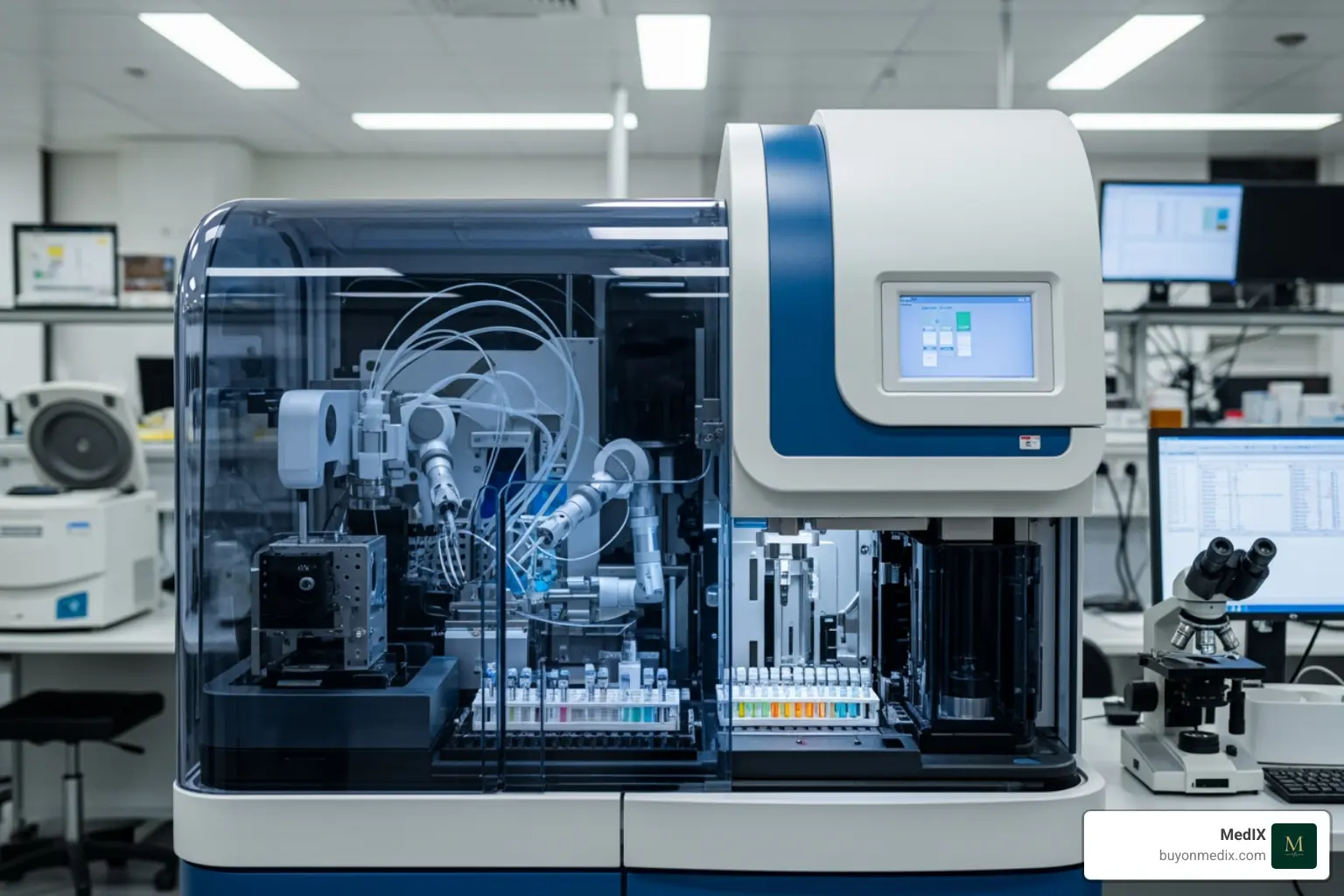
Why Clinical Chemistry Analyzers Are Essential for Modern Healthcare
Clinical chemistry analyzers are laboratory instruments that measure biochemical substances in blood, urine, and other bodily fluids. These automated systems are the backbone of diagnostic testing, helping diagnose conditions like diabetes, kidney disease, and liver disease, and monitor patient health.
Quick Answer: What You Need to Know About Clinical Chemistry Analyzers
- Primary Function: Measure chemical substances in bodily fluids using photometry, colorimetry, and electrochemistry methods.
- Clinical Impact: Account for 57% of all core laboratory testing volume, making them critical to lab operations.
- Key Capabilities: Perform metabolic panels, enzyme assays, electrolyte analysis, and specialized tests.
- Range of Options: From compact point-of-care devices to high-throughput systems processing up to 3,000 tests per hour.
- Main Benefits: Deliver fast, accurate, and consistent results that support timely patient care decisions.
Clinical chemistry testing is vital in modern healthcare. Optimizing these operations can help laboratories "convert from a cost center to a revenue driver" through the right technology.
Configurations range from compact benchtop models for smaller facilities (400 tests/hour) to large, integrated systems for reference labs that handle thousands of samples daily with minimal intervention.
Technology is advancing rapidly, with modern systems featuring AI, automated sample management, and LIS integration. They require smaller sample volumes, deliver faster results, and achieve higher quality standards like Six Sigma.
For procurement managers, selecting the right analyzer means balancing throughput, test menu, accuracy, automation, and total cost of ownership. The choice impacts lab efficiency, patient outcomes, and financial performance.
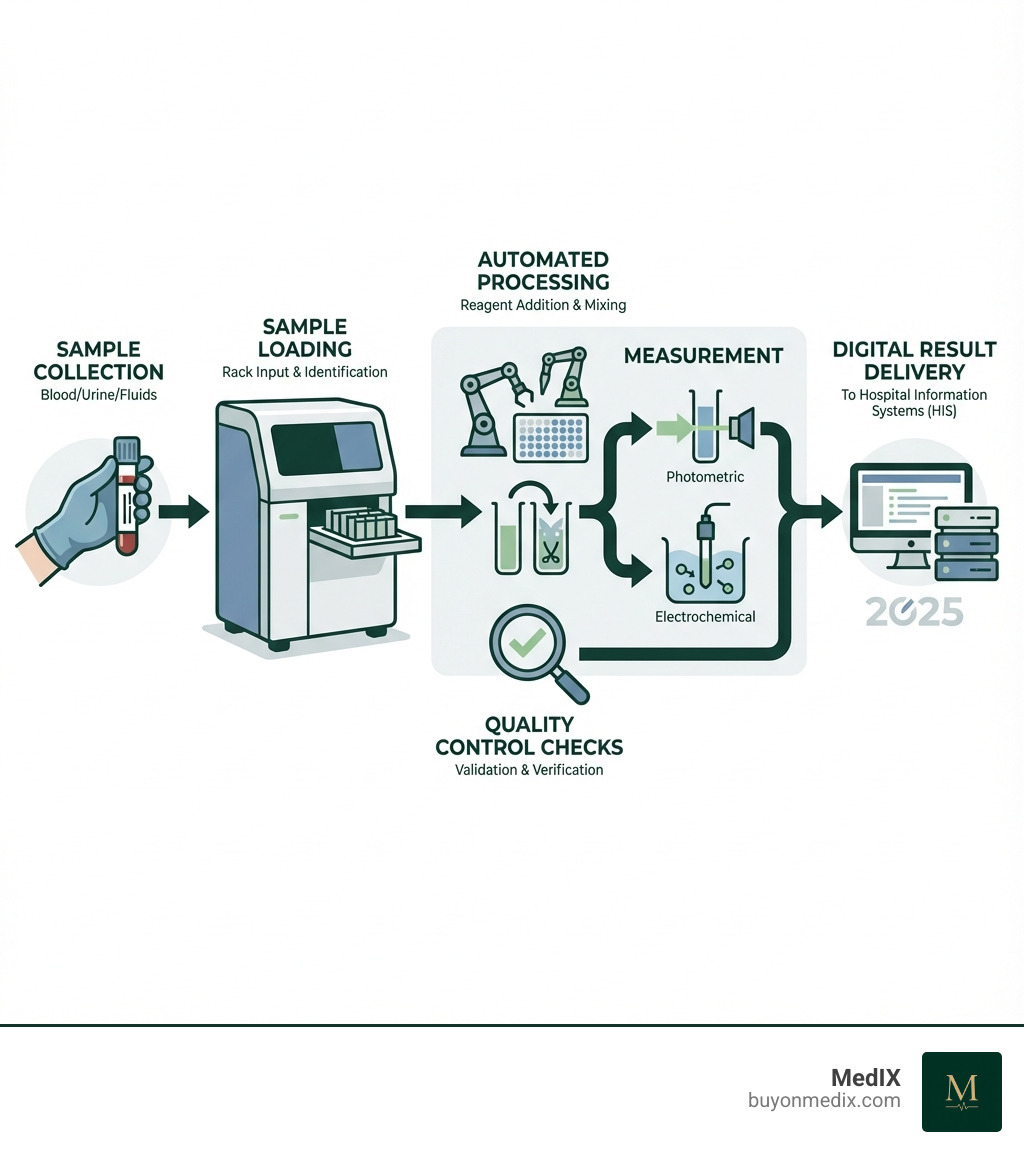
What Are the Primary Functions of Clinical Chemistry Analyzers?
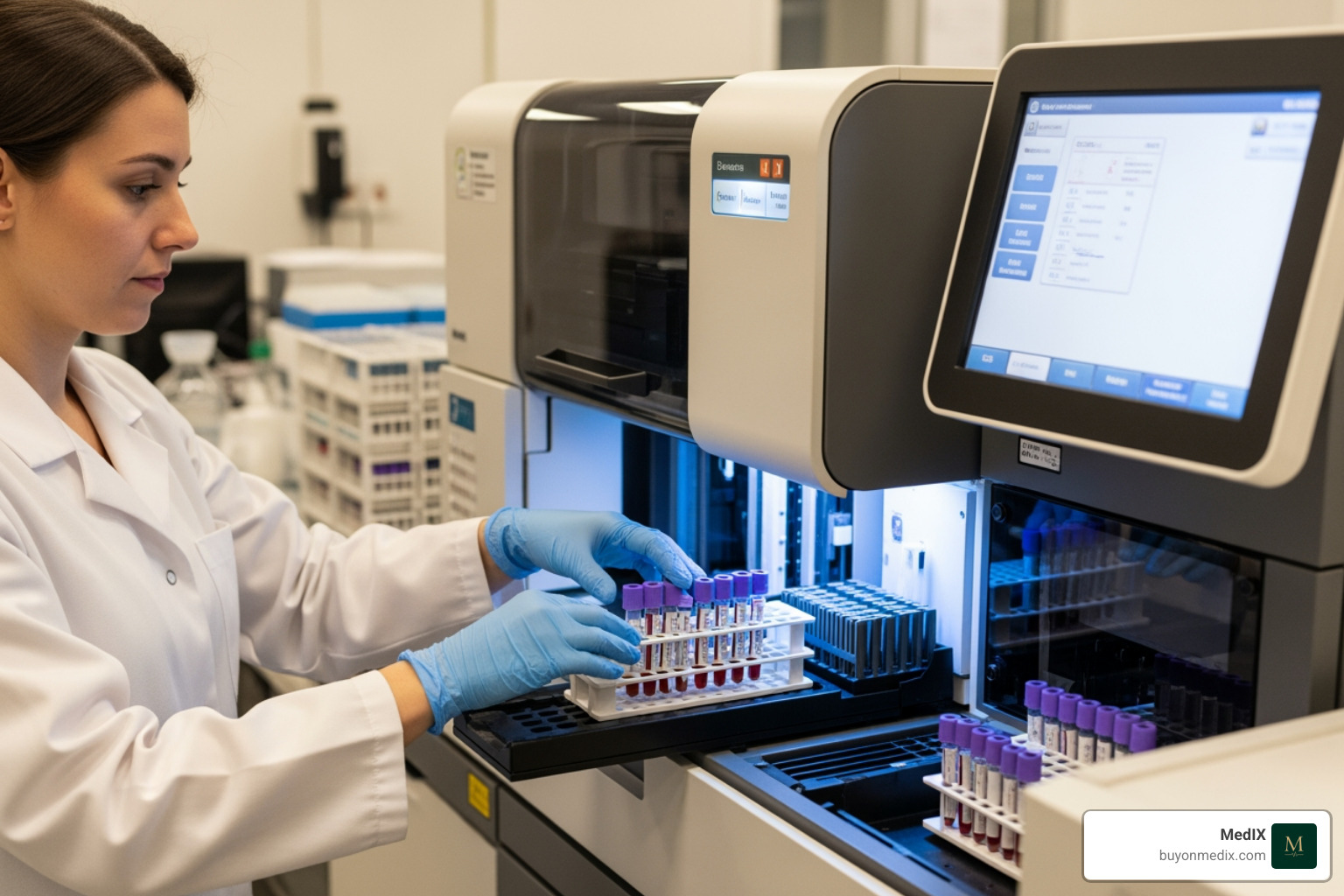
At their core, clinical chemistry analyzers measure the concentration of various biochemical substances in fluids like blood, urine, and cerebrospinal fluid. This data is crucial for revealing a patient's health status.
These substances include:
- Enzymes: Indicators of organ damage (e.g., liver, cardiac).
- Substrates: Key metabolic substances (e.g., glucose, creatinine).
- Electrolytes: Minerals for fluid balance (e.g., sodium, potassium).
- Proteins: Markers for inflammation and nutritional status.
- Lipids: Cholesterol and triglycerides for cardiovascular assessment.
- Hormones: Regulators of bodily functions.
- Drugs: For therapeutic monitoring and toxicology.
Analyzers use several core methods to perform these measurements:
- Photometry: Measures how much light a sample absorbs to calculate a substance's concentration.
- Colorimetry: A type of photometry where a color-producing reaction's intensity indicates concentration.
- Electrochemistry: Measures electrical signals from chemical reactions, often using Ion-Selective Electrodes (ISEs) to analyze electrolytes.
The data generated is indispensable for:
- Diagnosing conditions: Essential for identifying diabetes, kidney and liver disease, cardiovascular issues, and more.
- Monitoring disease progression: Tracking markers over time to assess treatment effectiveness.
- Screening for health risks: Identifying potential problems like high cholesterol before symptoms appear.
- Guiding treatment decisions: Providing timely results to help clinicians choose appropriate therapies.
- Assessing organ function: Evaluating the health of the liver, kidneys, and heart.
These analyzers provide the precise, consistent results that underpin accurate diagnoses and effective patient management, making them heroes of modern medicine.
9 Key Factors for Selecting the Right Clinical Chemistry Analyzers
Choosing the right analyzer is a critical decision that impacts a laboratory's efficiency, accuracy, and budget. Here are nine key factors to consider to make the best investment for your facility's needs.
1. Throughput and Turnaround Time (TAT)
Throughput, measured in tests per hour (TPH), dictates how many samples an analyzer can process. This is crucial for labs of all sizes. Mid-volume analyzers may offer 400 TPH, while high-volume systems can process 2,000-3,000 TPH. Beyond sheer numbers, turnaround time (TAT) is paramount, especially for STAT (short turnaround time) testing. Faster TAT means quicker diagnoses and treatment. For example, a workflow analysis at Christus Health demonstrated a 17% decrease in turnaround time with optimized processes, highlighting the tangible benefits of efficient systems.
2. Breadth of the Test Menu
The test menu is the range of assays an analyzer can perform. A comprehensive menu allows a lab to handle diverse patient needs on a single instrument. Most analyzers offer standard metabolic panels, enzyme assays, and electrolyte analysis. However, modern systems from leading manufacturers offer extensive menus of over 200 assays, including specialized tests like Therapeutic Drug Monitoring (TDM) and immunosuppressants. A broad, growing menu ensures your investment remains relevant as clinical needs evolve.
3. Accuracy and Quality: The Role of Six Sigma
In diagnostics, accuracy is non-negotiable. Six Sigma is a quality standard that minimizes defects, ensuring highly reliable and consistent test results. With clinical chemistry accounting for 57% of core lab testing, assay performance is paramount. Many top-tier analyzers achieve Six Sigma quality on a high proportion of their assays, fostering confidence in results. Advanced features like automated error detection, minimal sample-to-sample carryover (≤0.1 ppm), and designs that exceed stringent CLIA 2024 specifications further ensure quality and reduce the need for retesting.
4. Sample Handling and Volume Requirements
Efficient sample management is key to lab productivity. Modern analyzers optimize this process, often requiring minimal sample volumes (as little as 0.1cc)—a significant benefit for pediatric or geriatric patients. Other advancements include whole blood analysis for tests like HbA1c, which eliminates manual prep time, and automated sample management for sorting, decapping, and archiving. Advanced transport systems can also expedite STAT samples, further improving efficiency and result integrity.
5. Automation and Integrated Systems for Clinical Chemistry Analyzers
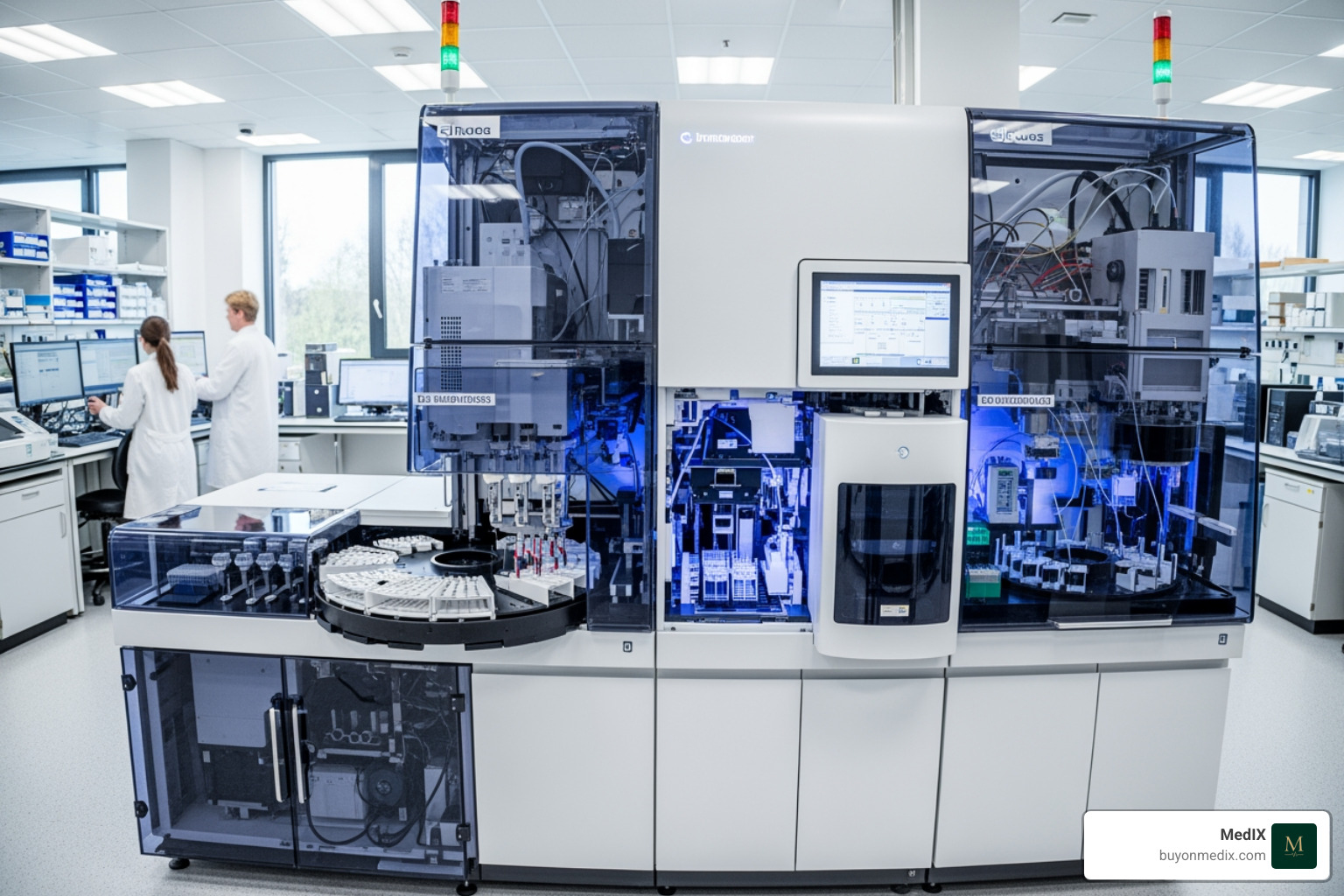
The trend in clinical chemistry is toward greater automation and integration. Modern solutions from manufacturers like Roche and Siemens combine clinical chemistry and immunoassay testing on a single, automated platform. These systems feature automated calibration and quality control (QC), minimizing hands-on time and allowing staff to focus on critical tasks. Many are also modular and scalable, allowing labs to expand capacity as needs grow. For high-volume labs, integration with Total Lab Automation (TLA) systems can create a complete, multidisciplinary automated workflow from sample entry to archiving.
6. Ease of Use and Operator Training
An analyzer's usability is crucial. Modern systems are designed with intuitive, touch-screen graphical user interfaces (GUIs) that simplify navigation and reduce the learning curve. This decreases the time and resources needed for staff training. Features like automated daily maintenance routines, tool-free parts replacement, and onboard help guides further simplify operations, reduce the burden on technicians, and lead to fewer errors and greater productivity.
7. Footprint and Scalability
Laboratory space is often limited. Many analyzers are designed to be compact, making them suitable for smaller facilities. Some integrated systems combine multiple testing types into a small footprint (as little as 21 sq. ft.). Beyond size, scalability is key for future-proofing an investment. Modular designs allow laboratories to add components as their testing volume or menu needs change, offering a smart long-term strategy that adapts to evolving demands.
8. Cost-Effectiveness of Modern Clinical Chemistry Analyzers
True cost-effectiveness is determined by the Total Value of Ownership (TVO), which considers the initial price plus ongoing operational costs. A system with a higher initial cost may offer better long-term value through lower reagent, consumable, and maintenance expenses. Features like ready-to-use concentrated reagents and reduced QC frequency (due to high reliability) can lead to significant savings. By optimizing workflows and reducing errors, advanced analyzers can lower overall laboratory expenses and help transform the lab from a cost center into a value driver.
9. Point-of-Care (POCT) vs. Core Laboratory Systems
It's important to distinguish between Point-of-Care Testing (POCT) devices and core laboratory systems.
Here's a list of key differences:
- Location: POCT is near-patient (bedside, clinic); Core Lab is centralized.
- TAT: POCT is extremely rapid (minutes); Core Lab is longer (minutes to hours).
- Throughput: POCT is low (single patient); Core Lab is high (hundreds to thousands of tests/hour).
- Operation: POCT is user-friendly for non-lab staff; Core Lab requires trained professionals.
- Test Menu: POCT is limited and focused; Core Lab is broad and comprehensive.
- Sample Volume: POCT uses very small volumes (e.g., 0.1cc); Core Lab typically uses larger venous samples.
- QC: POCT has simplified, often automated checks; Core Lab has rigorous, multi-level QC procedures.
- Connectivity: POCT has basic EHR connectivity; Core Lab is highly integrated with LIS/HIS.
Examples of POCT Analyzers: Common systems include the Abbott Afinion 2, Piccolo Xpress®, i-STAT System, Cholestech LDX® System, DCA Vantage Analyzer, and CLINITEK Status+ Analyzer.
While POCT offers rapid insights for immediate action, core laboratory systems are essential for comprehensive, high-volume, and specialized testing.
The Future is Now: Innovations in Analyzer Technology
The world of clinical chemistry analyzers is characterized by rapid innovation, empowering laboratories to do more with greater confidence.
Some of the most impactful innovations include:
- AI-powered intelligence: AI is making analyzers smarter by optimizing instrument performance, predicting maintenance needs, and assisting in result interpretation.
- Advanced sample management: Sophisticated systems now offer automated multi-rule sorting, decapping, sealing, and archiving of samples. Bidirectional, variable-speed transport expedites critical STAT samples.
- Digitization and connectivity: Robust digitization allows for seamless integration with Laboratory Information Systems (LIS) and Hospital Information Systems (HIS), eliminating manual data entry and reducing errors.
- Remote instrument monitoring: Systems from manufacturers like Beckman Coulter and Siemens allow for remote monitoring of instrument status and performance from a single workstation, ensuring maximum uptime and proactive support.
- Sustainability: A growing trend is the availability of certified pre-owned systems. These rigorously restored instruments provide a high-performance, cost-effective option while reducing the carbon footprint through material reuse.
These innovations are practical solutions that address the evolving demands of healthcare, enabling labs to deliver better, faster, and more sustainable diagnostic services.
Key Benefits of Investing in Advanced Analyzers
Investing in cutting-edge clinical chemistry analyzers is a strategic decision that profoundly impacts patient care, operational efficiency, and a laboratory's success.
Here's a comparison highlighting the advantages of advanced analyzers:
| Feature/Benefit | Older Clinical Chemistry Analyzers | Advanced Clinical Chemistry Analyzers |
|---|---|---|
| Accuracy & Precision | Good, but more variable and prone to manual error. | Excellent, often Six Sigma quality with robust error detection. |
| Efficiency & Speed | Slower throughput, more manual steps, longer TAT. | High throughput (up to 3,000 TPH), automated workflows, rapid TAT. |
| Test Menu | Limited, often requiring multiple instruments. | Broad and expanding (200+ assays) on a single platform. |
| Sample Handling | Larger sample volumes, manual prep. | Minimal sample volumes (0.1cc), automated handling. |
| Automation & Integration | Standalone units with limited connectivity. | Fully integrated, modular, and scalable with seamless LIS/HIS connectivity. |
| Ease of Use | Complex interfaces requiring significant training. | Intuitive, touch-screen interfaces with minimal training needs. |
| Cost-Effectiveness | Lower initial cost, higher long-term operational costs. | Lower Total Value of Ownership (TVO) through optimized efficiency. |
| Patient Outcomes | Slower results can delay treatment. | Faster, more accurate results improve patient care and outcomes. |
| Regulatory Compliance | Meets basic standards. | Designed to exceed stringent specifications (e.g., CLIA 2024). |
| Sustainability | Limited focus. | Options for certified pre-owned systems reduce carbon footprint. |
In short, investing in advanced analyzers leads to improved diagnostic accuracy, greater efficiency, better patient outcomes, streamlined workflows, and easier regulatory compliance. These advancements empower laboratories to operate at their peak, changing them into vital, value-generating partners in the healthcare ecosystem.
Procurement Strategies: Distributor vs. Direct
When acquiring clinical chemistry analyzers, laboratories can purchase directly from the manufacturer or through a distributor. Both approaches have merits.
Purchasing Directly from the Manufacturer:This offers a direct relationship with the product creator, deep technical expertise, and first access to new technology, which can be ideal for highly specialized needs.
Benefits of Purchasing Through a Distributor (like MedIX):
Working with a reputable distributor offers several compelling advantages:
- Simplified procurement: A distributor provides a single point of contact for multiple brands, streamlining the purchasing process and saving administrative time.
- Access to multiple brands: Distributors offer a portfolio of analyzers from various manufacturers (e.g., Roche, Siemens, Abbott), allowing you to compare options and find the best fit.
- Vetted suppliers and certified equipment: Reputable distributors like MedIX vet their suppliers and ensure equipment is certified and meets quality standards.
- Compliance and logistics support: Distributors can help steer complex regulations and manage global logistics, including shipping and customs.
- Consolidated support: A distributor can often provide consolidated service for all equipment purchased through them, simplifying maintenance.
- Cost-effectiveness: Distributors may offer competitive pricing or help identify solutions with a better total value of ownership.
For many facilities, the comprehensive service and simplified process offered by a distributor can be a game-changer.
Conclusion: Powering Your Lab's Success with the Right Partner
Clinical chemistry analyzers are the heart of the diagnostic lab, providing critical insights that drive patient care. We've explored their core functions, the key factors for selection—from throughput and test menu to quality and automation—and the difference between POCT and core lab systems.
The future of clinical chemistry is bright, with innovations like AI, advanced automation, and remote monitoring pushing the boundaries of what's possible. Investing in these advanced analyzers offers undeniable benefits, leading to improved diagnostic accuracy, time-saving efficiency, and better patient outcomes.
Choosing the right clinical chemistry analyzer is a strategic decision that impacts every aspect of your laboratory's operation. It requires careful consideration of your specific needs, budget, and long-term goals.
At MedIX, we understand these complexities. As a global B2B marketplace, we simplify the procurement of certified medical equipment from verified suppliers worldwide. Our platform uses AI-matching, rigorous compliance checks, and reliable global logistics to ensure you find the perfect solution for your laboratory's needs, empowering your team to deliver exceptional patient care with confidence.

Expert voices
Insights from leaders transforming medical equipment procurement


More from our blog
Discover the latest trends in medical technology and procurement
Stay ahead of medical technology
Get the latest insights, research, and market updates delivered straight to your inbox
Ready to transform your procurement
Discover how MedIX can streamline your medical equipment sourcing process