Transforming medical equipment procurement globally

Why Smart Medical Equipment Price Comparison Matters More Than Ever
Medical equipment price comparison is the process of evaluating and contrasting prices from multiple suppliers to ensure you're getting the best value for critical healthcare technology. For procurement managers facing global sourcing challenges, this practice is essential for controlling costs while maintaining quality standards.
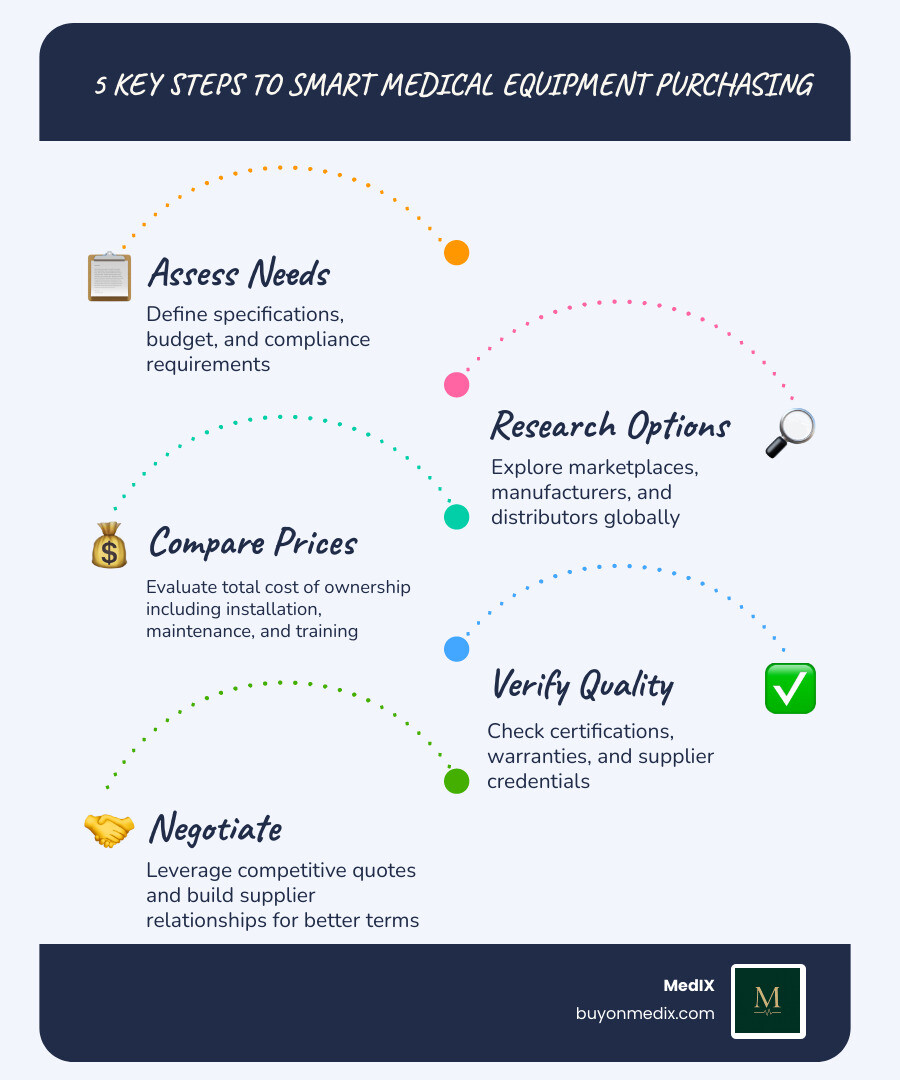
Quick Guide to Medical Equipment Price Comparison:
- Identify your needs - Define exact specifications, quantities, and budget constraints
- Research suppliers - Use online marketplaces, direct manufacturers, and verified distributors
- Compare total costs - Look beyond purchase price to include installation, maintenance, and training
- Verify quality - Check certifications, warranties, and supplier credentials
- Negotiate terms - Leverage competitive quotes and build long-term supplier relationships
Healthcare costs continue to climb, and the skyrocketing cost of new medical equipment is a major factor in rising medical expenses. Research shows that purchasing used or refurbished medical equipment instead of new can lead to tremendous savings—yet many procurement managers struggle with price transparency and supplier verification.
The challenge is real: you need to source equipment quickly, ensure compliance with regulatory standards, verify supplier legitimacy, and secure competitive pricing—all while managing international logistics and maintaining budget control.
This guide cuts through the complexity. We'll show you the key factors that influence equipment pricing, how to effectively compare costs across suppliers, which tools and marketplaces provide the most transparent pricing data, and proven strategies that healthcare facilities use to reduce procurement costs without sacrificing quality.
Whether you're sourcing a single ultrasound machine or outfitting an entire surgical suite, understanding how to properly compare medical equipment prices will save your organization significant money and reduce procurement headaches.
Understanding the Price Tag: Key Factors Influencing Medical Equipment Costs
When we dig into medical equipment price comparison, it quickly becomes clear that the sticker price is just the tip of the iceberg. Numerous factors conspire to inflate or deflate the cost of essential medical devices, and understanding these influences is paramount for smart procurement. Our research indicates that the skyrocketing cost of new medical equipment significantly contributes to rising medical costs globally.
Here are the primary factors influencing the cost of medical equipment:
- Brand Reputation and Market Dominance: Established brands with a long history of innovation and reliability often command higher prices. Their reputation for quality, advanced research and development, and extensive support networks factor into their premium pricing. While these brands offer assurance, our commitment to transparent pricing means we help you weigh this against value.
- Technology and Features: The level of sophistication, cutting-edge technology, and unique features embedded in a piece of equipment directly impact its cost. A basic patient monitor will naturally cost less than a multi-parameter system with advanced analytics and remote monitoring capabilities. Similarly, the latest surgical robotics, with their intricate mechanics and software, represent a significant investment.
- New vs. Refurbished Condition: This is perhaps one of the most impactful factors. As we'll discuss in detail, purchasing new equipment comes with the highest price tag, offering the latest technology and full manufacturer warranties. However, there are tremendous savings available by purchasing used or refurbished medical equipment instead of new. For example, listings show a new Ultherapy Skin Tightening Device for $10,000, but refurbished options for similar high-value items can offer substantial savings.
- Warranty and Service Contracts: The extent of the warranty (parts, labor, duration) and the availability and cost of ongoing service contracts are crucial. A comprehensive service agreement can add a significant amount to the total cost but provides peace of mind and ensures operational continuity. These contracts often cover preventative maintenance, repairs, and technical support, which are vital for complex equipment.
- Regulatory Approvals (FDA, CE, etc.): The rigorous process of obtaining regulatory approvals, such as FDA clearance in the United States or CE marking in Europe, is expensive and time-consuming. These costs are ultimately passed on to the consumer. Equipment that meets stringent global safety and performance standards assures quality but also reflects the investment in compliance.
- Total Cost of Ownership (TCO): This is the most holistic view of medical equipment costs. TCO goes beyond the initial purchase price to include installation, training, consumables, ongoing maintenance, energy consumption, and eventual disposal costs. For instance, an MRI machine's TCO would encompass not just its upfront cost but also the specialized facility requirements, power consumption, helium refills, and service contracts for its complex components. Understanding the 'total treatment cost' associated with utilizing certain equipment can also help in making informed decisions about procurement and usage. Our research highlights that aggressive, collaborative, and competitive bidding for high-cost products can lead to substantial cost savings, emphasizing the importance of looking at TCO.

New vs. Refurbished: A Comparative Analysis for Smart Savings
The decision between purchasing new or refurbished medical equipment is a cornerstone of effective medical equipment price comparison. For many healthcare providers, this choice represents a significant opportunity for cost savings without necessarily compromising quality or patient care. Our research consistently points to the skyrocketing cost of new medical equipment as a major factor in rising healthcare costs, making the refurbished market an attractive alternative.
- Cost Savings Potential: This is the most obvious advantage. Buying refurbished equipment can lead to tremendous savings compared to purchasing new directly from manufacturers. We've seen examples where devices like a GE Logiq e Vet or an Edge Systems Hydrafacial Tower Elite MD are available at significantly reduced prices on marketplaces. These savings can free up budget for other critical needs, such as staffing or facility upgrades.
- Access to Technology: Refurbished equipment often includes models that are still highly advanced and perfectly capable of meeting clinical needs. While not always the absolute latest generation, they frequently offer state-of-the-art features that were top-tier just a few years ago. This allows facilities to access high-quality technology that might otherwise be out of reach due to budget constraints.
- Warranty Differences: New equipment typically comes with a full manufacturer's warranty. Refurbished equipment, on the other hand, will have a warranty provided by the refurbisher or seller. This warranty might be shorter or cover different aspects than a new product warranty. It's crucial to understand these terms thoroughly when making a comparison.
- Expected Lifespan: While new equipment theoretically has a longer untouched lifespan, properly refurbished equipment can also offer many years of reliable service. The key is the quality of the refurbishment process. Our research suggests that with strategic planning, the average age of clinical equipment can be kept low, around just over 5 years, indicating a healthy turnover and availability of relatively new used equipment.
- Maintenance Considerations: Both new and refurbished equipment require ongoing maintenance. For refurbished items, ensure that parts are readily available and that technicians are capable of servicing the specific model. Reputable refurbishers will often offer service contracts, similar to those for new equipment, providing an added layer of security.
- Vetting Refurbished Equipment Suppliers: The quality of refurbished equipment heavily depends on the supplier. We always recommend browsing verified listings from sellers worldwide and looking for suppliers with strong reputations, certifications, and transparent processes. This includes checking for details on the refurbishment process, testing protocols, and the origin of replacement parts.
Here’s a quick comparison to help guide your decision:
| Attribute | New Medical Equipment | Refurbished Medical Equipment |
|---|---|---|
| Initial Cost | Highest | Significantly lower (often 30-70% less) |
| Warranty | Full manufacturer's warranty (typically 1-5 years) | Refurbisher/seller warranty (varies, often 3 months - 1 year) |
| Lifespan | Longest expected functional life | Good expected functional life, dependent on refurbishment quality |
| Latest Technology | Guaranteed to be the most current models and features | Often one or two generations behind, but still highly capable |
| Availability | Subject to manufacturing lead times | Dependent on market availability of specific models |
Your Toolkit for Medical Equipment Price Comparison
Navigating the complex world of medical equipment procurement requires a robust toolkit for effective medical equipment price comparison. Whether you're a small clinic or a large hospital network, having the right resources and strategies can lead to significant cost savings and better purchasing decisions.
The role of online marketplaces in medical equipment price comparison
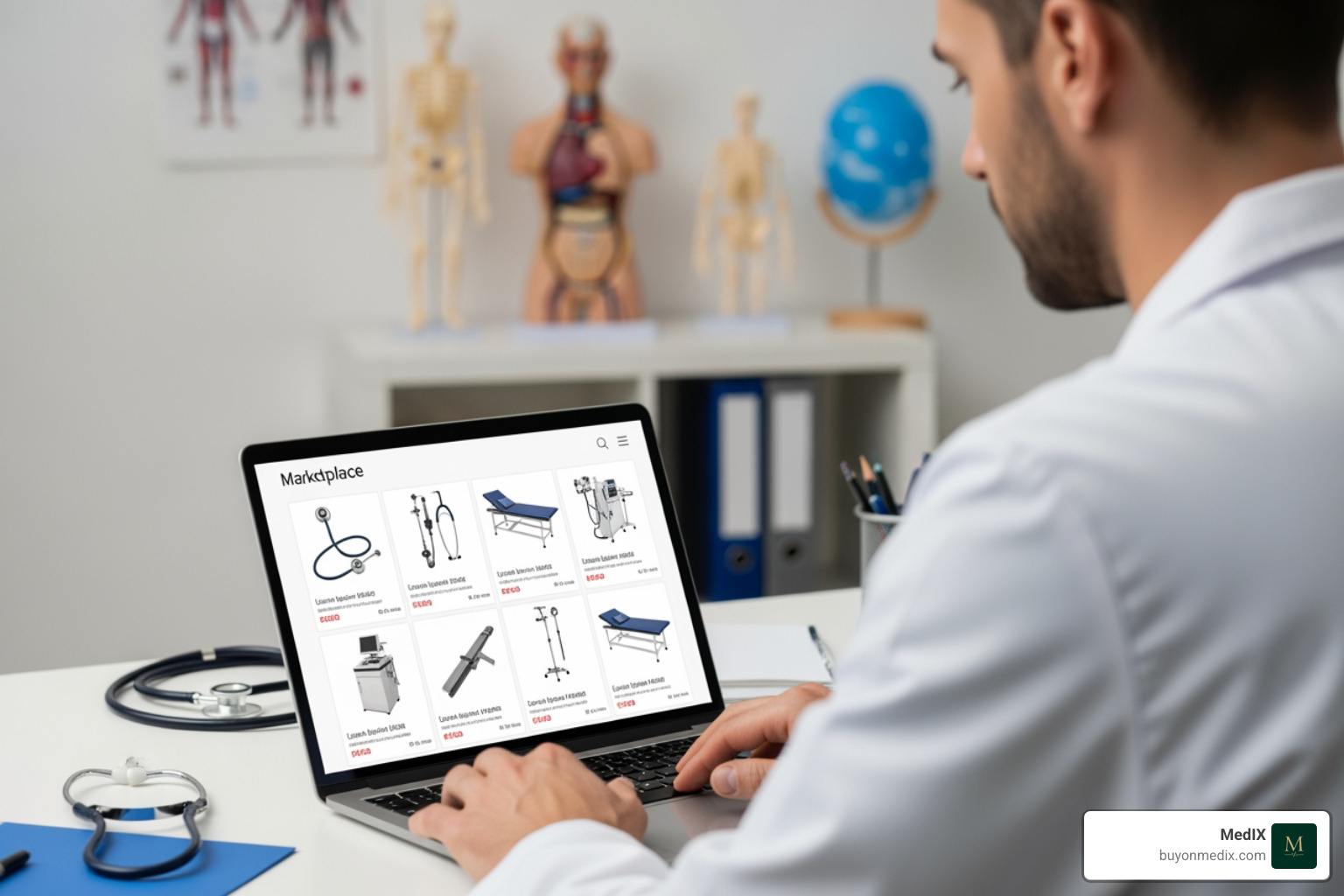
Online marketplaces have revolutionized the way healthcare providers approach procurement, offering unprecedented levels of price transparency and accessibility.
- Marketplace Access: Platforms like ours provide unparalleled access to a vast inventory of medical equipment from sellers worldwide. This means you're not limited to local suppliers or a handful of manufacturers.
- Transparent Pricing: One of the biggest advantages is transparent pricing. You can compare prices for new and used devices to fit your budget, often seeing actual price ranges or average costs for specific models. This direct access to pricing data helps you "buy smarter" and "get insights and options across multiple categories and brands."
- Global Reach: These platforms connect buyers with verified sellers globally, opening up opportunities for sourcing equipment that might be scarce or more expensive in your immediate region. This global perspective is crucial for optimizing medical equipment price comparison.
- Verified Sellers: Reputable marketplaces emphasize verified listings from sellers, adding a layer of trust and reliability to transactions. This helps mitigate risks associated with purchasing from unknown sources.
- Direct Comparison Tools: Many platforms offer tools that allow for direct comparison of similar products, highlighting differences in price, features, and condition. This streamlines the research phase of your procurement process.
- User Reviews: While not always available for every piece of equipment, user reviews and seller ratings can offer valuable insights into the reliability of both the product and the vendor.
How to effectively conduct a medical equipment price comparison
Beyond browsing marketplaces, strategic approaches are key to securing the best deals.
- Request for Proposal (RFP): For larger purchases or ongoing needs, issuing a comprehensive RFP allows you to solicit detailed bids from multiple suppliers. This formal process ensures you receive comparable offers that include not just price, but also service agreements, warranties, and delivery terms. Our research shows that aggressive, collaborative, and competitive bidding for high-cost products can lead to substantial cost savings.
- Benchmarking Data: Utilizing benchmarking solutions can provide critical insights into market pricing. Healthcare benchmarking solutions, like those offered by ECRI, allow you to analyze your spend against a comprehensive, GPO-agnostic database of equipment and consumable costs. This helps identify trends, anomalies, and areas for potential savings.
- Direct Negotiation: Don't shy away from direct negotiation, especially for high-value items or bulk purchases. Suppliers often have flexibility in pricing, particularly if you can demonstrate a clear understanding of market rates based on your medical equipment price comparison research.
- Utilizing Public Price Guides and Benchmarking Resources: Resources like the International Medical Products Price Guide or Global Medical Device Brand Pricing reports can offer a broader understanding of market rates. Additionally, consumer-focused tools, such as those from Fair Health, provide cost estimates for medical services and supplies, offering a different lens on healthcare costs that can indirectly inform equipment valuation.
- Leveraging MedIX Marketplace Tools for Comparison: Our platform is designed to simplify this process. By offering transparent listings and facilitating direct communication with verified suppliers, we empower you to conduct thorough comparisons and make informed purchasing decisions efficiently.
Equipment where price comparison is most crucial
While price comparison is beneficial for all medical equipment, it becomes particularly crucial for high-value, high-impact items where costs can vary wildly and represent a significant portion of a facility's budget.
- Imaging Equipment (MRI, CT Scanners): These capital-intensive machines have high upfront costs, complex installation requirements, and significant operational expenses. Thorough price comparison, including TCO analysis, is essential.
- Surgical Robotics: With the key elements in developing a new program for surgical robotics involving substantial financial support, comprehensive price comparison is vital for these advanced systems.
- Diagnostic Lab Analyzers: For high-throughput laboratories, the cost of analyzers and their associated reagents can accumulate quickly. Comparing not just the machine price but also the long-term cost of consumables is critical.
- High-end Patient Monitors: While individual monitors might seem modest, equipping an entire ward or ICU with advanced monitoring systems represents a substantial investment where comparing options can yield considerable savings.
- Endoscopy Systems: These intricate systems, including scopes, processors, and accessories, require careful price comparison, considering both initial outlay and ongoing maintenance and repair costs.
Advanced Procurement Strategies and Economic Influences
Effective medical equipment price comparison goes hand-in-hand with sophisticated procurement strategies and a deep understanding of broader economic forces. Healthcare facilities worldwide are constantly seeking ways to optimize their spending while ensuring access to the best possible technology for patient care.
Cost-Reduction Strategies for Healthcare Facilities
Our research highlights several successful strategies implemented by healthcare facilities to reduce the cost of medical equipment procurement:
- Health Technology Assessment (HTA): Implementing hospital-based HTA, using local data, can fill gaps in published evidence and improve the generalizability of findings to the local setting. This allows facilities to make evidence-based decisions on technology acquisition, ensuring cost-effectiveness and clinical relevance. Health systems should encourage the development of HTA centers and maintain databases of patient outcomes.
- Physician-led Committees: Physician-driven facility-based technology assessment committees can significantly decrease hospital costs on implants and standardize product lines. One academic medical center achieved savings of greater than $8 million/year by implementing such a committee, demonstrating that collaborative arrangements with medical staff leadership can provide surgeons with feedback on the financial impact of their implant selection.
- Equipment Standardization: Consolidating equipment from one manufacturer within a department can improve procedures and often leads to better pricing due to bulk purchasing power and simplified maintenance. This strategy also reduces training costs and inventory complexity.
- Leasing Analysis: For high-value equipment, a detailed financial analysis of purchase versus lease options is crucial. It is essential that technical staff are involved in discussions and negotiations on lease content, taking into account financial aspects and the equipment's economic lifetime (e.g., 10 years for radiotherapy equipment).
- In-house Clinical Engineering: Developing in-house clinical engineering expertise enables facilities to keep capital equipment current and clinician acceptance high by maintaining a fair and methodical process. This can also lead to more efficient maintenance and repair, reducing reliance on expensive external service contracts.
- Collaborative Bidding: Aggressive, collaborative, fair, and competitive bidding for high-cost products (e.g., coronary interventions and electrophysiological treatments) leads to substantial cost savings and can foster provider-industry partnerships. This approach leverages collective buying power and encourages transparency from vendors. Additionally, a medical equipment management group can provide oversight, plan yearly expenditure, and even redistribute equipment within the hospital to prevent unnecessary buying.
How Government Programs and Insurance Impact Pricing
The landscape of medical equipment pricing is heavily influenced by government programs and private insurance mechanisms, which shape reimbursement rates and accessibility.
- Overview of Public and Private Insurance Influences: While consumer-focused cost lookup tools often state that their estimates generally apply only to those covered by private insurance or uninsured, the larger picture of healthcare costs is deeply intertwined with how insurance systems operate. Our research shows that the Consumer Price Index (CPI) measures price changes in medical care, including medical equipment and supplies, by tracking the total reimbursement to medical care providers. This includes payments made by private insurance companies, as well as government programs like Medicare Part B, Part C (Medicare Advantage), and Part D.
- Reimbursement Rates: For many healthcare services and durable medical equipment (DME), the reimbursement rates set by government programs (like Medicare and Medicaid in some regions) and private insurers significantly dictate what providers can charge and, subsequently, the demand for certain types of equipment. These rates directly affect the financial viability of providing particular treatments and the types of equipment facilities choose to invest in.
- Durable Medical Equipment (DME) Coverage: Government programs like Medicare Part B often cover durable medical equipment. This coverage influences the market for DME, as manufacturers and suppliers must meet specific criteria and pricing guidelines to be included. Consumers can use tools to find what Medicare Part B covers for DME and locate suppliers near them.
- Understanding Cost Transparency Tools: Initiatives like fairhealthconsumidor.org aim to provide consumers with cost estimates for thousands of medical and dental services, including medical supplies. While primarily focused on services, these tools contribute to a broader environment of cost transparency that can indirectly influence equipment purchasing decisions by highlighting the 'total treatment cost' of care pathways involving specific equipment.
Understanding Price Trends and Market Dynamics
Staying ahead in medical equipment price comparison requires an awareness of broader economic trends and market dynamics.
- Medical Equipment Price Trends: The cost of medical equipment is not static. It is influenced by technological advancements, raw material costs, labor, and global supply chain efficiencies. The "skyrocketing cost of new medical equipment" is a recognized trend that drives the demand for cost-effective alternatives.
- Tracking Inflation and Market Changes: Economic indicators, such as the medical care index within national Consumer Price Indices (CPI), provide insights into how prices for medical care commodities, including medical equipment and supplies, are changing over time. The CPI measures inflation by tracking retail prices of goods or services of a constant quality and quantity. While the weighting of these indices is based on out-of-pocket expenditures, the price change reflects the total reimbursement to providers.
- Total Reimbursement vs. Out-of-Pocket Costs: Understanding that the CPI tracks total reimbursement, not just out-of-pocket costs, is crucial. This means that price increases captured by these indices reflect what providers receive from all payers (patients, insurance, government programs), painting a comprehensive picture of market value.
- Using Available Data to Inform Purchasing Decisions: By monitoring these trends and utilizing available data from various sources (marketplaces, benchmarking solutions, economic reports), healthcare facilities can make more informed decisions about when to buy, what to buy, and how to negotiate. This proactive approach to market dynamics is a powerful tool in procurement.
Frequently Asked Questions about Medical Equipment Pricing
We understand that medical equipment price comparison can raise many questions, especially when considering options beyond brand-new devices. Here, we address some of the most common inquiries to help you steer your purchasing decisions with confidence.
How can I verify the quality of refurbished medical equipment?
Verifying the quality of refurbished medical equipment is paramount to ensuring patient safety and operational reliability. It's a key step in any robust medical equipment price comparison.
- Certification Checks (OEM, ISO): Always inquire about the refurbishment process and any certifications the refurbisher holds. Original Equipment Manufacturer (OEM) certified refurbished equipment typically means it has been restored to factory specifications using genuine parts. Look for ISO certifications (e.g., ISO 13485 for medical devices) which indicate a commitment to quality management systems.
- Maintenance Records: Request detailed maintenance and service records for the equipment. A transparent seller should be able to provide a history of the device, including any major repairs or part replacements.
- Seller Reputation and Reviews: Research the seller's reputation. Online marketplaces often feature seller ratings and reviews. Look for established companies with a track record of reliability and positive customer feedback. Our platform emphasizes verified listings to help you connect with reputable suppliers.
- Pre-purchase Inspection Reports: Ask for a comprehensive inspection report detailing the condition of the equipment, including any cosmetic wear and tear, and confirmation of its functional performance. If possible, a third-party inspection can offer an unbiased assessment.
- Warranty Terms: A solid warranty from the refurbisher or seller is a strong indicator of their confidence in the equipment's quality. Understand what the warranty covers, its duration, and the process for making claims.
What's the difference between 'refurbished' and 'used' equipment?
While often used interchangeably, there's a crucial distinction between 'refurbished' and 'used' medical equipment that impacts both price and quality.
- Refurbished Definition: Refurbished equipment has undergone a rigorous process of inspection, testing, repair, and often cosmetic restoration to bring it back to a specified operational standard, often close to its original condition. This typically involves replacing worn parts, updating software, and calibrating components. It's tested, repaired, and certified to meet specific performance benchmarks.
- Used Definition: Used equipment, on the other hand, is sold as-is, directly from its previous owner, without any significant restoration or repair process. It might be in good working condition but hasn't been systematically inspected or certified by a professional refurbisher.
- Cosmetic vs. Functional Restoration: Refurbished items often address both cosmetic and functional aspects, making them look and perform closer to new. Used items typically only guarantee basic functionality, with cosmetic imperfections expected.
- OEM vs. Third-Party Refurbishment: Refurbishment can be done by the OEM (Original Equipment Manufacturer) or by a qualified third-party company. OEM refurbishment generally offers the highest assurance of quality and authenticity, but third-party refurbishers can also be highly reputable and cost-effective.
Are prices on online medical marketplaces negotiable?
Yes, prices on online medical marketplaces can often be negotiable, though this can vary depending on the platform, the seller, and the specific equipment. This is a vital aspect of effective medical equipment price comparison.
- Varies by Platform: Some marketplaces are set up with fixed pricing, while others encourage negotiation. Our platform aims to facilitate transparent transactions and communication, which often includes negotiation.
- "Make an Offer" Features: Many marketplaces include a "Make an Offer" button or similar functionality, explicitly inviting buyers to propose a different price. This is a direct invitation to negotiate.
- Direct Communication with Sellers: Even without a formal "Make an Offer" feature, most reputable marketplaces allow or facilitate direct communication between buyers and sellers. This provides an opportunity to discuss pricing, especially for bulk orders or if you've found a competitive quote elsewhere.
- Bulk Purchase Discounts: For larger quantities of equipment, sellers are often more amenable to offering discounts. Clearly communicate your needs for multiple units to leverage this potential saving.
- Building Supplier Relationships: Establishing a long-term relationship with a supplier can lead to better pricing and terms over time. Consistent business can earn you preferred customer status, making future negotiations smoother and more fruitful. Always remember that the goal is a win-win situation where both parties feel they've received fair value.
Conclusion
Navigating the complexities of medical equipment price comparison is a critical skill for any healthcare professional involved in procurement. As we've explored, it’s not just about the initial cost, but a comprehensive understanding of numerous factors from technology and brand reputation to TCO and market dynamics.
We've seen that tremendous savings are available by considering refurbished equipment, and that effective strategies like HTA, physician-led committees, and collaborative bidding can significantly reduce procurement costs for healthcare facilities. We also recognize the profound impact of government programs and insurance on pricing, and the importance of tracking economic trends.
Successful medical equipment procurement hinges on due diligence and leveraging the right tools. Transparent marketplaces like MedIX empower you to compare options, verify quality, and make informed decisions that benefit both your budget and your patients.
Ready to optimize your procurement process? Explore medical equipment categories to start comparing prices and find the best value for your facility.

Expert voices
Insights from leaders transforming medical equipment procurement


More from our blog
Discover the latest trends in medical technology and procurement
Stay ahead of medical technology
Get the latest insights, research, and market updates delivered straight to your inbox
Ready to transform your procurement
Discover how MedIX can streamline your medical equipment sourcing process