Transforming medical equipment procurement globally

Why Medical Supplies for Healthcare Professionals Matter More Than Ever

Medical supplies for healthcare professionals are the foundation of every healthcare operation—from routine examinations to life-saving surgeries. Without the right supplies, patient care stops.
Quick Answer: Essential Medical Supply Categories
Healthcare professionals need access to these core supply categories:
- Consumables & Disposables - PPE, gloves, syringes, bandages, tapes
- Diagnostic Equipment - Point-of-care tests, clinical analyzers, rapid test kits
- Specialized Care Products - Wound care, incontinence supplies, compression therapy
- Durable Medical Equipment - Mobility aids, patient monitors, exam room equipment
- Pharmaceutical Supplies - OTC drugs, prescription medications, vaccines
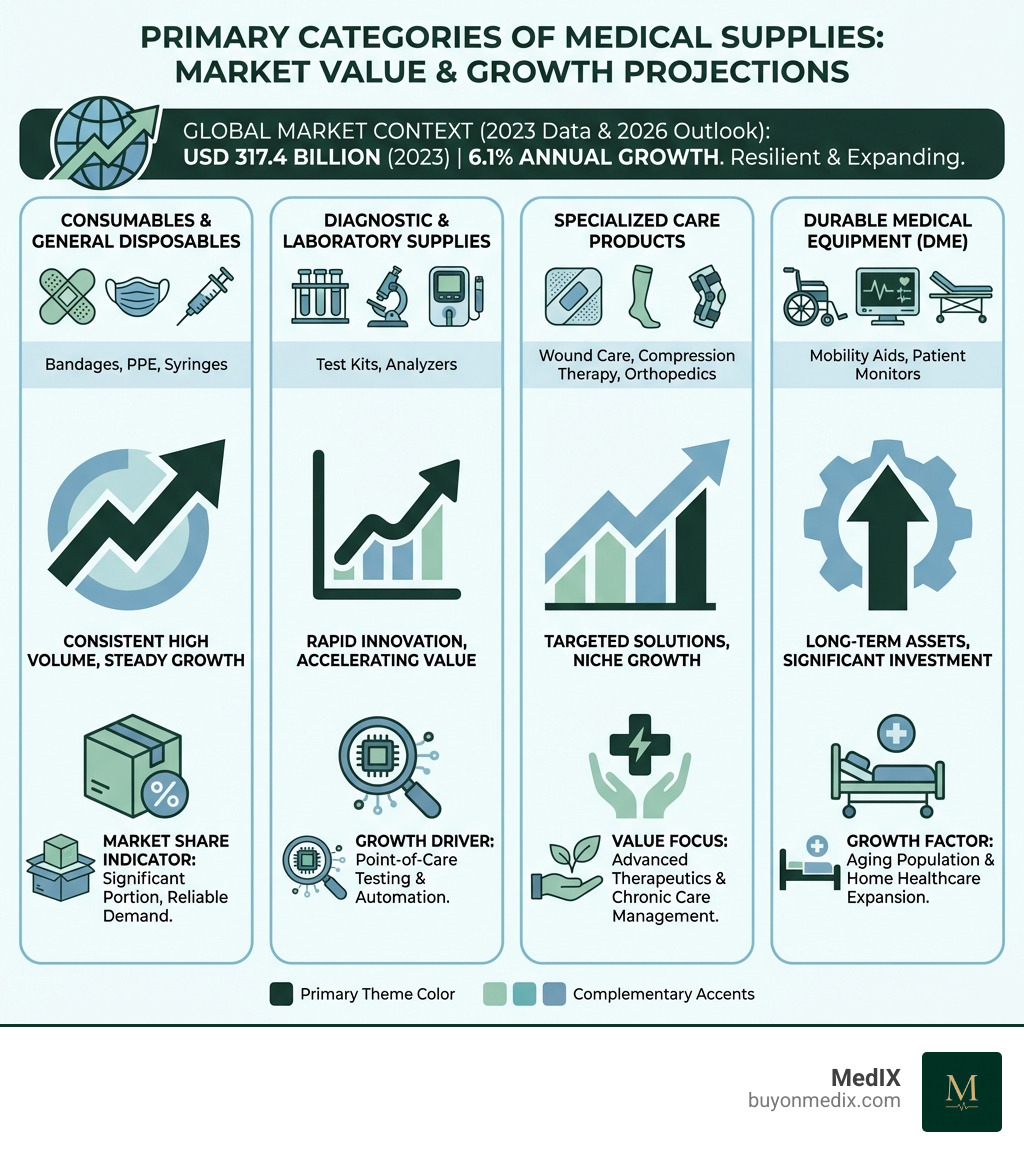
The global medical supplies market was valued at USD 317.4 billion in 2023 and is growing at 6.1% annually. North America alone is expected to reach USD 120.5 billion by 2025. The World Health Organization's essential medicines and health products framework emphasizes the critical importance of maintaining reliable access to quality medical supplies globally.
For broader market context and definitions of medical devices and supplies, see the overview on medical equipment.
But here's the challenge: procurement managers face mounting pressure to source verified products efficiently while managing costs, ensuring compliance, and maintaining reliable supply chains across borders.
While major distributors offer access to hundreds of thousands of medical supply products, many healthcare institutions still struggle with vendor fatigue, transparent pricing, and verification of product certifications.
The stakes are high. Every supply chain disruption risks patient care. Every unverified product threatens compliance. Every inefficient procurement process drains resources that could be spent on patient outcomes.
This guide cuts through the complexity. You'll learn how to steer essential supply categories, optimize procurement for your specific healthcare setting, and leverage technology to build a resilient supply chain—all while maintaining the quality standards your patients deserve.
Navigating the Essential Categories of Medical Supplies
When we talk about medical supplies for healthcare professionals, we're diving into a vast ocean of products, each vital for specific aspects of patient care. Understanding these primary categories is the first step toward efficient procurement and superior patient outcomes.

From everyday disposables to highly specialized diagnostic tools and long-term durable equipment, each category plays a crucial role. Let's break them down:
Consumables and General Disposables
These are the workhorses of any healthcare facility—items used once or in a short period and then discarded. Think of them as the unsung heroes that enable safe and sterile patient interactions.
- Personal Protective Equipment (PPE): Gloves, gowns, masks, and face shields are non-negotiable for protecting both healthcare professionals and patients from infection. The recent global health crises underscored their critical importance, making consistent access to high-quality PPE a top priority.
- Gloves: Available in various materials (latex, nitrile, vinyl) and for different uses (exam, surgical), gloves are fundamental for hygiene and infection control.
- Gowns: Isolation gowns, surgical gowns, and patient gowns are essential for maintaining sterile fields and preventing cross-contamination.
- Masks: Surgical masks, N95 respirators, and procedural masks are crucial for respiratory protection.
- Syringes and Needles: Used for injections, blood draws, and administering medication, these must be sterile and come in various gauges and lengths for different applications.
- Bandages and Tapes: From basic adhesive bandages to specialized surgical tapes and wound closure strips, these are indispensable for wound management and securing medical devices.
When sourcing these items, working with a reliable Medical Supplies Supplier is paramount to ensure consistent quality and availability.
Diagnostic and Laboratory Supplies
Accurate diagnosis is the cornerstone of effective treatment, and this category provides the tools to achieve it.
- Point-of-Care Testing (POCT): This includes rapid tests for conditions like flu, strep, and COVID-19, allowing for quick decisions at the patient's bedside or in the clinic.
- Clinical Analyzers: Devices for analyzing blood, urine, and other bodily fluids to measure various parameters, crucial for monitoring patient health and disease progression.
- Rapid Test Kits: Beyond POCT, these kits offer quick results for a wide array of conditions, enabling timely intervention.
- Specimen Containers: Sterile containers for collecting and transporting samples for laboratory analysis.
- Reagents: Chemical substances used in diagnostic tests to detect or measure specific analytes.
For facilities requiring precise and reliable lab work, understanding the nuances of Microbiology Lab Equipment and related supplies is key.
Specialized Care Products
This category encompasses items designed for specific medical conditions or therapeutic interventions, often requiring a deeper level of clinical expertise to select and apply.
- Wound Care: This is a significant segment, projected to reach USD 36.9 billion by 2028. It includes a vast array of products from basic dressings to advanced wound care solutions like hydrocolloids, alginates, foams, and negative pressure wound therapy systems. Products are available for acute wound care, such as surgical tapes and retention bandages, as well as for chronic and non-healing wounds.
- Incontinence Care: With a global market valued at USD 13.5 billion in 2022, products like adult diapers, pads, and protective underwear are crucial for managing urinary and fecal incontinence.
- Compression Therapy: This market is anticipated to reach USD 4.5 billion by 2027. Products include compression stockings, bandages, and garments used for conditions like phlebology, lymphology, and lipedema.
- Orthopedics: This includes a range of products for musculoskeletal support and injury recovery, such as braces, splints, casts, and supports. The orthopedic devices market is expected to grow at a CAGR of 5.2% from 2023 to 2030. These products provide pain relief and support, with casting materials being a key component for fracture management.
- Ostomy Supplies: For patients with ostomies, a variety of pouches, skin barriers, and accessories are necessary for daily management. Specialized suppliers offer a wide range of ostomy products.
- Catheters: Used for various purposes, including urinary drainage, vascular access, and drug delivery. A variety of advanced catheters are available from specialized suppliers.
Large health and medical companies often encompass many of these categories, including Incontinence Products, Wound Care, Compression Therapy, and Orthopedics, demonstrating the breadth of specialized care solutions available.
Sourcing Supplies for Diverse Healthcare Settings
The needs of a busy urban hospital differ significantly from a rural physician's office or a home health agency. Understanding these setting-specific requirements is crucial for effective procurement of medical supplies for healthcare professionals.

Distributors serve a wide array of channels, including acute hospital settings, primary care, long-term care, home health care, and physician and dental clinics. This highlights the diverse landscape of healthcare providers requiring custom supply solutions.
Hospitals and Health Systems
Hospitals are the giants of healthcare, requiring vast quantities and diverse ranges of medical supplies for healthcare professionals.
- Bulk Procurement: Hospitals often engage in large-scale purchasing, requiring suppliers with robust logistics and the capacity to handle significant volumes. This is where Bulk Medical Equipment strategies become vital.
- Surgical Instruments: Operating rooms demand a constant supply of specialized, high-precision instruments, both reusable and disposable.
- Advanced Diagnostics: Hospitals are equipped with sophisticated imaging and laboratory equipment, necessitating a continuous flow of related consumables and reagents.
- ICU Medical Equipment: Intensive Care Units require specialized monitoring equipment, ventilators, and a host of critical care supplies to manage the most fragile patients. For these high-stakes environments, access to reliable ICU Medical Equipment is non-negotiable.
Suppliers for health systems must be able to redefine supply chain expectations, offering patient-focused solutions and a comprehensive distribution network.
Physician Offices and Primary Care Clinics
While smaller in scale than hospitals, physician offices and primary care clinics are the front lines of healthcare, requiring a steady stream of essential medical supplies for healthcare professionals for routine care.
- Exam Room Essentials: This includes basic items like exam gloves, tongue depressors, cotton swabs, and disposable drapes.
- Vaccines: Especially during flu season, physician offices are key sites for vaccination, requiring reliable supply chains for influenza vaccines and related supplies.
- Diagnostic Tools: Otoscopes, ophthalmoscopes, stethoscopes, and blood pressure cuffs are standard equipment.
- Disposables: Needles, syringes, and masks are constantly in demand.
A dedicated Clinic Medical Supply partner can help these clinics manage their inventory efficiently, offering a broad array of medical-surgical products and pharmaceuticals.
Ambulatory Surgery Centers
These centers specialize in outpatient surgical procedures, demanding a very specific set of medical supplies for healthcare professionals to ensure sterility and surgical success.
- Custom Procedure Trays: Pre-packaged trays containing all the necessary instruments and disposables for a specific procedure, streamlining workflow and reducing waste.
- Sterilization Supplies: Autoclave wraps, sterilization pouches, and indicators are critical for maintaining aseptic conditions.
- Anesthesia Equipment: Anesthetic gases, intubation supplies, and monitoring devices.
- Orthopedic Instruments: For specific orthopedic procedures performed in an outpatient setting.
A robust portfolio of products and a nationwide distribution network allows ambulatory surgery centers to procure surgical equipment, custom procedure trays, prescription drugs, and orthopedic supplies efficiently.
Post-Acute and Home Health Agencies
As healthcare increasingly shifts to outpatient and home-based settings, the demand for medical supplies for healthcare professionals in post-acute and home health agencies is growing rapidly. These supplies are crucial for supporting patient independence and recovery outside traditional hospital walls.
- Mobility Aids: Walkers, wheelchairs, crutches, and canes to assist patients with movement.
- Nutritional Supplies: Enteral feeding formulas, supplements, and related delivery systems.
- CPAP Equipment: Continuous Positive Airway Pressure machines and accessories for sleep apnea management.
- Wound Care: A continuation of hospital wound care, but often adapted for patient self-management or home health nurse visits.
- Incontinence Products: Essential for maintaining dignity and hygiene for patients managing incontinence at home.
Many suppliers offer extensive support for post-acute care supplies and services, including general and advanced wound care products, nutritional supplies, CPAP supplies, and incontinence supplies for home health agencies and long-term care facilities. These products and services are designed to reinforce client independence.
Key Considerations for Procuring Medical Supplies for Healthcare Professionals
Sourcing medical supplies for healthcare professionals isn't just about placing an order; it's a strategic endeavor that impacts patient safety, operational efficiency, and financial health. We need to consider a multitude of factors to ensure we're making the best decisions.
Effective Healthcare Supply Chain Management involves balancing competing priorities, from cost-effectiveness to the nuances of clinician preference.
Balancing Quality, Cost, and Patient Outcomes
This is the eternal tightrope walk in healthcare procurement. We strive for the highest quality without breaking the bank, knowing that patient outcomes depend on both.
- Value-Based Purchasing: Moving beyond simply buying the cheapest product, this approach focuses on the total value a product delivers, considering its impact on patient care, staff efficiency, and long-term costs.
- Total Cost of Ownership: Beyond the purchase price, we must factor in costs like training, maintenance, disposal, and potential negative patient outcomes from lower-quality items.
- Regulatory Compliance: All medical supplies must meet stringent regulatory standards. We look for products with FDA clearance, CE marking, or other relevant certifications. Partnering with marketplaces like MedIX, which conducts rigorous compliance checks, helps ensure we are sourcing Certified Medical Equipment and CE Marked Medical Devices.
- Patient Safety Standards: Every procurement decision must prioritize patient safety. This means selecting products that are proven effective, reliable, and safe for their intended use.
Leading medical brands aim to offer a comprehensive mix of clinician-preference, cost-efficient, and physician-preferred items, bridging the gap between quality and savings.
The Role of Clinician Preference and Product Standardization
Happy clinicians often lead to better patient care. Their input on medical supplies for healthcare professionals is invaluable, but it needs to be balanced with the benefits of standardization.
- User Feedback: Actively soliciting feedback from nurses, doctors, and technicians on product usability, comfort, and effectiveness can lead to better adoption and fewer errors.
- Formulary Management: Developing a standardized list of approved products, often with clinician input, helps control costs and simplifies inventory.
- Product Trials: Before committing to a new product, conducting trials allows us to assess its performance in a real-world setting and gather clinician input.
- Training Efficiency: Standardizing products can reduce the need for extensive training on multiple similar items, saving time and resources.
- Clinical Differentiation: While some products offer unique clinical advantages that warrant their higher cost or specific selection, others may have "low clinical differentiation," meaning multiple options perform equally well, opening the door for cost-saving standardization.
- Inventory Reduction: Fewer product variations mean simpler inventory management, less waste, and potentially better bulk pricing.
Building a Resilient and Reliable Supply Chain
The past few years have taught us the critical importance of a robust and adaptable supply chain. Fragile supply chains can quickly become a crisis for patient care.
- Vendor Diversification: Relying on a single supplier for critical items can be risky. We aim to establish relationships with multiple trusted vendors to mitigate potential disruptions.
- Inventory Analysis: Regularly analyzing inventory levels to prevent stockouts of essential items while avoiding overstocking, which ties up capital and risks expiration.
- Lead Time Management: Understanding and planning for the time it takes for orders to be placed, fulfilled, and delivered is crucial, especially for global supply chains.
- Data Analytics: Leveraging data to predict demand, identify potential supply chain vulnerabilities, and optimize purchasing decisions. Technology and data analytics are key to building resilient healthcare supply chains, replacing fragility with resilience.
- Global Logistics: Ensuring that our chosen suppliers have reliable Medical Device Logistics capabilities, especially when sourcing from a worldwide marketplace, is essential for consistent delivery. MedIX's focus on reliable global logistics directly addresses this need.
Leveraging Technology and Innovation in Supply Management
In today's healthcare environment, technology is no longer a luxury but a necessity for optimizing the procurement and management of medical supplies for healthcare professionals. From digital ordering platforms to cutting-edge product innovations, technology is changing how we operate.
Digital Tools for Optimizing the Ordering Process
Gone are the days of endless paper trails and manual inventory counts. Digital solutions offer efficiency, accuracy, and insights.
- E-procurement Platforms: Online marketplaces and portals streamline the entire purchasing process, from selection and ordering to invoicing and payment. These platforms can offer comprehensive product information and functionality for convenience.
- Barcode Scanning Systems: Barcode-based inventory management tools speed up item counts and reduce human error. This simplifies medical supply ordering and purchasing.
- Automated Reordering: Integrating inventory data with ordering systems can trigger automatic reorders when stock levels hit predefined thresholds, preventing stockouts and ensuring continuity of care.
- Inventory Management Software: Comprehensive platforms provide integrated inventory control, offering features like customized reporting, practice management system integration, and the ability to create lists and formularies. Many suppliers also offer online ordering with customized shopping lists and advanced product search to speed up the process.
MedIX, with its AI-matching capabilities, takes this a step further, simplifying procurement by intelligently connecting certified medical equipment suppliers with hospitals and clinics, ensuring verified equipment and transparent transactions worldwide.
Emerging Trends in Medical Supplies for Healthcare Professionals
The medical supply landscape is constantly evolving, driven by innovation and a growing emphasis on sustainability and patient-centric care.
- Sustainable Materials & Eco-friendly Packaging: There's a rising demand for medical supplies made from biodegradable, recycled, or renewable resources, and packaging that minimizes environmental impact. This trend addresses both ecological concerns and increasingly stringent corporate social responsibility goals.
- Smart Supplies: These are devices integrated with technology, such as sensors, to provide real-time data. For instance, digital solutions with sensor technology can optimize patient care by monitoring conditions like incontinence and providing insights for personalized care.
- Telehealth Devices: The explosion of telehealth has driven demand for remote monitoring devices, wearable sensors, and diagnostic tools that can be used effectively outside of traditional clinical settings.
- 3D-Printed Medical Products: From custom prosthetics and implants to anatomical models for surgical planning and even personalized drug dosages, 3D printing offers unparalleled customization and rapid prototyping in medical supplies.
These innovations promise not only to improve patient care but also to improve efficiency and reduce waste across the healthcare system.
Frequently Asked Questions about Sourcing Medical Supplies
We understand that navigating medical supplies for healthcare professionals can raise many questions. Here are some of the most common ones we encounter, along with our expert advice.
How do I ensure the medical supplies I source are certified and compliant?
Ensuring that your medical supplies are certified and compliant is non-negotiable for patient safety and regulatory adherence. We recommend a multi-pronged approach:
- Look for Regulatory Approvals: Always verify that products carry the necessary regulatory clearances for your region. This typically includes FDA clearance in the United States, CE marking in Europe, or Health Canada approval. These marks indicate that the product meets essential health and safety requirements.
- Partner with Trusted Suppliers and Marketplaces: Establish relationships with reputable distributors and B2B marketplaces known for their commitment to quality and compliance. Platforms like MedIX, for example, specialize in connecting you with certified medical equipment suppliers and perform rigorous compliance checks on their listed products. This transparency helps you make informed decisions, knowing the equipment has been verified.
- Request Documentation: Don't hesitate to ask for product specifications, quality certifications, and regulatory documentation from your suppliers. A reliable supplier should be able to provide these readily.
- Understand Your Needs: Different medical devices have different classification levels and regulatory requirements. Understand the specific standards applicable to the types of supplies you are purchasing.
What is the best way to manage inventory for a small clinic?
For a small clinic, efficient inventory management of medical supplies for healthcare professionals is crucial to prevent stockouts, reduce waste, and manage costs. We find these strategies particularly effective:
- Implement a PAR Level System: This stands for "Periodic Automatic Replenishment." For each essential item, set a minimum (reorder point) and maximum (PAR level) quantity. When stock drops to the minimum, reorder enough to bring it back to the maximum. This ensures you always have enough without overstocking.
- Use Digital Tools: Leverage supplier-provided online portals or simple inventory management software. Many major distributors offer digital solutions that allow you to track inventory, create customized shopping lists, and streamline the reordering process. Even basic barcode scanning systems can drastically speed up item counts and improve accuracy.
- Regular Audits: Conduct regular (e.g., weekly or bi-weekly) physical counts of high-use or high-value items to identify discrepancies and prevent stockouts before they occur.
- Consolidate Suppliers: Where possible, work with fewer, comprehensive suppliers. This can simplify ordering, reduce administrative burden, and potentially open up better pricing through volume discounts.
- Designate an Inventory Manager: Even in a small clinic, assigning one person the primary responsibility for inventory oversight ensures accountability and consistency.
How can our facility reduce supply costs without sacrificing quality of care?
Reducing supply costs for medical supplies for healthcare professionals is a constant challenge, but it's entirely possible to achieve savings without compromising patient care. Here's how we approach it:
- Focus on Value Analysis for High-Cost Items: For expensive or frequently used items, conduct a thorough value analysis. This involves evaluating the clinical effectiveness, patient outcomes, and total cost of ownership (not just the purchase price) of different products. Sometimes, a slightly more expensive item might offer better patient outcomes or greater efficiency, leading to overall savings.
- Standardize Products Where Possible: Identify areas where multiple brands or types of similar products are being used. By standardizing to one or two clinically equivalent options, you can leverage bulk purchasing power, simplify staff training, and reduce inventory complexity. For example, many suppliers emphasize offering clinician-preferred items with low clinical differentiation to facilitate cost-efficiency.
- Explore Group Purchasing Organizations (GPOs) or B2B Marketplaces: GPOs negotiate discounted rates with suppliers on behalf of a network of healthcare facilities, offering significant savings. Similarly, B2B marketplaces like MedIX connect you directly with a global network of certified suppliers, often providing competitive pricing due to reduced intermediaries and transparent transactions.
- Optimize Inventory Management: As discussed above, efficient inventory practices (like PAR levels and automated reordering) reduce waste from expired products, prevent overstocking, and minimize emergency orders which often come at a premium.
- Engage Clinicians in the Process: Involve healthcare professionals in product selection and cost-saving initiatives. Their insights into product efficacy and usability are invaluable, and their buy-in is crucial for successful implementation of new products or standardization efforts.
Conclusion
Navigating the complex world of medical supplies for healthcare professionals requires more than just a shopping list; it demands strategic sourcing, an understanding of diverse healthcare settings, and a keen eye for quality and cost-efficiency. From the everyday consumables to specialized care products and advanced diagnostic tools, each item plays a critical role in delivering exceptional patient care.
We've explored the primary categories, the unique demands of various healthcare environments, and the key considerations that drive effective procurement. We've also seen how technology and innovation, from digital ordering systems to smart supplies and sustainable practices, are reshaping the future of supply management.
Our goal is to empower healthcare professionals and procurement teams to make informed decisions, ensuring a steady flow of high-quality, compliant, and cost-effective supplies. This commitment to procurement efficiency directly translates into better patient outcomes and a more resilient healthcare system.
To streamline your procurement and connect with verified suppliers worldwide, explore a global marketplace of certified medical supplies.

Expert voices
Insights from leaders transforming medical equipment procurement


More from our blog
Discover the latest trends in medical technology and procurement
Stay ahead of medical technology
Get the latest insights, research, and market updates delivered straight to your inbox
Ready to transform your procurement
Discover how MedIX can streamline your medical equipment sourcing process