Transforming medical equipment procurement globally

Why Pulse Oximeters Are Essential Medical Devices
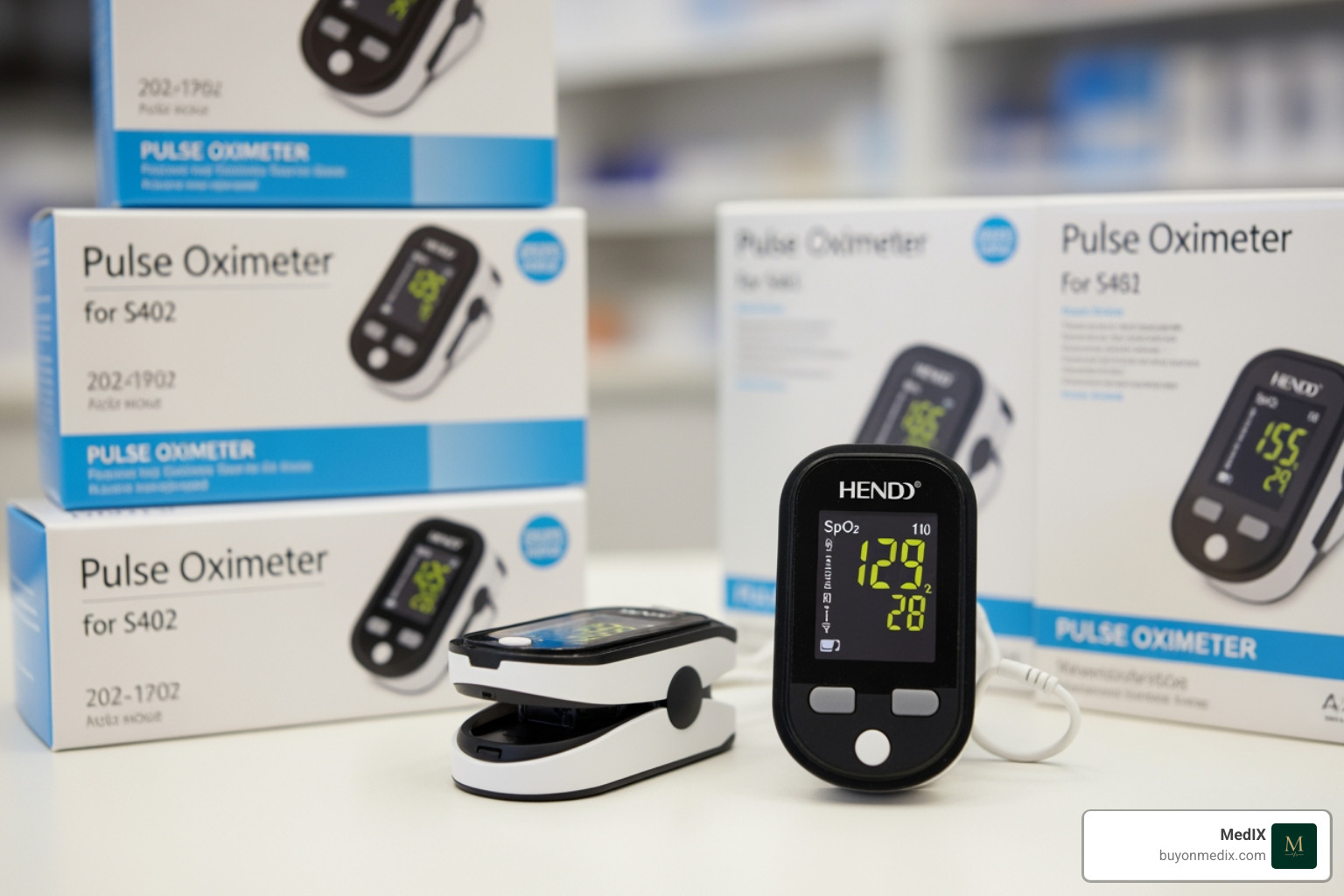
A pulse oximeter for sale is more than just another medical device—it's a critical tool for monitoring blood oxygen saturation (SpO2) and pulse rate in hospitals, clinics, home care settings, and even during athletic activities. These small, non-invasive devices have become indispensable for healthcare professionals and individuals managing respiratory conditions, cardiovascular health, or recovery from illnesses.
Quick Guide to Buying Pulse Oximeters:
- Price Range: $29.97 to $96.00 for consumer models; higher for medical-grade devices
- Top Features: Health Canada/FDA approval, OLED display, 30+ hours battery life, perfusion index
- Accuracy: ±2% for SpO2 readings between 70-100%
- Normal SpO2 Range: 94-100% (below 90% indicates hypoxemia requiring medical attention)
- Common Types: Fingertip (portable), handheld (clinical), pediatric (smaller sensors), Bluetooth-enabled (data tracking)
- Key Considerations: Finger thickness compatibility (0.3-1.0 inch), auto-shutoff, carrying accessories
If you're a procurement manager sourcing pulse oximeters for your healthcare institution, understanding the technology behind these devices is crucial. Pulse oximeters work by emitting red and infrared light through the fingertip and measuring how much light passes through. Oxygenated blood absorbs these wavelengths differently than deoxygenated blood—a principle based on spectrophotometry and the Beer-Lambert law. This non-invasive method provides instant feedback on a patient's oxygen levels without needles or blood draws.
The market offers everything from basic fingertip models at $29.97 to advanced Bluetooth-enabled devices with respiratory rate monitoring at $69.99. Whether you need devices for emergency transport, ICU monitoring, or home care programs, selecting the right pulse oximeter requires balancing accuracy, durability, regulatory approval, and cost-effectiveness.
Simple guide to pulse oximeter for sale terms:
Understanding Pulse Oximetry: How It Works and Why It Matters
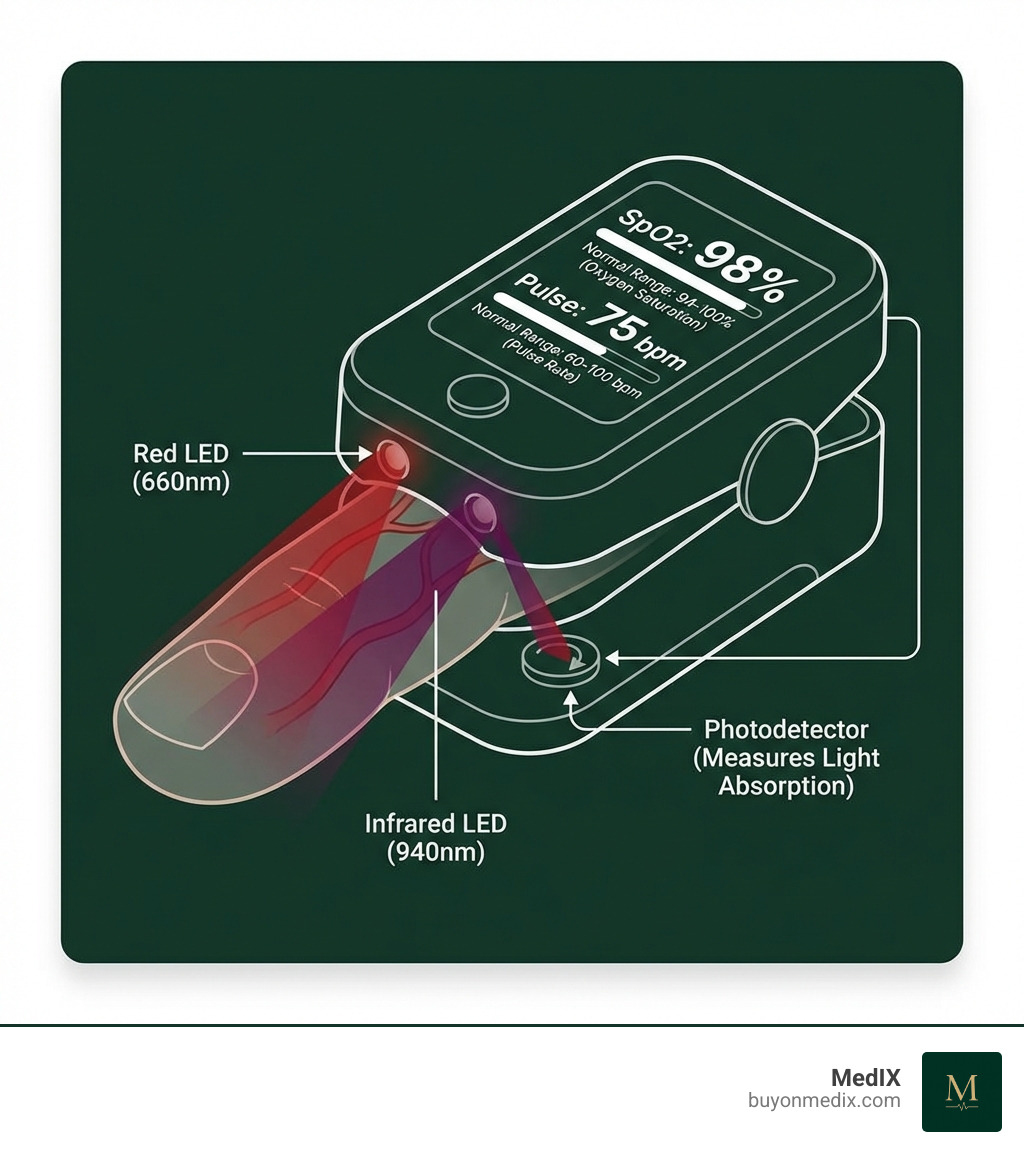
To find the best pulse oximeter for sale, we first need to understand the "magic" happening inside that little plastic clip. Pulse oximetry is a non-invasive and painless method that measures how much oxygen your blood is carrying. It relies on the principle of spectrophotometry.
Inside the device, there are two light-emitting diodes (LEDs). One emits red light (660 nm) and the other emits infrared light (940 nm). These light beams pass through the tissues of your fingertip to a photodetector on the other side. Here is where the science gets interesting: oxygenated hemoglobin (the protein in your blood that carries oxygen) absorbs more infrared light and allows more red light to pass through. Conversely, deoxygenated hemoglobin absorbs more red light and allows more infrared light to pass through.
By calculating the ratio of the absorption of the red and infrared light, the device can determine your SpO2 levels. This calculation is based on the Beer-Lambert law, which relates the attenuation of light to the properties of the material through which the light is traveling.
Why does this matter? Because oxygen is the fuel for every organ in your body. If your levels drop too low, your heart, brain, and other vital organs can suffer damage. Monitoring these levels is vital for patients with chronic obstructive pulmonary disease (COPD), asthma, or congestive heart failure. In a Medical Equipment Marketplace, having access to devices that use this technology accurately is the cornerstone of modern patient care. Furthermore, clinical research on pulse oximeter accuracy emphasizes that while these devices are highly reliable, they are estimates and should be used as part of a broader clinical assessment.
Normal Ranges for SpO2 and Pulse Rate
When you look at the screen of a pulse oximeter for sale, you will typically see two main numbers.
SpO2 (Oxygen Saturation): This is shown as a percentage.
- Normal Range: 94% to 100%.
- Concerning Levels: If the reading drops below 94%, it may indicate that the lungs aren't transferring enough oxygen to the blood.
- Hypoxemia: Levels below 90% are considered a medical emergency (hypoxemia) and require immediate consultation with a healthcare professional.
PR (Pulse Rate): This is measured in beats per minute (bpm).
- Normal Resting Heart Rate: For most adults, this ranges between 60 and 100 bpm.
- Athletes: Highly trained athletes may have a resting heart rate as low as 40 to 50 bpm.
Monitoring these numbers over time provides a "baseline." For instance, if a patient’s normal SpO2 is usually 98% and it suddenly drops to 94%, even though it is still within the "normal" range, it could signal an underlying issue that needs attention.
Key Features to Look for in a Pulse Oximeter for Sale
When browsing for a pulse oximeter for sale, it is easy to get overwhelmed by the sheer number of options. However, not all devices are created equal. If you are sourcing for a clinic, you must prioritize Certified Medical Equipment to ensure patient safety.
Here are the non-negotiables:
- Regulatory Approval: Look for Health Canada-approved or FDA-certified models. This ensures the device has undergone rigorous testing for accuracy.
- Accuracy: A reliable device should have an accuracy of ±2% for SpO2 between 70% and 100%.
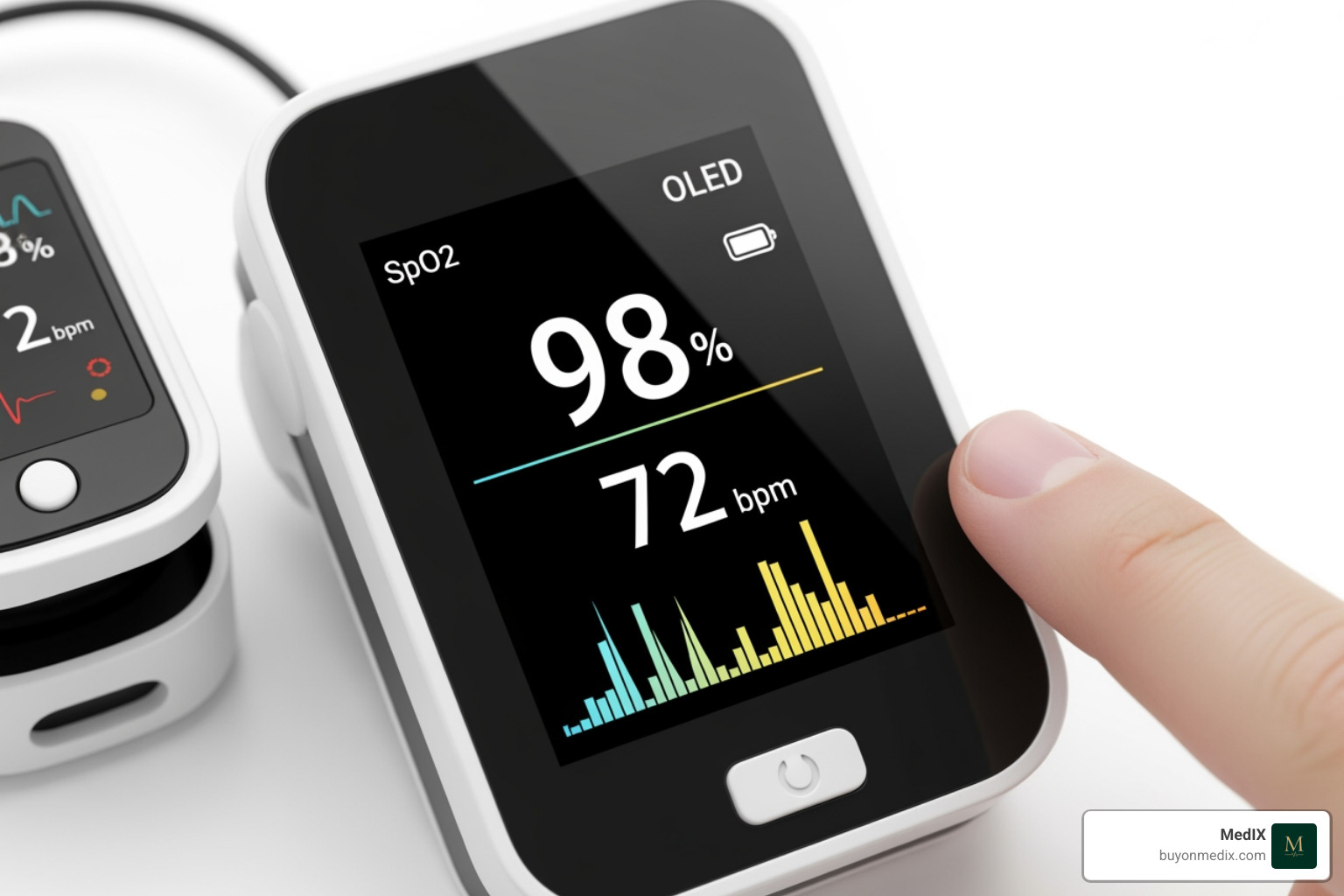
- Display Quality: An OLED or high-definition LED display is easier to read in different lighting conditions. Many premium models feature multidirectional displays, allowing you to read the screen from any angle.
- Perfusion Index (PI): This is a numerical value that represents the pulse strength at the sensor site. A higher PI means a stronger pulse, which usually results in a more accurate reading.
- Battery Life and Auto-Shutoff: Most devices use AAA batteries. Look for a model with at least 30 hours of continuous operation. An auto-shutoff function is essential to preserve battery life when the finger is removed.
Choosing a Premium Pulse Oximeter for Sale
If your budget allows, premium models offer features that can significantly improve patient monitoring. When performing a Medical Equipment Price Comparison, you will notice that premium models often range from $50 to $90.
Premium features include:
- Bluetooth Connectivity: These devices sync with smartphone apps to log data over time. This is incredibly helpful for doctors to track a patient’s progress during recovery.
- Audible Alarms: Some models can be programmed to beep if oxygen levels or heart rates fall outside of a pre-set range.
- Respiratory Rate Monitoring: Advanced sensors can now estimate the number of breaths taken per minute, providing a more holistic view of respiratory health.
Finding a Pulse Oximeter for Sale for Athletes
Athletes, hikers, and aviators have different needs than clinical patients. They require ruggedness and portability. When looking for a pulse oximeter for sale for sports use, look for "Sports Technology" labels.
These devices are often drop-tested and moisture-proof. Accuracy is still paramount, especially for high-altitude climbers or pilots who need to monitor for hypoxia. Useful accessories for this group include:
- Lanyards: To keep the device accessible around the neck.
- Carrying Cases: Hard-shell EVA cases protect the sensor from damage in a gym bag or backpack.
- Reliable Medical Sources: Always check Reliable Medical Sources to ensure that even "sports" models meet basic accuracy standards.
Comparing Different Types of Pulse Oximeters
Choosing the right form factor is just as important as the features. We generally categorize these devices into three main types based on their intended use.
| Feature | Fingertip Pulse Oximeter | Handheld Pulse Oximeter | Pediatric Pulse Oximeter |
|---|---|---|---|
| Primary Use | Home use, spot-checks, sports | Clinical settings, hospitals, EMS | Infants and young children |
| Portability | Extremely high (pocket-sized) | Medium (requires probe/cable) | High |
| Monitoring | Spot-checking only | Continuous or spot-checking | Spot-checking |
| Price Range | $30 - $60 | $150 - $500+ | $30 - $50 |
| Sensor Type | Built-in clip | External probe | Small built-in or wrap sensor |
As Patient Monitor Suppliers, we often see hospitals opting for handheld models for their durability and the ability to swap out sensors (e.g., using a wrap sensor for a toe if the finger is unavailable). However, for most home care and general clinic use, the fingertip model is the "gold standard" for convenience.
Pediatric vs. Adult Models
One of the most common mistakes is using an adult pulse oximeter for sale on a small child. For a pulse oximeter to work, the finger must be thick enough to break the light beams properly.
Adult devices are typically designed for finger thicknesses between 0.37" and 0.86". If a child's finger is too small, the light will "leak" around the sides, leading to highly inaccurate or failed readings. Pediatric models feature:
- Smaller Sensors: Specifically calibrated for smaller finger diameters.
- Silicone Padding: Softer padding for sensitive skin.
- Child-Friendly Designs: Often brightly colored to reduce "white coat syndrome" anxiety.
For clinics, it is best to source these through a specialized Clinic Medical Supply to ensure you have a range of sizes available for all patient demographics.
How to Ensure Accurate Readings at Home
Even the most expensive pulse oximeter for sale can give a "garbage" reading if used incorrectly. We always recommend following these steps to ensure clinical-grade accuracy.
- Warm Your Hands: Cold hands mean poor circulation (low perfusion). If your fingers are cold, rub them together or run them under warm water before testing.
- Remove Nail Polish: Dark nail polish (especially black, blue, or deep red) can block the light beams and result in an artificially low SpO2 reading.
- Be Still: Movement is the enemy of pulse oximetry. Rest your arm on a flat surface and keep your hand steady for at least 30 seconds to allow the device to find a consistent pulse.
- Mind the Light: Very bright ambient light (like direct sunlight) can sometimes interfere with the photodetector. Use the device indoors or shield it with your other hand if outside.
- Check the Waveform: If your device has a plethysmograph (a little moving wave), wait until the wave is steady and rhythmic before trust the number.
If you are a Medical Supplies Supplier, educating your customers on these factors is just as important as the sale itself.
Maintenance and Cleaning Protocols
To keep your device in top shape, regular maintenance is required. This is especially true if you are purchasing Bulk Medical Equipment for a large facility.
- Cleaning: Wipe the silicone padding and the exterior with a soft cloth dampened with a mild disinfectant or 70% isopropyl alcohol. Never submerge the device in water.
- Storage: Store in a cool, dry place. If you aren't going to use the device for more than a month, remove the batteries to prevent corrosion.
- Battery Replacement: Low batteries can lead to dim displays and inaccurate readings. Always keep a fresh pair of AAA batteries nearby.
Frequently Asked Questions about Pulse Oximeters
What is the difference between a pulse oximeter and a patient monitor?
A pulse oximeter is a dedicated device that measures only SpO2 and pulse rate. A patient monitor is a larger clinical machine that tracks multiple vitals simultaneously, including blood pressure, ECG, temperature, and respiratory rate. While a pulse oximeter is often a part of a patient monitor, the standalone version is designed for portability and spot-checks.
Can I use a pulse oximeter if I have dark nail polish?
It is not recommended. Dark colors like navy, black, and chocolate brown significantly interfere with the light wavelengths used by the device. For the most accurate results, remove the polish from at least one finger or use the device on a toe (if the device fits) or earlobe (using a specialized clip).
How long do the batteries typically last in a fingertip model?
Most modern fingertip pulse oximeters use two AAA batteries. Under normal use (spot-checking a few times a day), these batteries can last several months. In continuous use settings, you can expect about 30 to 60 hours of operation. Always look for models with an "auto-off" feature to maximize this lifespan.
Conclusion
Finding the right pulse oximeter for sale doesn't have to be a daunting task. Whether you are an individual looking to track your fitness, a patient managing a chronic condition, or a procurement professional stocking a hospital, the key is to look for accuracy, regulatory certification, and the right features for your specific needs.
At MedIX, we understand that quality medical equipment saves lives. As a global B2B marketplace, we specialize in connecting healthcare providers with certified suppliers. We take the guesswork out of procurement by ensuring all equipment on our platform meets rigorous compliance checks. From single fingertip units to bulk orders of advanced patient monitors, we provide the transparency and reliable global logistics needed to keep your facility running smoothly.
For more information on sourcing verified medical technology, visit us at https://www.buyonmedix.com. We are here to simplify your medical supply chain, one reliable device at a time.

Expert voices
Insights from leaders transforming medical equipment procurement


More from our blog
Discover the latest trends in medical technology and procurement
Stay ahead of medical technology
Get the latest insights, research, and market updates delivered straight to your inbox
Ready to transform your procurement
Discover how MedIX can streamline your medical equipment sourcing process