Transforming medical equipment procurement globally

The Vital Role of Ophthalmic Equipment Suppliers

Finding the right Ophthalmic equipment suppliers is crucial for any eye care practice. These specialized providers offer a wide range of essential products, including:
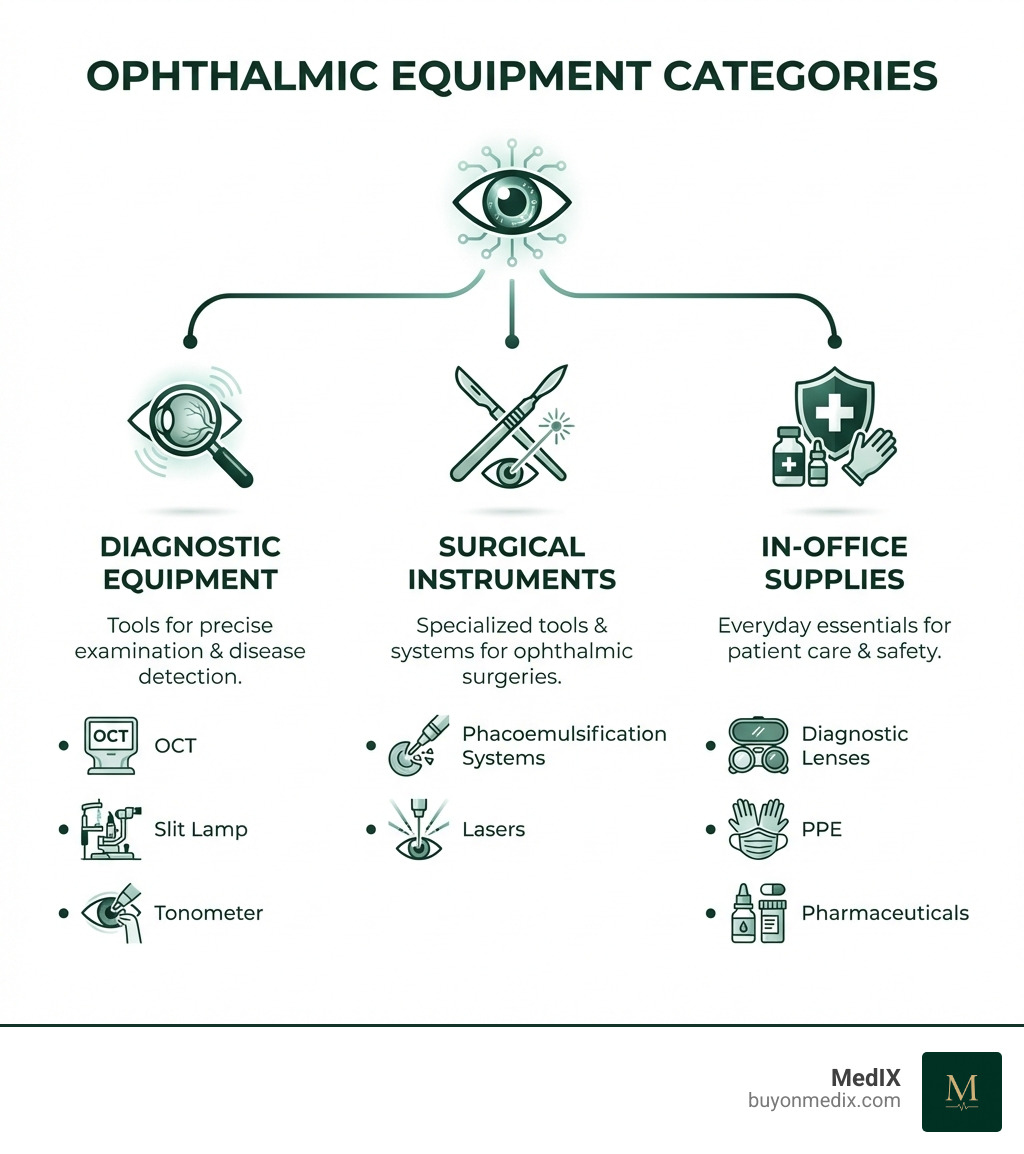
- Diagnostic Equipment: Tools for precise eye examination and disease detection (e.g., OCTs, slit lamps, tonometers).
- Surgical Instruments: Specialized tools for ophthalmic surgeries (e.g., phacoemulsification systems, lasers).
- In-Office Supplies: Everyday essentials like diagnostic lenses, PPE, and pharmaceuticals.
- Support Services: Installation, training, maintenance, and financing.
The world of eye care relies on advanced technology. As a procurement manager, you know that securing reliable, high-quality equipment is key to effective patient treatment. This is where specialized ophthalmic equipment suppliers come in, providing the innovative tools that empower eye care professionals. The global ophthalmic equipment market, valued at USD 15.5 billion in 2023, is projected to reach USD 25.8 billion by 2032, with a strong 5.8% CAGR. This growth reflects the increasing demand for sophisticated eye care solutions. Choosing the right supplier means partnering with someone who understands these dynamics and provides the products and support to keep your practice at the forefront of eye health.
Understanding the Spectrum of Ophthalmic Equipment

When we talk about ophthalmic equipment suppliers, we're referring to a vast ecosystem of devices and consumables crucial for every aspect of eye care. Understanding this spectrum is the first step in making informed procurement decisions that improve practice efficiency and patient outcomes. The market for ophthalmology instruments alone is expected to grow from USD 5.2 billion in 2023 to USD 8.1 billion by 2028, at a CAGR of 9.3%, underscoring the continuous innovation in the sector.
Diagnostic Equipment: The Foundation of Eye Care
Accurate diagnosis is the cornerstone of effective eye care. Optical Coherence Tomography (OCT) is a key diagnostic tool. This non-invasive imaging test uses light waves to create cross-section pictures of the retina, vital for managing conditions like glaucoma, macular degeneration, and diabetic retinopathy.
Retinal cameras (fundus cameras) capture high-resolution images of the retina, optic disc, and macula for documentation and monitoring. Advanced models offer ultra-widefield (UWF™) imaging, capturing over 80% of the retina in one shot to help uncover pathology in the periphery.
Tonometers are essential for measuring intraocular pressure (IOP), a key indicator for glaucoma. Types range from applanation to rebound and air-puff tonometers. Perimeters (visual field testers) evaluate peripheral and central vision to detect blind spots caused by glaucoma, stroke, or other neurological issues.
Corneal topographers map the corneal surface, crucial for contact lens fitting and refractive surgery planning. Autorefractors and Autorefractors/Keratometers provide objective measurements of refractive error and corneal curvature, streamlining the prescription process.
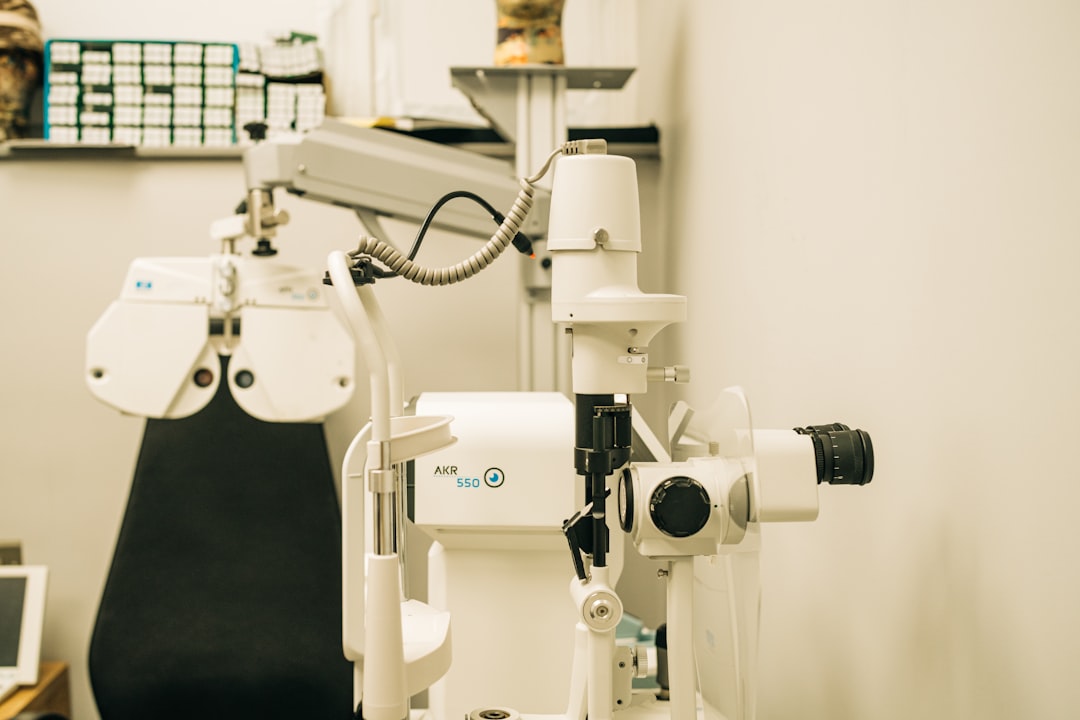
Finally, the ubiquitous Slit lamp remains a foundational tool, offering magnified, 3D views of the eye's anterior and posterior segments, often with digital imaging capabilities. For a deeper dive into the vast world of diagnostic tools, you can explore More info on diagnostic tools.
Surgical Instruments and Systems
The evolution of ophthalmic surgery is driven by advancements in surgical instruments. Ophthalmic equipment suppliers are at the forefront of providing these sophisticated tools. The market for ophthalmic surgical equipment is projected to grow at a CAGR of 7.2% from 2023 to 2030, reaching an estimated value of USD 7.9 billion.
Phacoemulsification systems are indispensable for modern cataract surgery, using ultrasonic energy to break up and remove the clouded lens. Vitrectomy machines are essential for retinal and vitreous surgeries, allowing surgeons to remove the vitreous gel and perform intricate repairs.
Ophthalmic lasers are versatile tools for procedures like glaucoma treatment (SLT), posterior capsulotomy (YAG laser), and retinal photocoagulation. High-quality surgical microscopes provide the extreme magnification and illumination needed for microsurgery, with some systems offering 3D visualization. For cutting-edge refractive surgeries, Femtosecond lasers offer a new level of precision.
Beyond these systems, suppliers provide a comprehensive array of hand instruments, including bipolar instruments, calipers, cannulas, forceps, scissors, needle holders, and speculums, all vital for microsurgical precision. These instruments are considered Durable Medical Equipment when sourced from reputable suppliers.
Essential Clinic Supplies and Consumables
No practice can function without essential clinic supplies. Ophthalmic equipment suppliers ensure you are stocked with everything from disposables to specialized pharmaceuticals.
Diagnostic lenses (e.g., 90D, 78D) are used with slit lamps for detailed examinations. Sterilization supplies, from pouches to autoclaves, are paramount for infection control, as is Personal Protective Equipment (PPE) like gloves and masks.
Pharmaceuticals are another crucial category, including:
- Dilating drops and anesthetics
- Antibiotics and steroids
- Glaucoma medications
- Dry eye treatments and other OTC drops
In addition, surgical disposables like drapes, gowns, and single-use blades are vital for sterility. Other essentials include cleaning solutions, equipment covers, and staining products. These diverse items, falling under Clinic Medical Supply, highlight the comprehensive role of ophthalmic equipment suppliers.
Key Considerations When Selecting Ophthalmic Equipment Suppliers

Choosing the right ophthalmic equipment suppliers is a strategic partnership that supports your practice's growth and patient care standards. The decision involves a careful evaluation of several critical factors beyond the price tag, focusing on long-term value, reliability, and support.
A supplier's reputation, product portfolio breadth, and scalability are crucial. Can they meet all your needs and grow with your practice? Post-sale support, including installation, training, and maintenance, is arguably one of the most vital aspects. Finally, don't overlook financing options and training programs that make technology accessible and ensure your staff can operate it effectively.
How Leading Ophthalmic Equipment Suppliers Cater to Different Practice Needs
Leading ophthalmic equipment suppliers understand that one size does not fit all. For small practices, they often focus on affordability, ease of use, and multi-functional devices that maximize efficiency in a compact space. This includes all-in-one diagnostic systems, portable devices, and cost-effective modular systems that can be upgraded over time.
For large clinics and hospitals, suppliers offer high-throughput systems, advanced EMR integration, and robust service contracts. These might be comprehensive packages with multiple units, centralized data management, and dedicated support. Suppliers also provide flexible procurement options, including Bulk Medical Equipment for larger institutions, ensuring competitive pricing for volume purchases.
New vs. Pre-Owned: Making the Right Investment
The decision between new and pre-owned equipment is a common dilemma. New equipment offers the latest technology and full manufacturer warranties, providing peace of mind but at a higher upfront cost.
Pre-owned or refurbished equipment is a budget-friendly alternative, allowing practices to acquire high-quality instruments at a fraction of the price. This is appealing for new practices or those expanding on a budget. However, diligence is key. We advise working with reputable ophthalmic equipment suppliers who provide Certified Medical Equipment. This certification ensures the equipment has been thoroughly inspected, refurbished, and calibrated. When considering pre-owned, scrutinize warranty differences, technology access, refurbishment quality, and the long-term ROI.
Beyond the Sale: Evaluating Supplier Support and Services
The relationship with your ophthalmic equipment suppliers shouldn't end at the sale. The quality of post-sale support is crucial for uninterrupted practice operations. Reputable suppliers offer a suite of services to protect your investment:
- Installation and training: Professional setup and comprehensive staff training to master new technology.
- Maintenance and repairs: Preventative maintenance contracts and prompt repair services to minimize downtime.
- Technical assistance: A readily available support team for troubleshooting and questions.
These services are a significant part of the value proposition, ensuring operational continuity and allowing your staff to focus on patient care.
The Impact of Technology on Modern Ophthalmic Equipment
Technology is revolutionizing modern ophthalmic equipment, driven by advancements in computing, imaging, and artificial intelligence. This surge is making diagnostics more precise, treatments more effective, and workflows more efficient. For ophthalmic equipment suppliers, keeping pace is essential to offer the best solutions.
AI is changing diagnostic interpretation, advanced imaging is providing unprecedented detail, and automation is streamlining procedures. Data integration is connecting devices for a holistic view of eye health, while tele-ophthalmology is expanding access to care. These factors profoundly impact practice workflow, allowing clinicians to focus more on patient interaction.
The Rise of AI and Advanced Imaging
The synergy between Artificial Intelligence (AI) and advanced imaging is creating a new frontier in ophthalmology, enabling earlier and more accurate disease management.
AI-powered diagnostics analyze imaging data from OCTs and retinal cameras to identify subtle signs of disease, leading to earlier detection of diabetic retinopathy, glaucoma, and macular degeneration. Our AI Smart Compare of Medical Equipment tools leverage this technology to help you make smarter procurement decisions.
Advanced imaging technologies like OCT-Angiography (OCT-A) and Swept-Source OCT offer deeper, more detailed views of ocular structures without invasive procedures. Ultra-widefield (UWF) imaging is another game-changer, capturing a much wider view of the retina to detect peripheral pathology that might otherwise be missed. These technological leaps are moving eye care towards more predictive and personalized medicine.
Emerging Trends Shaping the Future of Ophthalmology
The ophthalmic market is constantly evolving. We're excited about several emerging trends ready to reshape the future of eye care:
- Robotic surgery systems: While still in early stages for ophthalmology, these promise unparalleled precision for delicate procedures.
- Portable and handheld devices: Handheld refractometers, pachymeters, and even portable OCTs are making diagnostics more accessible and mobile.
- Multimodal imaging platforms: These integrate various diagnostic capabilities (e.g., OCT, fundus photography, topography) into a single device, streamlining workflow.
- Dry eye technology: A rapidly expanding area with new diagnostic tools (e.g., osmolarity testing, meibography) and therapies (e.g., IPL).
- Sustainable equipment choices: A growing emphasis on energy-efficient designs and eco-friendly materials.
These trends ensure that eye care professionals will have an ever-improving arsenal of tools to preserve vision.
Ensuring Quality and Reliability in Your Procurement Process
In medical equipment, quality and reliability are absolute necessities. A robust procurement process, supported by vigilant ophthalmic equipment suppliers, is paramount for patient safety, accurate diagnoses, and successful treatments.
We prioritize regulatory compliance, ensuring all equipment adheres to health standards. Quality assurance protocols are followed at every stage, and supply chain security safeguards against counterfeit products. This involves rigorously vetting suppliers and verifying their credentials. Understanding proper Healthcare Supply Chain Management is key to this process, as is DSCSA registration in certain regions to track products through the supply chain.
How Reputable Ophthalmic Equipment Suppliers Guarantee Quality
Reputable ophthalmic equipment suppliers go to great lengths to guarantee product quality and reliability. This commitment is demonstrated through:
- ISO certifications: Adherence to international quality management standards like ISO 13485 for medical devices.
- FDA/CE marking: Signifies that devices meet specific safety and performance requirements for the US and European markets, respectively.
- Rigorous standards: Following strict manufacturing processes, using high-grade, biocompatible materials, and conducting extensive testing for performance, accuracy, and safety before any product is shipped.
When we connect you with Global Medical Device Distributors, we ensure they uphold these critical quality benchmarks. This meticulous attention to detail is what sets exceptional suppliers apart.
The Importance of a Secure and Transparent Supply Chain
In today's global market, a secure and transparent supply chain is a moral imperative for patient safety. Trustworthy ophthalmic equipment suppliers manage this to prevent counterfeit devices and ensure product authentication.
Traceability is key, allowing for quick identification and recall of any device if a safety issue arises. Our commitment to robust Medical Device Logistics helps ensure this. In the United States, the Drug Supply Chain Security Act (DSCSA) sets a standard for a safer pharmaceutical supply chain. Its principles of electronic tracking are highly relevant for medical devices, helping to prevent counterfeit products and ensure patient safety. You can Register for DSCSA compliance to do your part.
A secure supply chain protects patients and builds trust in the tools you use every day.
Conclusion
Navigating ophthalmic equipment suppliers is a critical task. We've covered the spectrum of equipment, from diagnostic and surgical tools to essential clinic consumables. Choosing the right supplier is a strategic partnership that hinges on reputation, product range, scalability, and robust post-sale support. The choice between new and pre-owned equipment requires balancing budget with technology and warranty considerations.
Technology, especially AI and advanced imaging, is rapidly advancing eye care, while emerging trends like robotics and multimodal platforms promise an even more innovative future. Above all, quality assurance is non-negotiable. Reputable suppliers guarantee reliability through regulatory compliance, certifications, and a secure, transparent supply chain to protect patient safety.
At MedIX, we understand these complexities. We simplify procurement by connecting you with a global network of vetted ophthalmic equipment suppliers, ensuring compliance and reliability. Our goal is to empower your practice with the best equipment, so you can focus on what matters most: providing exceptional eye care. To streamline your procurement and partner with trusted suppliers, Streamline your procurement with a trusted partner.

Expert voices
Insights from leaders transforming medical equipment procurement


More from our blog
Discover the latest trends in medical technology and procurement
Stay ahead of medical technology
Get the latest insights, research, and market updates delivered straight to your inbox
Ready to transform your procurement
Discover how MedIX can streamline your medical equipment sourcing process