Transforming medical equipment procurement globally


The Lifeline of Modern Healthcare

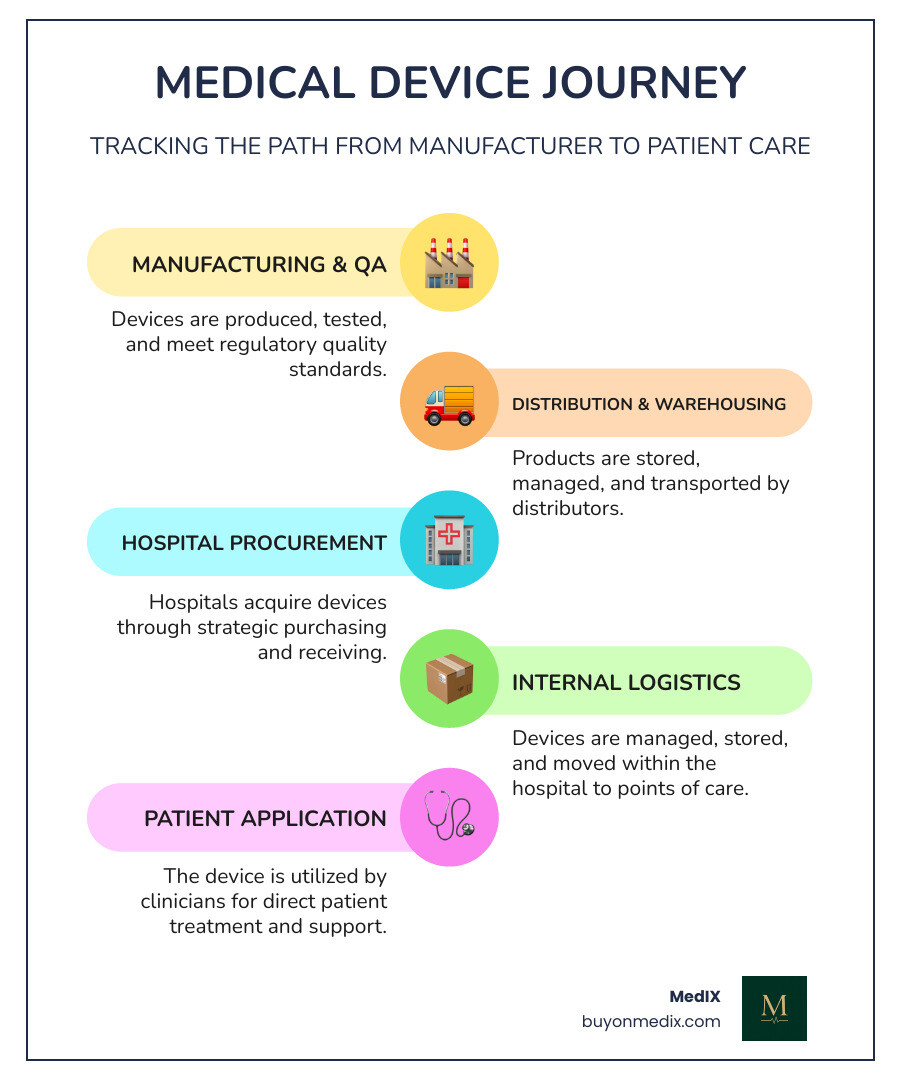
Hospital supply chain management is the strategic coordination of all processes involved in procuring, storing, and delivering medical supplies, pharmaceuticals, equipment, and information from manufacturers to patients. It encompasses:
- Procurement and purchasing - Sourcing and acquiring medical products at negotiated prices
- Inventory management - Tracking and controlling stock levels across facilities
- Distribution and logistics - Moving supplies from warehouses to point of care
- Data and information flow - Sharing real-time data between suppliers, distributors, and providers
- Supplier relationship management - Building partnerships with manufacturers and distributors
When the COVID-19 pandemic began, many health systems ran out of essential supplies like gloves, gowns, and N95 masks almost overnight. This crisis exposed a harsh truth: the hospital supply chain is both the second largest expense category after labor and a critical determinant of patient care quality.
Over 6,090 hospitals in the United States depend on a complex global network to deliver everything from basic office supplies to life-saving medications and sophisticated surgical equipment. This network involves manufacturers who produce medical devices and pharmaceuticals, distributors who manage warehousing and logistics, and healthcare providers who serve patients directly.
The stakes couldn't be higher. When supplies run short, surgeries get canceled, treatments get delayed, and patients suffer. When costs spiral out of control—hospital supply expenses jumped 18.5% between 2019 and 2022, outpacing inflation by nearly 30%—healthcare organizations face severe financial pressure that ultimately affects their ability to serve communities.
Yet most health systems still struggle with fragmented data, manual processes, and limited visibility into their supply chains. External suppliers often know more about a hospital's spending patterns than the hospital itself. This guide will show you how to transform our supply chain from a vulnerability into a strategic advantage.
The Perfect Storm: Unpacking Today's Hospital Supply Chain Challenges
Our healthcare systems face a relentless barrage of challenges, changing hospital supply chain management into a high-stakes balancing act. It's a perfect storm of persistent shortages, escalating costs, and global instability that demands our immediate attention. Despite the expiration of the COVID-19 Public Health Emergency, supply chain challenges haven't vanished; they've simply evolved. Today, we're seeing shortages extend beyond personal protective equipment (PPE) to critical prescription drugs, medical devices, and even basic items like sterile water and syringes.

This ongoing scarcity isn't just an inconvenience; it's a systemic issue. Reports indicate that scarcity rates for about 20% of essential medical supplies are above 5% in U.S. hospitals, creating constant pressure on our teams.
The COVID-19 Wake-Up Call
The COVID-19 pandemic served as a stark, undeniable wake-up call, exposing deep vulnerabilities within global healthcare supply chains. We watched as PPE, like face masks and shields, became precious commodities. By late March 2020, nearly one-third of hospitals in the U.S. reported near-empty face mask inventories, and 13% had no plastic face shields left. Ventilators, once a niche medical device, were suddenly in critical demand, highlighting a global dependency on a few manufacturers.
The crisis laid bare the fragility of the "just-in-time" inventory model, which prioritizes efficiency and cost-saving by minimizing stock, but leaves little buffer for unexpected surges in demand. When global production lines faltered and transportation seized up, hospitals found themselves in dire straits. The numbers tell a clear story: supply chain disruptions were 67% higher in 2020 than in 2019. This environment unfortunately led to instances of hoarding and price gouging, further destabilizing an already stressed system.
Navigating Regulatory and Geopolitical Problems
Beyond the immediate shock of a pandemic, our hospital supply chain management must contend with an intricate web of regulatory problems and unpredictable geopolitical shifts. Regulatory frameworks, while crucial for patient safety, can inadvertently create bottlenecks. Lengthy FDA approval processes for new drugs and devices often delay access to critical supplies. We also face the ongoing challenge of medical device recalls. For instance, the FDA recalled almost 900 medical devices in 2022, a staggering 125% jump from the 399 recalls in 2012. You can learn more about this scrutiny here: FDA recalled almost 900 medical devices in 2022. Such recalls, while necessary, disrupt supply lines and necessitate swift, often costly, replacements.
Globally, tariffs and trade policies can significantly inflate costs. Health systems in the U.S., for example, anticipated cost surges of at least 15% due to various tariffs. Geopolitical risks, such as the 2021 Suez Canal blockage, can delay critical medical shipments, reminding us that a localized event can have global repercussions on our supply of essential goods.
Over-Reliance on Fragile Global Networks
One of the most significant vulnerabilities we face is an over-reliance on single-source suppliers and global networks that are susceptible to disruption. When a key manufacturer or region becomes the sole provider of a critical item, any hiccup in their operations can send shockwaves through our entire system.
Consider the stark lesson from Hurricane Helene in 2024. This natural disaster disrupted IV fluid production, flooding a key manufacturing plant and disrupting approximately 60% of the national IV fluid supply. The ripple effect was immediate and severe: more than 80% of healthcare organizations across the nation faced shortages after Hurricane Helene disrupted operations at Baxter’s plant in North Carolina.
The concentration of medical supply and pharmaceutical manufacturing in specific regions, particularly Asia, further exposes us to geopolitical and logistical risks. This resource dependency means that events far from our hospitals—be it a natural disaster, a trade dispute, or even a chip shortage affecting medical device components—can directly impact our ability to provide care.
The Ripple Effect: How Supply Chain Failures Impact Hospitals and Patients
When the hospital supply chain management system falters, the consequences extend far beyond mere logistical headaches. It creates a detrimental ripple effect that impacts patient safety, financial stability, and the well-being of our dedicated healthcare professionals. It's a sobering thought that a broken link in the supply chain can directly translate to compromised care at the bedside.

The Human Cost: Compromised Patient Care and Outcomes
The most critical impact of supply chain issues is on our patients. When essential supplies are unavailable, surgeries are delayed, critical treatments are postponed, and even medication administration can be disrupted. Imagine a surgeon ready for an operation, only to find a critical instrument missing, or a nurse unable to administer a vital medication due to a sudden shortage. These aren't hypothetical scenarios; they are daily realities for many.
We've seen how shortages force clinicians to use alternative products, which may be less familiar, less effective, or require additional training, potentially compromising patient outcomes. For instance, after Hurricane Helene disrupted IV fluid production, more than 80% of healthcare organizations across the nation faced shortages, leading to widespread disruptions. This can lead to delayed surgeries and other vital treatments, as highlighted by Becker’s Hospital Review.
Furthermore, inefficient supply chains place an immense burden on our clinical staff. Nurses, physicians, and other frontline workers are often forced to spend valuable time hunting for supplies instead of focusing on patient care. Reports indicate that more than 67% of providers spend 10 or more hours per week mitigating supply chain challenges and shortages, and nearly 40% had to cancel or reschedule cases at least quarterly in 2023 due to product shortages. This isn't just an operational inefficiency; it's a direct drain on our most valuable resource—our caregivers—and can lead to increased stress and burnout.
The Financial Toll on Healthcare Organizations
Beyond patient care, supply chain inefficiencies impose significant financial burdens on healthcare organizations, threatening their sustainability. When shortages hit, hospitals often pay premium prices to secure urgent supplies, inflating operational costs. This reactive purchasing, while necessary in a crisis, is unsustainable.
We also face substantial losses from wasted inventory. Items expire before they can be used due to poor inventory management, or they become obsolete. A survey reveals that the annual financial loss for U.S. hospitals due to unnecessary supply chain expenditures and related processes amounts to a staggering $25.7 billion. You can read more about this financial impact here: survey.
The rising cost of treating patients adds another layer of financial pressure. PwC projects a 7% increase in the cost of treating patients in the United States in 2024, following a 6% increase in 2023 and 5.5% in 2022. This upward trend, as detailed in this PwC projects a 7% increase in patient treatment costs report, is exacerbated by supply chain issues. When product shortages force us to cancel or reschedule procedures, it directly impacts our revenue, creating a vicious cycle of financial instability.
Building a Resilient Future: Strategies for Modern Hospital Supply Chain Management
The challenges facing hospital supply chain management are undeniable, but so are the opportunities for change. We must move beyond reactive problem-solving to proactive, strategic management that prioritizes resilience, agility, and data-driven decisions. This isn't just about weathering the next storm; it's about building a robust system that consistently delivers high-quality care efficiently and affordably.
Using Technology and Data Analytics
Technology and data analytics are the backbone of modernizing healthcare supply chains. They provide the visibility and intelligence we need to anticipate, respond, and adapt.
- AI for Demand Forecasting: Artificial intelligence (AI) is revolutionizing how we predict future needs. By analyzing historical data, patient trends, and even external factors like seasonal illnesses, AI can provide highly accurate demand forecasts, helping us avoid both stockouts and overstocking. In fact, 40% of hospitals implemented AI tools for supply chain optimization in 2023, and nearly half (46%) of healthcare companies are already using AI to identify and address potential supply chain disruptions. This highlights a significant shift towards smart, predictive systems, as reported here: 46% of healthcare companies are using AI to identify disruptions.
- Real-time Inventory Tracking: Gone are the days of manual inventory counts. Solutions like RFID technology and barcode scanning provide real-time visibility into every item, from its arrival at the loading dock to its usage at the patient's bedside. This precision reduces waste, minimizes errors, and ensures that clinicians have what they need when they need it.
- Blockchain for Traceability: Imagine being able to trace every pharmaceutical or medical device back to its origin, verifying its authenticity and journey. Blockchain technology offers this level of transparency and immutability, combating counterfeiting and ensuring product integrity across the supply chain network.
- Cloud-based ERP Systems: Integrating supply chain data with our financial and clinical systems is paramount. Cloud-based Enterprise Resource Planning (ERP) systems offer a centralized platform for this, breaking down data silos and enabling comprehensive analytics and reporting.
Top Technologies Changing Healthcare Supply Chains:
- Cloud ERP & SCM Systems: For integrated data and real-time visibility.
- AI-enabled Analytics: For predictive forecasting, risk identification, and optimization.
- Automatic Identification and Data Capture (AIDC): Barcodes and RFID for precise inventory tracking.
- Blockchain: For improved traceability, authenticity, and regulatory compliance.
- IoT Devices: For automated monitoring of supply usage and location.
Strengthening the Chain Through Collaboration and Diversification
No hospital can build a resilient supply chain in isolation. Collaboration and diversification are key pillars of a robust system.
- Supplier Relationship Management (SRM): Building strong, transparent relationships with manufacturers and distributors is crucial. This involves more than just price negotiation; it's about fostering partnerships where information is shared, risks are jointly managed, and mutual trust is built. By understanding our partners' capacities and challenges, we can anticipate issues and collaborate on solutions.
- Diversifying Suppliers: Relying on a single supplier for critical items is a recipe for disaster. We must actively diversify our supplier base, seeking out multiple qualified sources for essential products. This strategy mitigates risk and provides alternatives when one supplier faces disruption.
- Nearshoring and Local Sourcing: The pandemic highlighted the risks of distant, global supply lines. A growing trend is nearshoring or local sourcing, which involves procuring supplies from closer geographic regions or within our own country. This reduces lead times, transportation costs, and exposure to international disruptions. In 2024, 20% of hospitals shifted to local sourcing to mitigate global risks, demonstrating a clear move towards regional resilience. You can read more about this trend here: 20% of hospitals shifted to local sourcing.
- Domestic Manufacturing Initiatives: Supporting and encouraging domestic manufacturing of medical supplies is a strategic imperative. Public funds are being allocated to strengthen American manufacturing, such as the approximately $290 million allocated through a $1.5 billion federal investment aimed at bolstering the production of medical masks, gowns, gloves, and their components. This initiative, highlighted by Medtigo, aims to reduce our dependence on foreign sources for critical items.
Optimizing Your Internal Hospital Supply Chain Management Processes
While external partnerships are vital, optimizing our internal hospital supply chain management processes is equally important. This involves refining how we operate day-to-day to improve efficiency and clinical effectiveness.
- Lean Principles: Adopting lean methodologies focuses on eliminating waste in all its forms—overstocking, unnecessary movement, waiting times, and defects. This means streamlining workflows, reducing stock-keeping units (SKUs), and standardizing processes to create a more efficient and agile system.
- Just-in-Time vs. Just-in-Case Inventory: We need to find the right balance. While the just-in-time model offers cost efficiencies, a "just-in-case" approach with strategic stockpiles of critical items is essential for resilience. This balance ensures we have adequate buffers without incurring excessive holding costs.
- Process Standardization: Standardizing procurement, inventory management, and distribution processes across all facilities within a health system reduces variability, improves compliance, and simplifies training. This is particularly important for health systems expanding through mergers and acquisitions, where reconciling disparate systems and data is crucial.
- Clinician Engagement and Value Analysis Committees: Clinicians are at the heart of healthcare delivery, and their input in supply chain decisions is invaluable. By involving them in value analysis committees, we can ensure that product selections balance clinical efficacy with cost-effectiveness, leading to better patient outcomes and financial stewardship. This engagement is highlighted as imperative for high-performing supply chain organizations, as discussed in Optimizing health system supply chain performance. Their insights help us make informed decisions that directly impact patient care and operational efficiency.
Frequently Asked Questions about Hospital Supply Chain Management
What are the key components of a healthcare supply chain?
The healthcare supply chain is a complex ecosystem designed to deliver all the necessary goods and services to maintain operations and provide patient care. Its key components and players include:
- Key Players:
- Manufacturers: Companies that produce pharmaceuticals, medical devices, and other healthcare products.
- Distributors: Intermediaries that store, transport, and deliver products from manufacturers to healthcare providers.
- Providers: Hospitals, clinics, pharmacies (over 67,000 in the U.S.), and other healthcare facilities that use supplies to treat patients.
- Key Elements:
- Physical Goods: This includes everything from life-saving drugs and complex surgical instruments to basic office supplies and cleaning products. Over 5.8 billion prescriptions were filled in 2017 in the U.S. alone, illustrating the sheer volume of goods involved.
- Information: Real-time data on demand, inventory levels, shipment statuses, and product specifications is crucial for efficient operations.
- Finances: The flow of money, including payments, contracts, and reimbursement models, underpins the entire system.
- Patients: The entire supply chain revolves around ensuring patients receive the treatments and care they need.
How does technology like AI improve supply chain efficiency?
Technology, particularly artificial intelligence (AI), is changing hospital supply chain management by bringing unprecedented levels of efficiency and foresight. AI improves efficiency in several ways:
- Predictive Analytics and Demand Forecasting: AI algorithms can analyze vast datasets, including historical consumption, seasonal trends, and even public health data, to predict future demand with remarkable accuracy. This helps hospitals order the right quantities, preventing both costly overstocking and dangerous shortages.
- Identifying Potential Disruptions: AI can monitor global news, weather patterns, and supplier performance data to flag potential disruptions early, giving supply chain managers time to react and implement contingency plans.
- Automating Procurement: AI-powered systems can automate routine purchasing tasks, generate purchase orders, and even negotiate with suppliers for optimal pricing, freeing up human staff for more strategic work.
- Optimizing Inventory Levels: By continuously analyzing usage patterns and lead times, AI can recommend optimal inventory levels for each item, reducing carrying costs and minimizing waste from expired products.
- Reducing Manual Tasks: The digital change enabled by AI significantly reduces manual data entry and administrative burdens, leading to fewer errors and faster processes. This digital shift has been shown to reduce process costs by 50% and increase revenue by 20% across many industries, including healthcare. You can explore more on this impact here: AI can reduce process costs by 50%.
What is the first step to building a more resilient supply chain?
The first and most crucial step to building a more resilient hospital supply chain management system is to gain complete visibility into your current operations and conduct a thorough risk assessment. We cannot fix what we cannot see or understand.
Here's how we approach it:
- Mapping the Supply Chain: We start by carefully mapping out our entire supply chain, identifying every link from raw material suppliers to the point of patient care. This includes understanding who our suppliers are (and their suppliers), where they are located, and how products move through the system.
- Identifying Single Points of Failure: This mapping exercise helps us pinpoint critical products or services that rely on a single source or a single geographic location. These "single points of failure" represent significant vulnerabilities in times of disruption.
- Understanding Supplier Dependencies: We dig into understanding our suppliers' own dependencies. Do they rely on a single raw material provider? Are they susceptible to specific regional risks? This helps us gauge the true resilience of our extended network.
- Data Collection and Analysis: We gather and analyze data on lead times, inventory levels, consumption rates, and historical disruptions. This data forms the foundation for informed decision-making.
- Technology Implementation (Initial Phase): While a full technological overhaul might come later, implementing basic digital tools for data collection and visualization is an excellent starting point. This could involve inventory management software or dashboards that aggregate key supply chain metrics.
By achieving this foundational visibility and understanding of risks, we can then prioritize which vulnerabilities to address first and strategically implement the necessary technologies and partnerships to build a truly resilient supply chain.
Conclusion: From Survival to Strategic Advantage
The journey through the complexities of hospital supply chain management reveals a critical truth: it is no longer merely a back-office function. It is a strategic asset, essential for financial stability, operational excellence, and, most importantly, patient care. The lessons from recent global disruptions have underscored the need for a fundamental shift—from a reactive approach focused on survival to a proactive, patient-centric strategy that creates enduring value.
We've seen how vulnerabilities in global networks, regulatory problems, and an over-reliance on fragile systems can lead to devastating consequences for both our patients and our bottom line. But we've also explored the powerful strategies and technologies available to us: from the predictive power of AI and the transparency of blockchain to the resilience built through diversified sourcing and collaborative partnerships.
The future of hospital supply chain management is one of continuous improvement, leveraging data, fostering collaboration, and adopting innovative solutions. By embracing these changes, we can transform our supply chains from a source of vulnerability into a robust, agile system that consistently supports our mission of delivering exceptional healthcare.
At MedIX, we understand these challenges intimately. Our global B2B marketplace is designed to simplify procurement, connecting hospitals and clinics worldwide with certified medical equipment suppliers. Through AI-matching, rigorous compliance checks, and reliable global logistics, we ensure verified equipment and transparent transactions, empowering you to build a more resilient and efficient supply chain.
It’s time to take control of your supply chain destiny. We invite you to explore how MedIX can help you steer these complexities and secure the vital equipment your patients depend on.

Expert voices
Insights from leaders transforming medical equipment procurement


More from our blog
Discover the latest trends in medical technology and procurement
Stay ahead of medical technology
Get the latest insights, research, and market updates delivered straight to your inbox
Ready to transform your procurement
Discover how MedIX can streamline your medical equipment sourcing process